Table of Contents
Jeonggwan Line Feasibility Passed

The Jeonggwan Line, an urban rail project that will innovate the transportation network in Busan's East, is set to proceed as it successfully passed the preliminary feasibility study (PFS). On February 12, Busan announced the successful PFS for the Jeonggwan Line at a meeting of the Financial Project Evaluation Committee, confirming a goal for its opening in 2032.
The Jeonggwan Line is an important route that will provide transport convenience in a region, Jeonggwan-eup in Gijang-gun, where there has been no existing urban rail service. This line is expected to contribute to the establishment of a circular rail network in East Busan by connecting the 'Busan-Yangsan-Ulsan Metropolitan Railroad' with the 'Donghae Line'.
Despite low evaluations on economic indicators during the PFS, it ultimately passed through a comprehensive evaluation method (AHP) that accounted for policy effectiveness and regional balanced development effects. This is expected to significantly assist in improving the transportation system in the East Busan area.
Related Articles
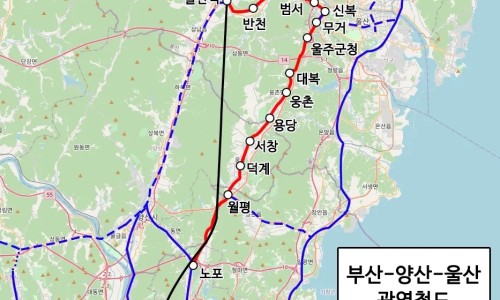

Jeonggwan Line Route Map and Station Locations

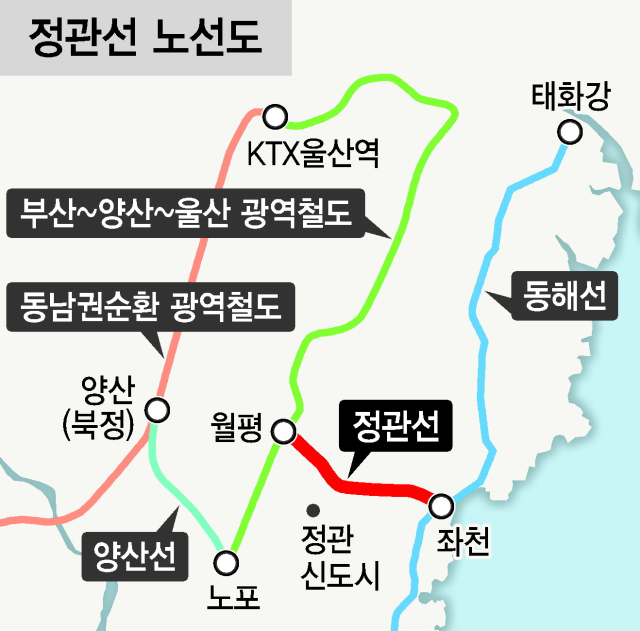
The Jeonggwan Line covers a section from Wolpyeongri in Jeonggwan-eup, Gijang-gun, passing through Jeonggwan New Town to Jwachan Station on the Donghae Line, spanning 12.8 km. A total of 13 stations and 1 vehicle base are planned to be established along this route.
Overview of Major Projects
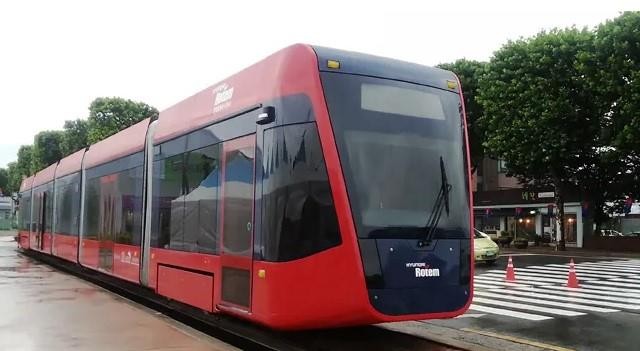
The route extends from Wolpyeongri in Jeonggwan-eup through Jeonggwan New Town to Jwachan Station on the Donghae Line.
The total extension is 12.8 km, with 13 stations planned.
Additionally, there will be 1 vehicle base established, with the total project cost amounting to 479.4 billion won.
The operation method is planned to be a wire-free tram.
| Length | Stations | Vehicle Base | Vehicle System | Vehicle Composition | Funding Sources |
| 12.8(km) | 13 (sites) | 1 (site) | Tram | 11 sets (5-module formation) | Public Finance [National + City Budget + Gijang-gun] |
The transfer system will connect the ▲ Busan-Yangsan-Ulsan Metropolitan Railroad and ▲ Donghae Line. This is expected to greatly improve access from Jeonggwan area to the urban centers of Ulsan, Yangsan, and Busan.
Opening Schedule in 2032
The business period for the Jeonggwan Line project is set from 2023 to 2032. In 2026, services for feasibility assessment and basic planning will begin, with construction starting in 2028 and a target opening in 2032. However, this schedule is likely to be delayed by at least 3 years.
The Donghae Line and the Busan-Yangsan-Ulsan Metropolitan Railroad serve as key elements for forming the Busan-Ulsan-Gyeongnam super-wide economic zone. Upon completion, the Jeonggwan Line is expected to establish a circular network in East Busan, integrating Busan, Yangsan, and Ulsan into one living area.
Particularly, the introduction of the eco-friendly, wire-free tram method is expected to minimize the disruption of urban landscapes, which holds significant meaning as a mode of transportation that can also lead to the revitalization of tourism and commercial areas. The development of this transportation network is expected to have a positive impact on the regional economy.
Transportation Innovation in East Busan
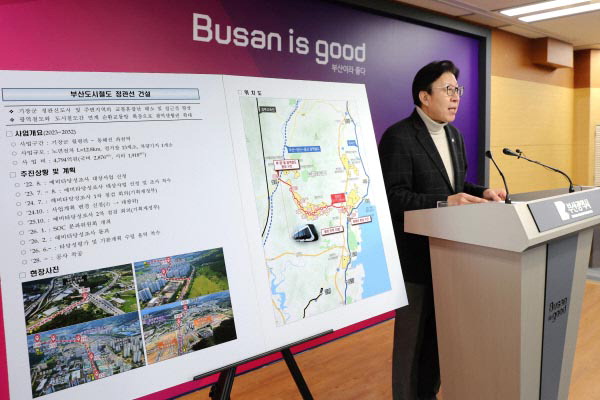
With the approval of the preliminary feasibility study for the urban rail Jeonggwan Line, this has become an important turning point for transportation innovation in East Busan, beyond simply establishing new rail lines. The population increase in Jeonggwan New Town, expansion of industrial zones, and the growing demand for metropolitan commuting enhance the necessity for such transport means.
Future challenges to address include ▲ the detailed determination of station locations ▲ optimization of transfer flows ▲ adjustment of schedules with metropolitan railroads ▲ strategic links with commercial areas and tourist resources. If these plans proceed without issues, the Jeonggwan Line is likely to establish itself as a major public transport means in the East Busan area following its anticipated opening in 2032.
Additionally, the urban rail Jeonggwan Line will function as a crucial transportation infrastructure that practically connects the metropolitan economic zones of Busan, Yangsan, and Ulsan. As the preliminary feasibility study has passed, it is crucial that the upcoming project implementation proceeds smoothly.
#UrbanRailJeonggwanLine, #JeonggwanLineFeasibilityPassed, #JeonggwanLineOpening, #Tram, #JeonggwanNewCity, #GijangGunTransport, #DonghaeLineTransfer, #BusanYangsanUlsanMetropolitanRailroad, #EastBusanCircularRailroad, #BusanUlsanGyeongnamMetropolitanArea, #JeonggwanEupWolpyeongri, #JwachanStation, #BusanTransportNetwork, #OpeningIn2032, #BusanUrbanRail, #MetropolitanRailLink, #BusanTram, #EcoFriendlyTransport, #13Stations, #VehicleBase, #TransportInfrastructure, #PreliminaryFeasibilityStudy, #BusanPolicy, #EastBusanDevelopment, #MetropolitanLivingArea, #BusanUrbanPlanning, #TransportInnovation, #BusanRail, #BusanNewCity, #BusanMetropolitanTransport
Frequently Asked Questions (FAQ)
Q. What are the reasons the Jeonggwan Line urban rail project passed the preliminary feasibility study?
Although the Jeonggwan Line's economic indicators were low, it was approved considering policy effectiveness and regional balanced development effects.
During the PFS process for the Jeonggwan Line, economic indicators were rated low; however, it ultimately passed through a comprehensive evaluation method (AHP) that included the effects of policy effectiveness and regional balanced development. This result reflects that the Jeonggwan Line is expected to play an important role in improving the transportation system in East Busan and regional development.
Q. Where are the Jeonggwan Line route and major stations located?
The Jeonggwan Line consists of 12.8 km from Wolpyeongri in Gijang-gun to Jwachan Station, with 13 stations and a vehicle base.
The route starts from Wolpyeongri in Jeonggwan-eup, Gijang-gun, passes through Jeonggwan New Town, and continues to Jwachan Station on the Donghae Line. It will have a total length of 12.8 km, with 13 stations and one vehicle base planned. The operation mode is planned to be wire-free tram.
Q. What is the expected opening time and project schedule for the Jeonggwan Line?
The project is scheduled to start in 2023, with a target opening in 2032, and construction will begin in 2028.
The Jeonggwan Line project is promoted from 2023 to 2032, aiming for feasibility assessment and basic planning services in 2026, construction to begin in 2028, and an opening in 2032. However, the schedule is likely to be delayed by at least 3 years.
Q. What are the expected effects of the Jeonggwan Line on the transportation network in East Busan?
The Jeonggwan Line will significantly enhance transportation accessibility by establishing a circular rail system in East Busan and connecting with metropolitan railroads.
The Jeonggwan Line will connect with the Busan-Yangsan-Ulsan Metropolitan Railroad and the Donghae Line, establishing a circular rail network in the East Busan area. This is expected to improve accessibility from the Jeonggwan area to the urban centers of Busan, Yangsan, and Ulsan, with the introduction of eco-friendly tram minimizing urban landscape disruption, contributing positively to tourism and commercial vitality.
Q. What role does the Jeonggwan Line play in the metropolitan economic zone of Busan, Yangsan, and Ulsan?
The Jeonggwan Line becomes a core transport infrastructure that effectively connects the metropolitan economic zone of the three regions.
Upon completion of the Jeonggwan Line, a circular network in East Busan will be established, integrating Busan, Yangsan, and Ulsan into one living area. This will act as a key element in forming the Busan-Ulsan super-wide economic zone, providing a foundation to effectively support the growing demands for metropolitan commuting due to increases in population and industrial zone expansion.
