Table of Contents
Groundbreaking Ceremony of Jangnak Bridge
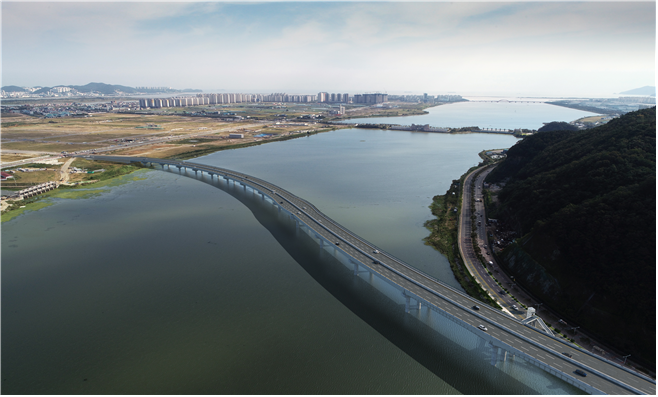
The construction of the Jangnak Bridge has officially begun. The city of Busan held a groundbreaking ceremony at the terminal point of Eco Delta City in Gangseo District, laying the groundwork for a revolutionary transportation system in the west Busan area.
This project will serve as an important connecting road for the Busan-Jinhae Free Economic Zone and will play the role of a starting point for the east-west transportation axis connecting Myeongji, Noksan, and Eco Delta City. It is scheduled to be completed by the end of 2030, and construction has now commenced.
Project Overview and Scale
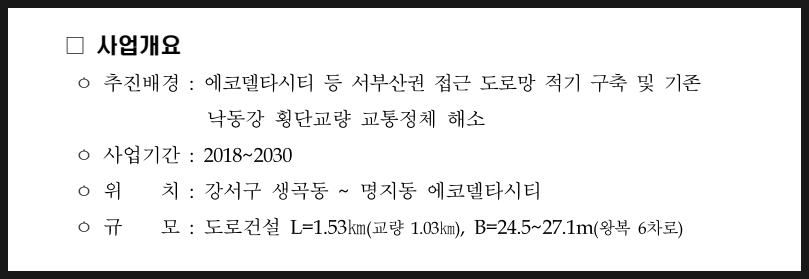
The Jangnak Bridge is designed to be a 1.53km-long road connecting the Saenggok-dong and Myeongji-dong areas in Gangseo District, with a six-lane structure for both directions. Of this length, the bridge itself accounts for 1.03km, and the road width varies between 24.5m and 27.1m.
The total budget for this project is 163.6 billion won, with 80 billion won provided by the national government and 83.6 billion won by the city. The project commenced in 2018 and is expected to be completed by 2030.
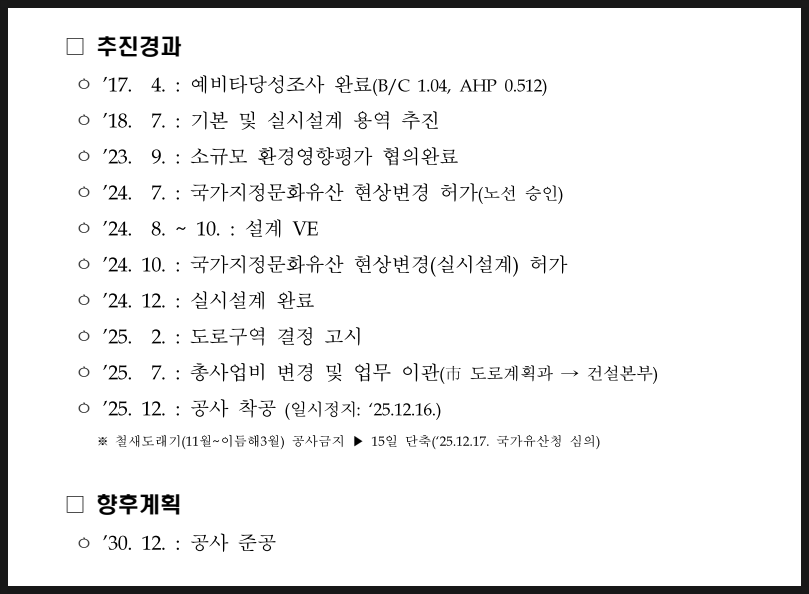
Key progress milestones are as follows.
In 2017, a preliminary feasibility study was passed, yielding a B/C ratio of 1.04. In 2023, a small-scale environmental impact assessment was completed, and in 2024, approval for changes to national heritage was received.
The detailed design was also completed in the same year, and construction is expected to begin in 2025 alongside the official declaration of the road area.
Despite various environmental factors, such as construction limitations due to migratory bird habitats, work was initiated as major administrative procedures were finalized.
Core of the East-West Transportation Network
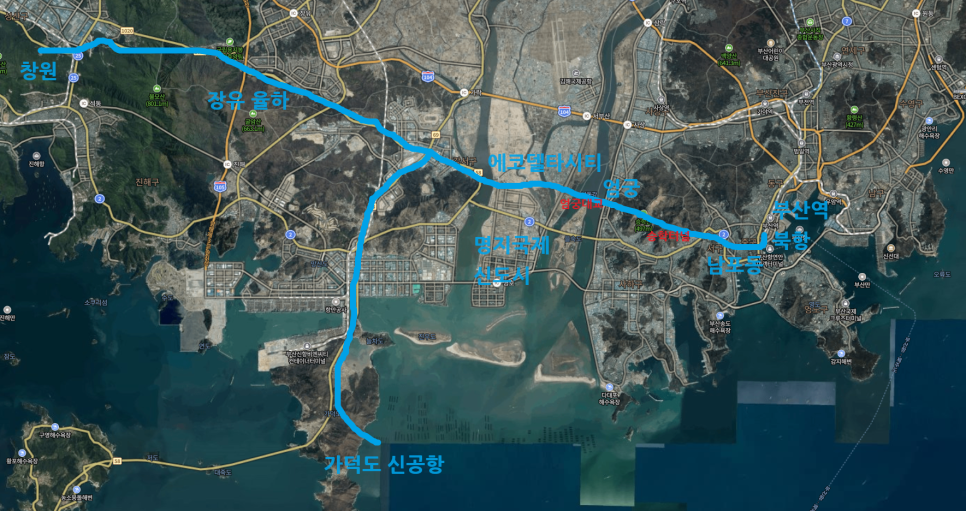
The Jangnak Bridge serves as more than just a bridge; it has become a crucial part of the east-west transportation network connecting Eco Delta City, Eomgung Bridge, Seunghak Tunnel, and the North Port back road.
Currently, traffic congestion frequently occurs in the west Busan area due to the bridges crossing the Nakdong River. Once the Jangnak Bridge is completed, it is expected to effectively disperse existing traffic and greatly enhance accessibility to Myeongji, Noksan Industrial Complex, and Eco Delta City.
Additionally, this bridge will serve as a northern access road connecting the Busan-Jinhae Free Economic Zone and the city center, thereby improving the efficiency of logistics movement and strengthening industrial competitiveness.
Connecting Effects of Eco Delta City
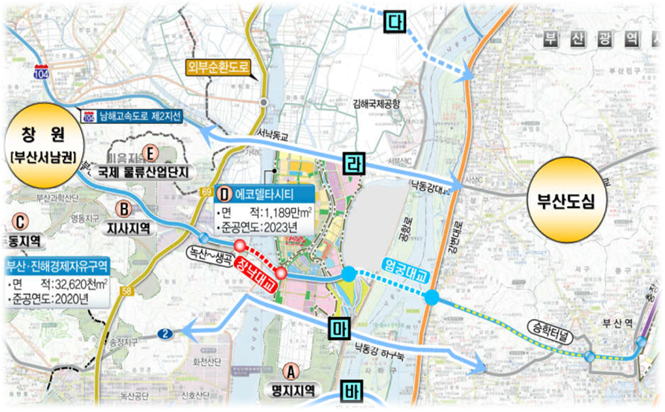
The Jangnak Bridge is a vital component for completing the transportation network of Eco Delta City. Eco Delta City is being developed as a new growth hub based on smart city principles and is set to become a futuristic city that integrates residential, industrial, and research functions together.
Upon completion of the bridge, an east-west axis connecting Myeongji, Noksan, and the Sasang-Eomgung region will be established. This will contribute to promoting balanced development in the western Busan region and expanding the infrastructure necessary for residential and industrial needs.
The city of Busan aims to construct the bridge in harmony with nature by continuously consulting with environmental groups and relevant organizations during the construction process.
Significance of Completion in 2030

The commencement of construction for the Jangnak Bridge symbolizes an important milestone in reorganizing the transportation system of the west Busan area. This project, slated for completion in 2030, will significantly enhance the transportation infrastructure of west Busan through a complex network of roads connecting Daejeo Bridge, Eomgung Bridge, and Seunghak Tunnel.
This change is expected to produce various positive effects, not only on improving transportation convenience but also on increasing logistics transport efficiency, improving access to industrial complexes, and enhancing the value of new towns.
It is interpreted as a process of completing an integrated east-west transportation network for Busan to grow into a global hub city, and it is crucial that safety and environmental management are considered simultaneously in future project developments to ensure successful completion.
#JangnakBridge, #JangnakBridgeGroundbreaking, #BusanBridgeProject, #WestBusanTransportation, #EcoDeltaCity, #MyeongjiNewTown, #NoksanIndustrialComplex, #BusanJinhaeFreeEconomicZone, #NorthernAccessRoad, #EomgungBridge, #SeunghakTunnel, #BusanRoadNetwork, #EastWestAxis, #NakdongRiverBridge, #WestBusanDevelopment, #BusanInfrastructure, #2030Completion, #BalancedDevelopmentinBusan, #GangseoDistrictDevelopment, #BusanNewTown, #BusanLogistics, #BusanTrafficImprovement, #DaejeoBridge, #NorthPortBackRoad, #BusanConstructionProject, #BusanUrbanPlanning, #BusanNewGrowthHub, #BusanFreeEconomicZone, #BusanRoadOffering, #FutureTransportinBusan
Frequently Asked Questions (FAQ)
Q. Where is the construction site of the Jangnak Bridge and what are the main connecting areas?
The Jangnak Bridge connects Saenggok-dong and Myeongji-dong in Busan's Gangseo District.
The Jangnak Bridge construction project starts at the terminal point of Eco Delta City in Busan's Gangseo District and connects Saenggok-dong and Myeongji-dong with a total length of 1.53km. It will play a core role in the east-west transportation axis connecting Myeongji, Noksan, and Eco Delta City within the Busan-Jinhae Free Economic Zone, becoming the center of the transportation network in west Busan.
Q. What is the scale and budget of the Jangnak Bridge construction project?
A total length of 1.53km with six lanes and a budget of approximately 163.6 billion won.
The Jangnak Bridge is designed to be a six-lane road (24.5 to 27.1m wide) with a total length of 1.53km, including a 1.03km bridge section. The total project budget is 163.6 billion won, of which 80 billion won is covered by the national government and 83.6 billion won by Busan City. The project started in 2018 and is expected to be completed by 2030.
Q. What have been the main progress milestones and administrative procedures for the construction of the Jangnak Bridge?
After passing the preliminary feasibility in 2017, environmental evaluations and national heritage approvals were completed.
The preliminary feasibility study passed with a B/C ratio of 1.04 in 2017, followed by the completion of a small-scale environmental impact assessment in 2023 and approval for changes to national heritage in 2024. The detailed design was completed in the same year, and construction is expected to begin in 2025 with the official declaration of the road area. Environmental impacts from migratory bird habitats were also considered.
Q. What impact will the Jangnak Bridge have on the transportation network in the west Busan area?
It will alleviate traffic congestion from Nakdong River bridges and play a key role in the east-west transportation network.
The Jangnak Bridge will ease frequent traffic congestion in west Busan and enhance access to Eco Delta City, Myeongji, and Noksan Industrial Complex. Acting as a core axis of the east-west transportation network linked with Eomgung Bridge, Seunghak Tunnel, and the North Port back road, it also plays a role in connecting the Busan-Jinhae Free Economic Zone and the northern access road to the city center, significantly boosting logistics efficiency and industrial competitiveness.
Q. What significance does the completion of the Jangnak Bridge hold for the city of Busan and the development of Eco Delta City?
It promotes balanced development in the western region and completes the transportation network of the smart city Eco Delta City.
The Jangnak Bridge is key to completing the transportation network of Eco Delta City, a smart city-based new growth hub, creating an east-west axis connecting Myeongji, Noksan, and the Sasang-Eomgung regions. This will support the expansion of residential and industrial infrastructure and balanced development in the west Busan region, while aiming for construction that harmonizes with the environment through continuous consultations with citizens. After its completion in 2030, it is expected to strengthen the foundation for Busan's growth as a global hub city.
