Table of Contents
Overview of Eco Delta Autonomous Driving

Autonomous mobility services will officially commence in Eco Delta City, Gangseo-gu, Busan. This project holds great significance as a core demonstration project of the national pilot smart city, going beyond just the introduction of transportation means.
The city of Busan aims to create a future transport environment that citizens can genuinely feel by combining autonomous driving technology with data-driven urban management. Notably, it is designed to connect residential areas with major living facilities, enhancing its utilization in everyday life. These changes are expected to provide better transportation services for the citizens of Busan.
Key Points of the Autonomous Bus Route Map
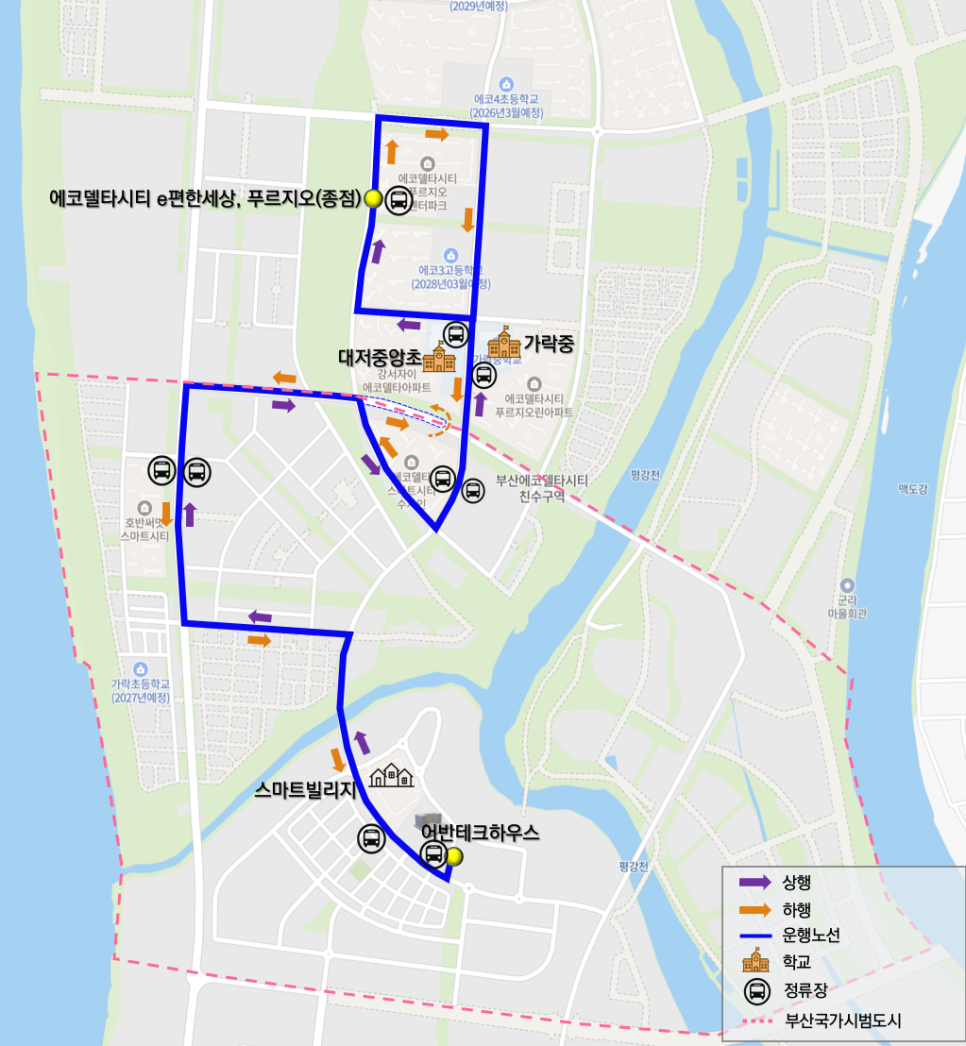
The newly introduced autonomous bus operates on a circular route within Eco Delta City.
The operating section connects residential areas with the Urban Tech House, with a round-trip distance of approximately 10 km. There are a total of 9 stops located in the Eco Delta City area of Gangseo-gu, Busan.
This route focuses on providing a mobility service that effectively connects residential areas, smart villages, and research facilities.
The main design elements of the route emphasize commuting, daily movement, and connectivity with smart services.
Operation Hours, Fare and Usage Method
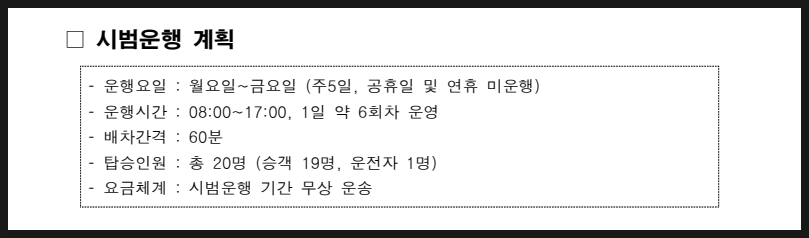
From April 2026, trial operations of the autonomous bus will begin. This bus will operate 5 days a week, Monday through Friday, from 8 AM to 5 PM. The bus will have an approximate interval of 60 minutes, serving around 6 times a day. Notably, during the trial operation period, the fare will be free.
The vehicles in operation will be low-floor electric buses with a capacity of 20 passengers, and in the initial phase, a safety officer will accompany the bus to ensure passenger safety. Subsequently, based on the experimental data, plans for commercial transportation and route expansion will be progressed.
Analysis of Autonomous Driving Technology Features
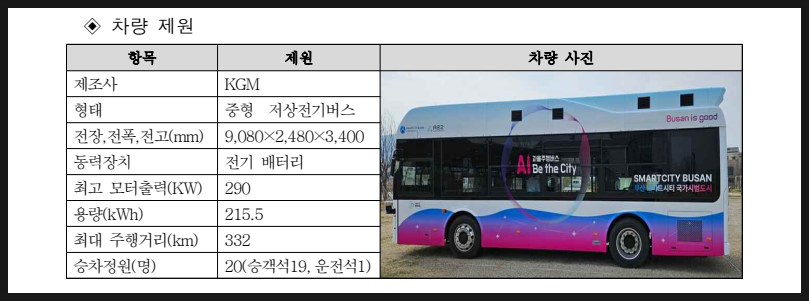
The Eco Delta autonomous bus utilizes a fusion recognition technology that combines various sensors to achieve safe driving.
LiDAR perceives distance and space, radars detect objects and measure their speed, while cameras are responsible for recognizing signals and pedestrians.
These diverse technologies are integrated to assess road conditions in real-time and perform automatic control for safe driving.
Furthermore, by continuously collecting driving data, it has the potential to evolve into an AI-based optimization system for operations.
Integration with Smart City Robot Services
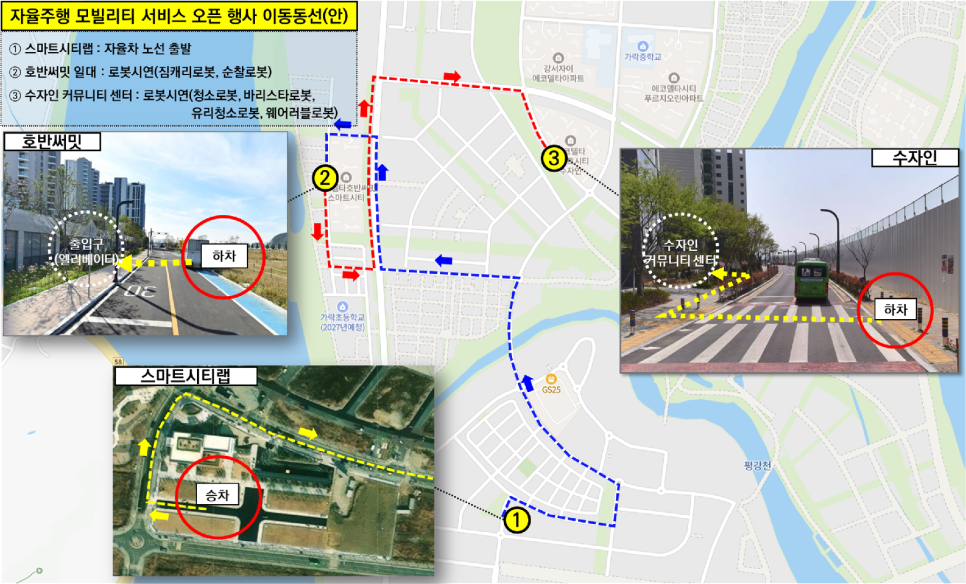
This autonomous driving service is not only independent but also operates concurrently with robot-based urban services.
Main services include 'Luggage Carrying Robots' for transporting goods, 'Patrol Robots' for safety, 'Cleaning Robots' for managing public spaces, and 'Barista Robots' for customer interaction.
All these systems are managed through an integrated control platform, forming the foundation for operating the entire city as a single smart system.
Prospects of Eco Delta Smart City

Eco Delta City functions as a model for a national smart city, going beyond the mere concept of a new town.
The introduction of autonomous buses serves as an important case that simultaneously realizes innovation in traffic systems, increased convenience in daily life, and data-driven urban management.

In conclusion, this project progresses in the order of "introduction of autonomous driving technology → collection and analysis of data → service development → expansion of urban scope".
If Busan expands through this project, it has a great potential to become a leading smart city not only domestically but globally.
#EcoDeltaCity, #AutonomousBus, #BusanSmartCity, #AutonomousRouteMap, #EcoDeltaBus, #BusanTrafficInnovation, #SmartMobility, #BusanAutonomousDriving, #GangseoGuDevelopment, #BusanNewCity, #NationalPilotSmartCity, #AutonomousDrivingTechnology, #LiDAR, #AITraffic, #BusanTrafficPolicy, #FutureTraffic, #BusanHotIssues, #EcoDeltaDevelopment, #BusanInvestmentInformation, #BusanRealEstate, #SmartCity, #UrbanInnovation, #BusanFuture, #RobotService, #BusanLivingInfrastructure, #BusanTrafficInformation, #EcoFriendlyBus, #ElectricBus, #BusanDevelopmentBoons, #BusanNewCityProspects
Frequently Asked Questions (FAQ)
Q. In which regions will Eco Delta City's autonomous bus operate?
It will operate in the section connecting residential areas and the Urban Tech House within Eco Delta City, Gangseo-gu, Busan.
The Eco Delta City's autonomous bus will operate in the Eco Delta City area of Gangseo-gu, Busan, primarily connecting residential areas with the Urban Tech House, smart villages, and research facilities in a circular route. There are 9 stops in total, with a round-trip distance of about 10 km. This route is designed to enhance the convenience of citizens' lives, emphasizing commuting and daily movement alongside the integration of smart services.
Q. What are the operation hours and fare for Eco Delta City's autonomous bus?
It operates Monday to Friday from 8 AM to 5 PM, and the fare is free during the trial period.
The autonomous bus will operate from April 2026, five days a week, Monday to Friday. The daily operation will be approximately six times with a 60-minute interval. During the trial period, a safety officer will accompany the bus to ensure safety and the fare will be free. Future plans for commercial transportation and route expansion will be based on the analysis of experimental data.
Q. What are the key technologies applied in the autonomous bus?
LiDAR, radar, and camera sensor fusion technologies are applied for real-time road condition recognition and automatic control.
The autonomous bus of Eco Delta City is equipped with fusion recognition technology that integrates various sensors. The LiDAR sensor determines distance and space, radar detects the surrounding objects and their speed. The camera is responsible for recognizing signals and pedestrians. This data from these sensors is processed in real-time to assess road conditions, enabling automatic control for safe driving. Additionally, accumulated driving data will be used for AI-based operational optimization.
Q. How is the autonomous bus service integrated with other smart city services?
It is integrated through various robot services such as luggage carrying, patrolling, cleaning, and barista robots under a unified control platform.
The autonomous service in Eco Delta City operates alongside robot-based urban services rather than in isolation. It includes luggage-carrying robots, patrol robots for safety, cleaning robots for managing public spaces, and barista robots for customer service. All these services are managed through an integrated control platform, establishing a foundation for operating the entire city as a unified smart system.
Q. What is the long-term outlook for the Eco Delta City autonomous bus project?
It is expected to develop into a national smart city model, promoting traffic innovation and service expansion.
The Eco Delta City project is establishing itself as a national smart city model beyond simple new town development. The introduction of autonomous buses serves as a significant case of innovation in traffic systems, increased convenience in daily life, and data-driven urban management. In the future, the sequence from introducing autonomous driving technology, collecting and analyzing data, evolving services, and expanding the scope of the entire city will be implemented step by step, holding potential for development as a leading smart city both domestically and internationally.