Table of Contents
- Turning Point of Rail Transportation in Eco Delta City
- ‘Delta Scape Landscape Delta’ Selected
- Improved Fare and Service Interval… Strengthening Popularity with EMU-150 Deployment
- After Long Delays to Design Competition Selection… Progress of Promotion
- Leap as a Transportation Hub in Eco Delta City
- Frequently Asked Questions (FAQ)
Turning Point of Rail Transportation in Eco Delta City
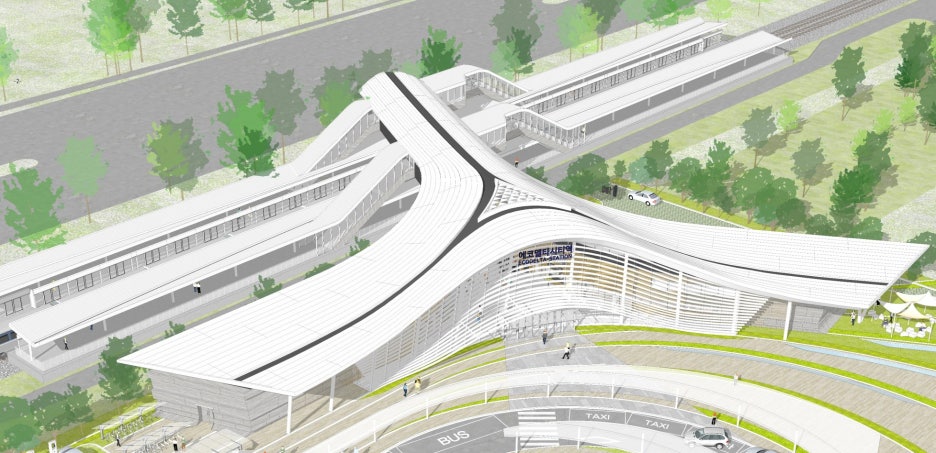
With the announcement of the winner in the design competition for the new station in Eco Delta City, Busan's Gangseo district, the transformation of the local transportation environment is accelerating.
The new station will play a pivotal role in the Bujeon-Masan double track railway project, significantly enhancing the mobility of Gangseo residents.
‘Delta Scape Landscape Delta’ Selected

The project ‘Delta Scape Landscape Delta’ by HK Architecture Office has been selected as the winning design. This project effectively showcases the natural characteristics of the Nakdong River delta and the future urban vision of Eco Delta City.
The new station will have a building area of 358 pyeong (1,183.30㎡) and a total floor area of 462 pyeong (1,526.65㎡), consisting of 3 above-ground floors. Including the transfer bridge, the total building area will reach 645 pyeong (2,131.52㎡). It also includes linking transportation facilities considering transfers between various means of transport, expected to function as a real transportation hub.
The total project cost for the new Eco Delta City Station will be 63.98 billion won. This project plans to start detailed design work in 2025 and commence construction in 2026, aiming for completion in 2028. The design work is expected to begin in earnest from December 2025 to April 2027. Subsequently, construction for the station and plaza will be carried out sequentially.

Progress seems to be proceeding smoothly as planned, and a new Sinwol Station will also be established in Gimhae.

Improved Fare and Service Interval… Strengthening Popularity with EMU-150 Deployment
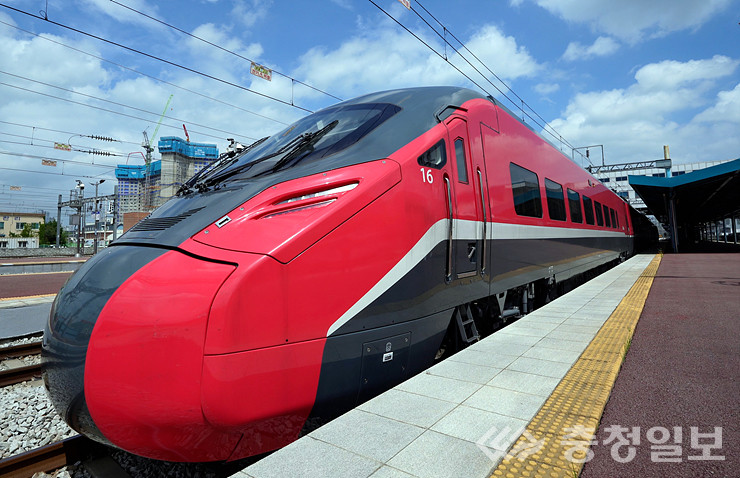
The previous operation plan was centered around the EMU-260, but it has been decided to add the EMU-150, known as ITX-Mind, to reduce fares and service intervals.
The basic fare for EMU-150 is set at 4,800 won, while EMU-260 is set at 8,400 won, with discounts on periodic tickets also available. Students can receive discounts up to 60%, while regular individuals can receive discounts up to 50%.
It is expected that the service interval will be reduced from the existing 90 minutes to 30 minutes. Such changes are expected to significantly improve the accessibility of public transportation, increasing the utilization rate of the Eco Delta City Station.
After Long Delays to Design Competition Selection… Progress of Promotion

The Eco Delta City Station had not progressed for more than 10 years due to delays in feasibility reassessment and consultations with relevant agencies. However, from 2024 to 2025, under the leadership of Representative Kim Do-woop, this project made significant progress.
In particular, in 2024, the feasibility reassessment service was completed, and in 2025, approval from the Ministry of Land, Infrastructure and Transport was initiated, concretizing the roadmap aiming for opening in 2028.
The major schedule is as follows: In February 2024, the feasibility reassessment was completed, showing a B/C ratio of 1.09. Then, in June, the implementation plan was established, and between July and October, various delay issues were resolved and the fast-track announcement was made.
On March 7, 2025, final approval from the Ministry of Land, Infrastructure and Transport was granted, and on November 26, the result of the design competition was announced. Afterward, from December 2025 to April 2027, the detailed design of the station and plaza will proceed. Finally, between 2026 and 2027, construction of the line and station is scheduled to commence, with the aim of opening in the second half of 2028.
Leap as a Transportation Hub in Eco Delta City

With the selection in the design competition for the Eco Delta City Station, the new station project is being actively promoted, with a goal of opening in 2028. This project aims to drastically improve Gangseo's transportation infrastructure by establishing a new station and transfer center with a total project cost of 63.98 billion won.
Currently, Eco Delta City is being developed as Busan's future public smart city, and with the secured rail accessibility, it is expected that residential, work, and commercial functions will be further strengthened.
Additionally, improvements in the metropolitan transportation system connecting Busan's western region and Gyeongnam are also anticipated. Furthermore, with secured connectivity to the Busan New Port Line and the Gangseo Urban Railway, local transportation convenience is expected to increase.
#EcoDeltaCityStation, #EcoDeltaCityOpening, #BujeonMasanDoubleTrackRailway, #GangseoDistrictDevelopment, #BusanGangseo, #NewRailway, #StationDesignCompetition, #DeltaScape, #HKArchitectureOffice, #BusanUrbanPlanning, #BusanTransportationProspect, #EcoDeltaRailway, #GangseoGeumhoStation, #BusanRacecourseStation, #BusanRealEstate, #BusanDevelopmentIssues, #BusanTransportationPlanning, #SmartCityBusan, #BusanRegeneration, #BusanReconstruction, #BusanInfrastructure, #KoreaNationalRailroadCorporation, #TransportationHub, #PublicTransportImprovement, #BusanLivingZone, #EDCStation, #BusanWesternRegion, #GangseoDistrictProspect, #Busan2030
Frequently Asked Questions (FAQ)
Q. What is the winning design of the Eco Delta City Station design competition?
The winning design is ‘Delta Scape Landscape Delta’ by HK Architecture Office.
The winning design of the Eco Delta City Station design competition is ‘Delta Scape Landscape Delta’ by HK Architecture Office. This work is characterized by harmoniously expressing the characteristics of the Nakdong River delta and the future urban vision of Eco Delta City. The station will consist of three above-ground floors, with a building area of 358 pyeong (1,183.30㎡) and a total floor area of 462 pyeong (1,526.65㎡), and will have a total building area of 645 pyeong (2,131.52㎡) when including the transfer bridge. Additionally, the connecting transportation facilities are designed to allow transfer between various means of transportation, expecting to function as a transportation hub.
Q. What is the schedule and budget for the Eco Delta City Station project?
The project cost is 63.98 billion won, with design starting in 2025, construction in 2026, and opening expected in 2028.
The Eco Delta City Station project will require a total budget of 63.98 billion won, and detailed design will start in earnest from 2025. The design work will proceed from December 2025 to April 2027, and the construction of the station and line is scheduled to begin in 2026. Ultimately, it is planned to open in the second half of 2028, which is expected to play a significant role in improving the transportation environment in Gangseo District, Busan.
Q. What role will Eco Delta City Station play in the Bujeon-Masan double track railway project?
Eco Delta City Station will function as a major junction and transportation hub.
Eco Delta City Station will serve as an important junction in the Bujeon-Masan double track railway project. With the establishment of this station, it is expected that the mobility of Gangseo residents will significantly improve, and the connecting transportation facilities allow for easy transfers between various means of transport. As a result, Eco Delta City Station is anticipated to become a practical center of transportation and a core hub in the metropolitan transportation network connecting the western region of Busan and Gyeongnam.
Q. What changes will take place in public transportation at Eco Delta City Station, aiming for opening in 2028?
The deployment of EMU-150 (ITX-Mind) will reduce fares and service intervals.
The previous operations centered around the EMU-260, however, to enhance public accessibility, the EMU-150, known as ITX-Mind, will be additionally deployed. The fare is set at 4,800 won for EMU-150 and 8,400 won for EMU-260, and discounts on periodic tickets will be offered up to 60% for students and up to 50% for regular individuals. The intervals between services are expected to decrease from the existing 90 minutes to 30 minutes, greatly improving convenience and accessibility for users.
Q. What is the background for the commencement of the Eco Delta City Station project after a long delay?
It has progressed from overcoming delays in feasibility reassessment and consultations to 2024-2025.
The Eco Delta City Station project has been delayed for over 10 years due to issues such as feasibility reassessment and consultations with relevant agencies. However, under the leadership of Representative Kim Do-woop in 2024, the feasibility reassessment service was successfully completed, and in 2025, final approval from the Ministry of Land, Infrastructure, and Transport was granted, allowing the project to proceed. Key dates include the completion of the feasibility reassessment in February 2024 with a B/C ratio of 1.09, establishment of the implementation plan in June 2025, and the announcement of the design competition winner and commencement of detailed design has taken place in November 2025.
