Table of Contents
Significance of Starship's Success
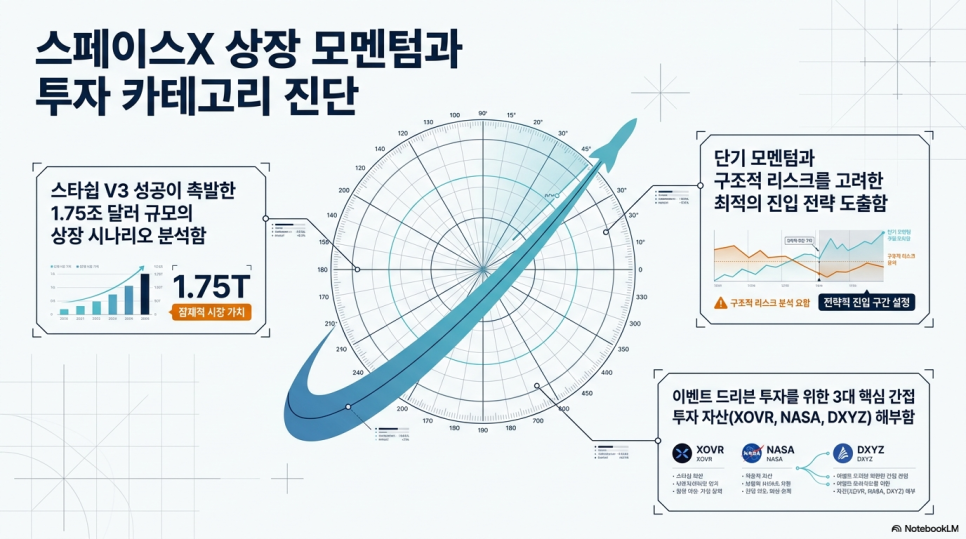
The recent launch of Starship V3 positively impacts SpaceX's listing process. However, it is difficult to view this success as perfect, and it is more appropriate to interpret that some key technical risks that the market was most concerned about before the IPO have been partly alleviated.
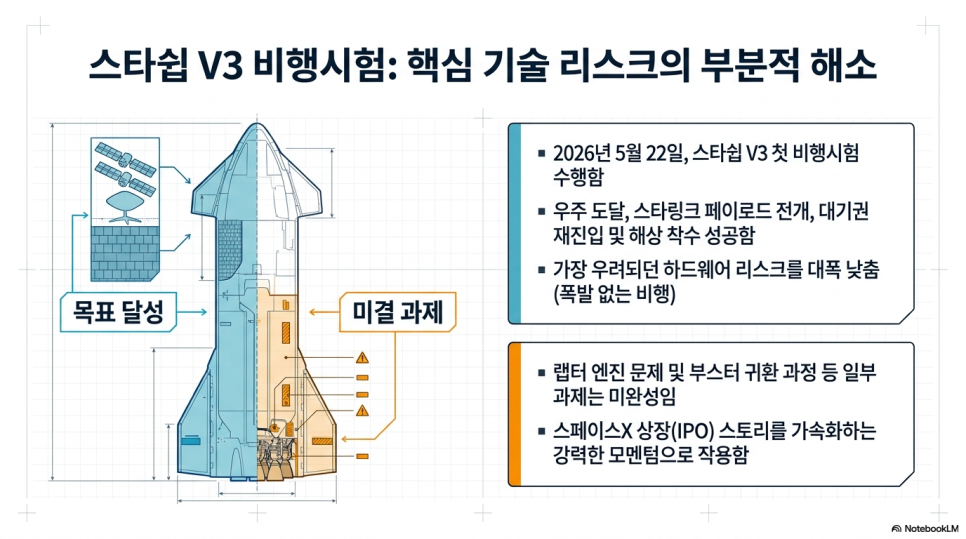
SpaceX conducted its 12th flight test of Starship at Starbase Texas on May 22, 2026. This test marked the first flight of Starship V3, achieving the successful deployment of Starlink-related payloads as the upper spacecraft reached space successfully.
Furthermore, the re-entry and ocean landing processes were completed without issues. However, concerns remain regarding the Raptor engine issues, the incomplete booster return process, and the omission of the orbital relight test. Therefore, this test can be evaluated as “achieving major goals to a considerable extent without an explosion.”
Related Articles

Expanding Expectations for IPO
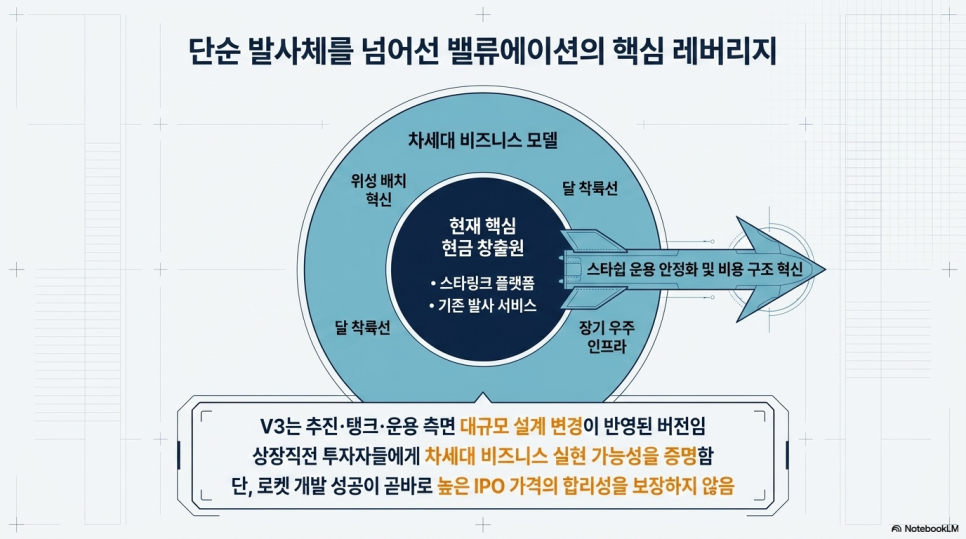
This Starship launch carries significant meaning. It is not merely a rocket launch but a key factor in determining SpaceX's valuation. Currently, SpaceX's main sources of revenue are Starlink and launch services, and once Starship stabilizes, there is potential for significant changes in cost structures for next-generation Starlink satellites, military and government satellites, lunar landers, and long-term space infrastructure development.
In particular, Starship V3 is reported to have undergone substantial design changes in propulsion, tanking, and operational aspects compared to previous models. The success of this launch could instill a positive perception among investors ahead of the IPO that “SpaceX is mitigating its most critical hardware risks.” Nonetheless, the success of rocket development does not guarantee the appropriateness of the IPO price, thus technological advancements and investment returns must be considered separately.
SpaceX IPO Schedule
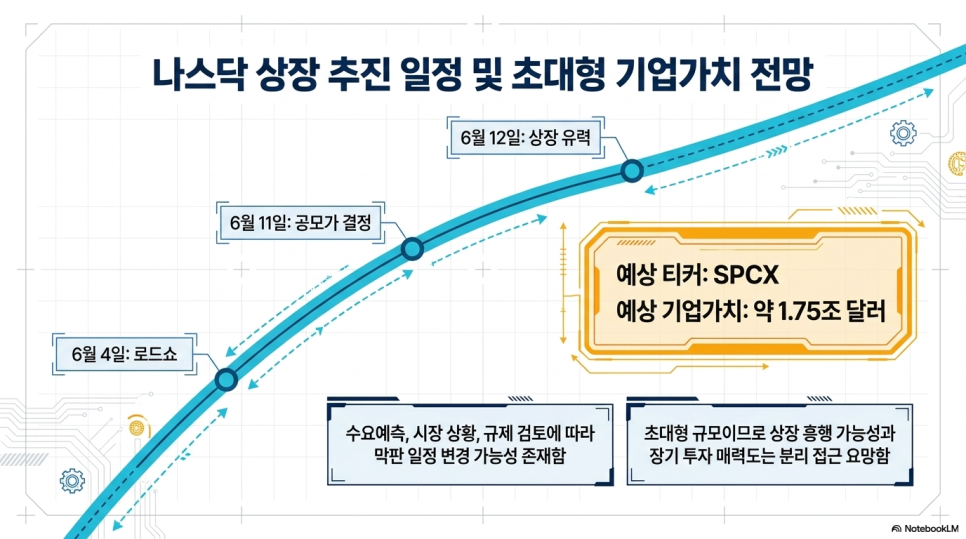
Currently, the schedule for SpaceX's IPO is becoming more concrete. According to reports from Reuters, SpaceX plans to list on NASDAQ under the ticker SPCX. The roadshow is set to begin on June 4, with pricing to be determined on June 11. The expected listing date is June 12. However, the IPO schedule may vary based on demand forecasts, market conditions, and regulatory reviews, so caution is needed.
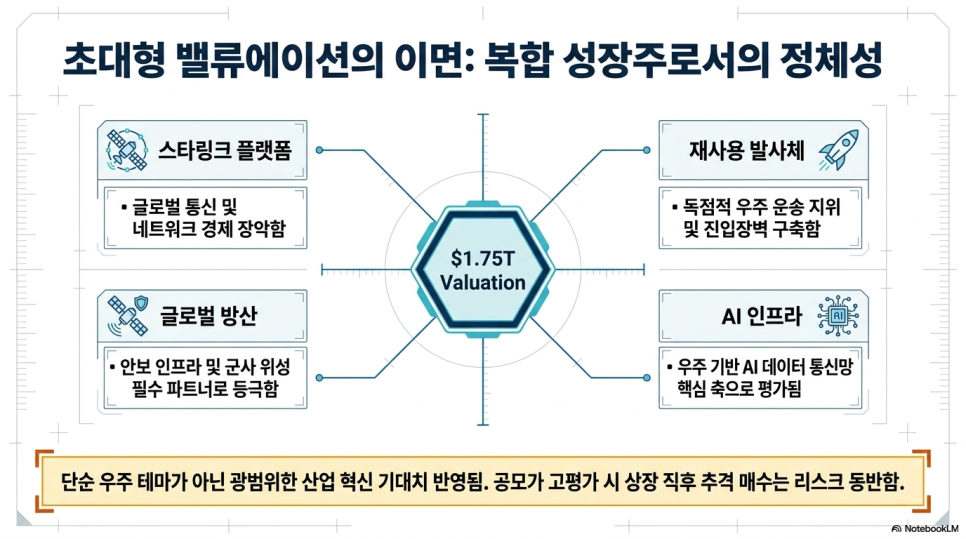
Currently, SpaceX's corporate value is expected to reach approximately $1.75 trillion. This valuation goes beyond a simple assessment of a space company, combining various prospects, including Starlink, reusable launch vehicles, defense, telecommunications, and AI infrastructure. Therefore, the likelihood of the company's success upon listing and its long-term investment attractiveness should be considered separately.
Investment Points for XOVR

XOVR is an ERShares Private-Public Crossover ETF composed of a mixture of publicly traded stocks and privately held assets. The biggest advantage of this ETF is its high exposure to SpaceX. According to the manager, XOVR adopts a strategy that combines listed innovative companies with some private companies to access the pre-IPO market. This structure offers various opportunities to investors.

XOVR can expect positive effects from the NAV revaluation if SpaceX progresses with a high valuation during its IPO. However, as it includes the evaluation of private SPVs, it has a structure that is somewhat more complex than a typical ETF. In the case of private assets, there may be discrepancies between the market trading price and the NAV, and liquidity issues also exist.
In conclusion, while XOVR strongly emphasizes direct investment in SpaceX, it is important to understand it as a crossover ETF that includes not just space investments but also AI, platforms, and high-growth tech stocks.
Characteristics of NASA ETF

The NASA referred to here is not the U.S. National Aeronautics and Space Administration but the ticker name for the Tema Space Innovators ETF, which is an active ETF focused on the space economy. According to the official explanation, NASA invests in companies related to space exploration, rocket and propulsion systems, satellite technology, and commercial space infrastructure, and it includes some pre-IPO companies.
The biggest advantage of this ETF is its clear investment story. While XOVR is a product that mixes SpaceX and AI-related stocks, NASA is a thematic ETF specialized in the space industry. If there is a perspective that SpaceX's listing will positively affect the entire space sector, NASA is likely to be a more suitable choice.
For those considering investments in the space industry, NASA could be an attractive option.
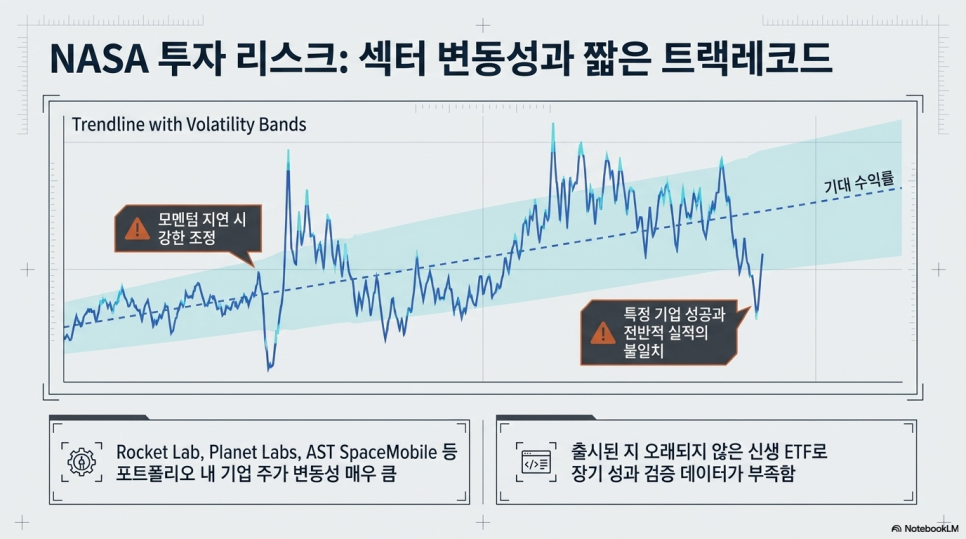
NASA-related stocks have not been on the market long enough to secure long-term performance data. Additionally, companies in the space theme like Rocket Lab, Planet Labs, AST SpaceMobile tend to be highly volatile, so if expectations for SpaceX's IPO diminish, the entire ETF may be affected. This should be taken into consideration.
Investment Risks of DXYZ

DXYZ is a publicly traded investment company in the form of a closed fund called Destiny Tech100. This product aims to invest in high-growth private technology companies, including SpaceX, OpenAI, Anthropic, xAI, Databricks, and Stripe. Due to these characteristics, it offers various opportunities to investors.

The biggest advantage of DXYZ lies in its name. The opportunity to indirectly invest in private unicorns that are difficult for individual investors to access is attractive. However, the simultaneous biggest disadvantage is the price. Unlike ETFs, closed funds do not have a market price convergence structure through setup and redemption. As demand increases, they can trade at prices much higher than the NAV, and conversely, if demand decreases, the price can fall significantly even if the underlying assets are solid.
Therefore, DXYZ should be continuously evaluated for its status as an expensive investment means with high-quality assets. For example, even if SpaceX's IPO is successful, if the market has already reflected an excessive premium, it may be difficult to achieve the expected returns.
Comparison of Three Products

Investors interested in SpaceX's IPO should take different approaches to the three products.
First, XOVR is an event-driven financial product that directly invests in SpaceX. If the valuation of the IPO is set high, the short-term investment opportunities are likely to be most pronounced.
Second, NASA is an ETF with an investment theme that covers the entire space industry. If funds flow into the space sector after SpaceX goes public, prices could rise along with satellite and launch vehicle-related firms like Rocket Lab and ASTS.
Lastly, DXYZ is a basket that includes private unicorn companies in AI, space, and deep tech. While the portfolio is attractive, due to the NAV premium and closed fund structure, it can be said to be the product with the highest speculative nature.
Summary of Investment Strategies

What should be noted at this point is not only whether SpaceX is an outstanding company. What is more important is the price range of investment. The success of Starship V3 certainly acts as a positive factor, but expectations for the IPO may already have been significantly reflected in the prices of XOVR, NASA, and DXYZ.
Therefore, depending on the timing of the investment, it would be more reasonable to check the IPO price range, final corporate value, initial trading trends, the NAV of XOVR, the supply and demand situation in the space industry for NASA, and whether the premium for DXYZ is decreasing, rather than simply buying solely based on expectations.
When SPCX, the parent company of SpaceX, goes public, the investment structure will become much simpler. Instead of ETFs or closed funds, it will become possible to purchase shares directly. However, large-scale IPOs are likely to have a significantly high pricing level, so blindly buying immediately after the listing requires caution.
Final Summary
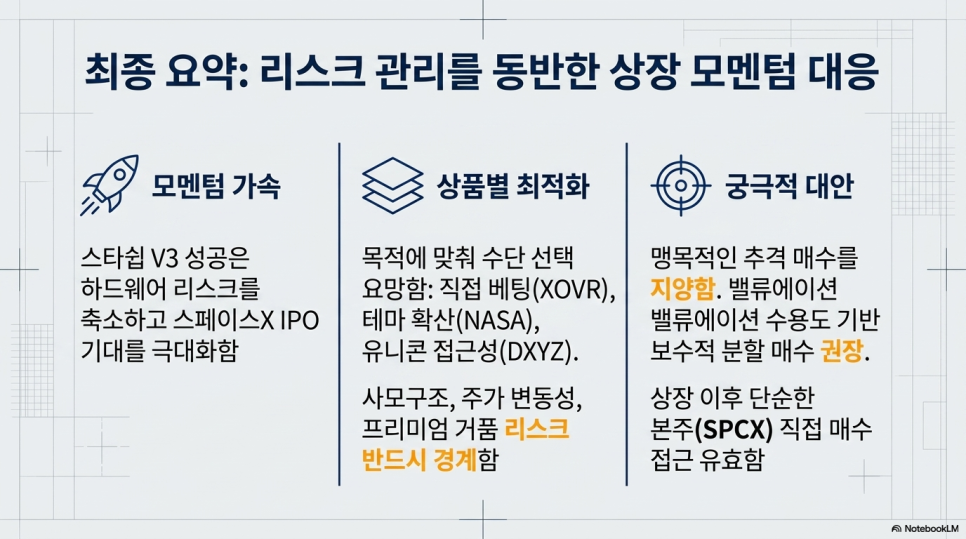
Recently, the successful launch of SpaceX's Starship V3 has further increased investor expectations for SpaceX's IPO. However, technical success does not automatically translate into investment returns, so caution is warranted. As SpaceX's IPO approaches, XOVR offers direct access, NASA possesses the potential for thematic expansion related to space, and DXYZ provides accessibility to private unicorns.
On the other hand, each product carries its own risks. XOVR has structural risks from its private asset ETF nature, NASA has volatility in space themes, and DXYZ bears high premium risks. Therefore, rather than focusing on the listing of SpaceX itself, it is important to comprehensively analyze the listing price, corporate valuation, supply and demand situation, and the structure of each financial product.
The long-term growth potential of the space industry is very attractive, but in the short term, market trends may exhibit a "buy on the news, sell on the news" characteristic. Therefore, given the current market conditions, it is more important to pay attention to diversification and risk management rather than relying solely on expectations.
#SpaceX, #SpaceX, #StarshipV3, #StarshipLaunch, #SpaceXListing, #SpaceXIPO, #SPCX, #Starlink, #SpaceIndustry, #SpaceETF, #XOVR, #NASAETF, #DXYZ, #DestinyTech100, #RocketLab, #ASTS, #PlanetLabs, #FireflyAerospace, #AerospaceStocks, #USStocks, #USIPO, #PreIPO, #PrivateInvestment, #GrowthStocks, #ThematicETF, #SpaceEconomy, #SatelliteCommunications, #ReusableRockets, #Starship, #InvestmentStrategies
Frequently Asked Questions (FAQ)
Q. What does the SpaceX Starship V3 launch mean for the IPO?
The success of Starship V3 is a positive sign of the alleviation of key hardware risks for SpaceX's IPO.
The successful launch of Starship V3 is significant as it indicates that SpaceX has partially alleviated the technical risks that were most concerning ahead of the IPO. Improved in thrust and design, Starship V3 has achieved many of its key objectives without an explosion, successfully deploying payloads into space. However, technical challenges such as the Raptor engine issue, booster return incompleteness, and the omission of the orbital relight remain. Thus, while this success provides a positive signal to IPO investors, it does not guarantee technical completeness.
Q. What is the schedule for SpaceX's IPO and expected dates?
SpaceX plans to list on NASDAQ in mid-June 2024, but the schedule is subject to change.
SpaceX is set to go public on NASDAQ under the ticker SPCX, with the roadshow starting on June 4 and the offering price expected to be decided on June 11. The listing date is anticipated to be June 12; however, the schedule may vary based on demand forecasts, market conditions, and regulatory reviews. Investors should be aware of this and monitor market trends and official announcements.
Q. What are the investment points and characteristics of the XOVR ETF?
XOVR is a pre-IPO and innovative company mixed ETF with high exposure to SpaceX.
XOVR is a crossover ETF composed of backed stocks and private assets, and its most significant attraction is the direct investment in SpaceX. It combines AI and innovative tech stocks with pre-IPO companies to offer various growth opportunities, expecting potential positive returns from NAV revaluation. However, it includes private assets, making it complex, and it may pose liquidity issues or discrepancies between market prices and NAV, so investors should be cautious when investing.
Q. What are the features and advantages of the NASA ETF?
NASA ETF is an active thematic ETF specialized in the space industry and possesses a distinct investment story.
The NASA ETF is oriented around the space economy rather than the National Aeronautics and Space Administration, investing in companies related to space exploration, rockets, satellite technologies, and commercial space infrastructure. Some pre-IPO companies are included, and benefits are expected as the flow of funds expands in the space sector due to SpaceX's listing. Its strength lies in being specialized in space compared to XOVR, but the high volatility of space theme stocks and lack of long performance records can be seen as weaknesses.
Q. What investment type and risks does the DXYZ fund possess?
DXYZ is a closed-end fund that includes private unicorns, which entails high premiums and price volatility.
Destiny Tech100 (DXYZ) is a closed-end publicly traded investment company aiming to invest in high-growth private companies in AI, space, and deep technology. It provides opportunities to invest indirectly in unicorn companies that are hard for individual investors to access, yet it brings about risks related to high premiums, and market prices can vary significantly from the NAV due to its closed-end fund characteristics. Thus, investors must carefully examine the overvaluation of the fund and its associated risks.
Q. How should investors distinguish between XOVR, NASA, and DXYZ when investing in relation to SpaceX's IPO?
XOVR is event-based direct investment, NASA is focused on thematic expansion in space, and DXYZ is a basket of private unicorns.
XOVR is more suited for direct investment in SpaceX and if the IPO price is set high, it presents ample short-term opportunities. NASA has a broader investment approach in the space industry, anticipating price increases for related companies like Rocket Lab and ASTS when funds increase in the space sector after SpaceX's listing. DXYZ encompasses private unicorns in AI, space, and deep tech, but it is the most speculative product due to its high premium and closed-end fund structure. Investors should understand the structures and risks associated with each product and consider diversification in their strategy.
Q. Does the success of SpaceX's Starship V3 directly correlate with investment returns?
The success of Starship V3 does not guarantee investment returns, and careful analysis is necessary.
While the success of Starship V3 alleviates some technical risks and increases IPO expectations, technological advancements do not automatically imply improved profitability. The market must differentiate between technological performance, corporate value, and investment returns, making it essential to analyze the price range for the IPO, initial trading conditions, the NAV of associated financial products, and supply and demand conditions. Thus, more attention should be paid to diversification and risk management rather than relying only on current expectations when investing.
