Table of Contents
Countdown to SpaceX IPO

As SpaceX's IPO approaches, global stock markets and domestic aerospace-related stocks are becoming vibrant. The market forecasts a high probability of SpaceX listing on Nasdaq on June 12.
Recently, SpaceX submitted an unofficial listing application to the U.S. Securities and Exchange Commission (SEC) and began preparations for the public offering's prospectus. Goldman Sachs is the main underwriter for this offering, with large investment banks such as Morgan Stanley, JPMorgan Chase, and Citigroup also participating.
This trend is generating considerable interest among investors, and if SpaceX's listing occurs, it is expected to have a positive impact on the stock market related to the aerospace industry.

This SpaceX IPO holds significance beyond just being a public offering of a space company. SpaceX operates in various fields, including rocket launch services, Starlink satellite communications, AI data infrastructure, and space transportation platforms.
Currently, the market estimates SpaceX's corporate value to be around $125 billion to $175 billion, or approximately 1,880 trillion to 2,600 trillion Korean Won. If the listing occurs, it is very likely to become one of the largest technology-related IPOs in American history.
Attention on Starship V3 First Flight
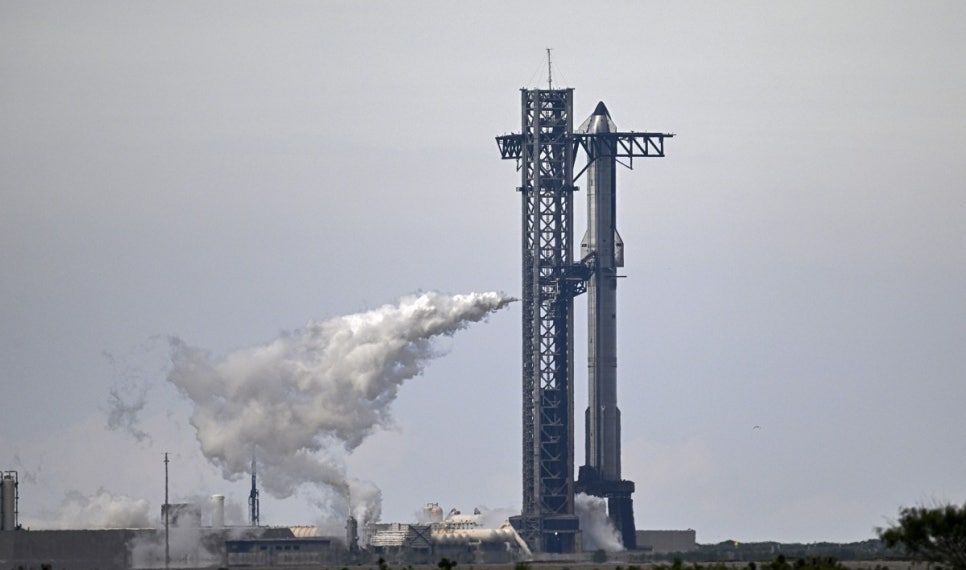
A significant event that heightens expectations for this IPO is the scheduled first test flight of the Starship V3 on the 22nd.
SpaceX plans to conduct an unmanned flight test of the next-generation spacecraft Starship V3. This Starship is drawing attention as the central platform for manned exploration of the Moon and Mars, the expansion of the Starlink satellite network, and the establishment of large-scale space data centers.

This V3 model has shown significant performance improvements compared to previous models.
The lightweight design and thrust enhancement of 33 Raptor engines are remarkable, and the fuel replenishment capability in space has also been enhanced. Furthermore, inter-stage docking and mobility have greatly improved, allowing for reduced launch costs, thanks to a fully reusable launch system. Along with this, large-scale launch support for Starlink has also been established.
There are high expectations in the market that the success of this test flight will serve as a crucial catalyst right before the IPO. Due to the nature of the space industry, technology capabilities directly impact a company's value.
How to Invest in SpaceX ETF
Currently, it is impossible for individual investors to purchase SpaceX shares directly, as SpaceX is a privately held company.
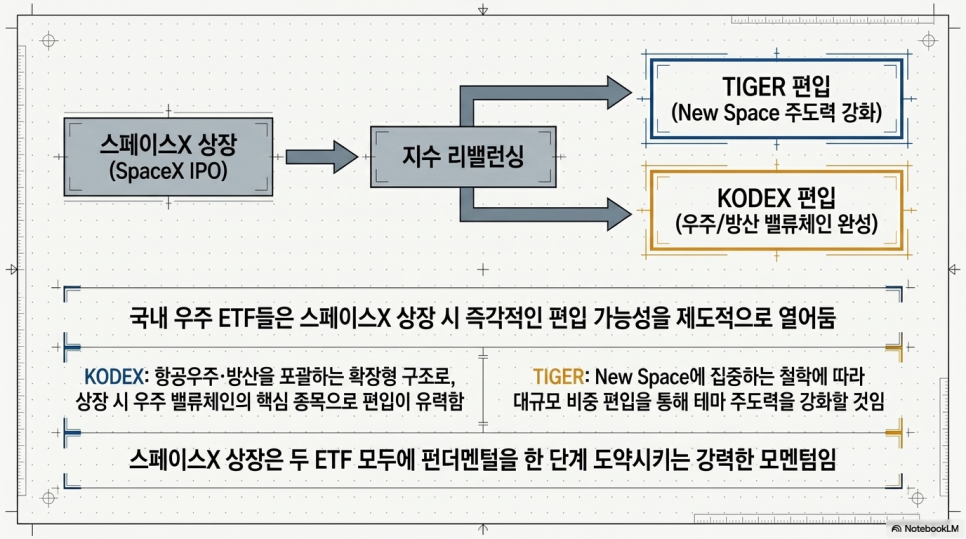
For this reason, investor interest has shifted towards aerospace ETFs. In particular, the TIGER American Space Tech ETF is receiving significant attention in Korea.
Over the past month, over 700 billion won have flowed into this ETF, recording a return of over 20%. This trend is likely to continue in the future.

Some major space ETFs that domestic investors are interested in include:
The first is a domestic aerospace ETF that focuses on U.S. space tech companies like Rocket Lab, ASTS, and Intuitive Machines.
The other ETF is the KODEX American Aerospace ETF, which is a diversified fund including various sectors encompassing defense, aerospace, and space infrastructure.
These ETFs reflect the growth potential of the space industry.

Let's take a look at the American ETFs related to SpaceX. Notably, the Baron First Principles ETF holds non-listed shares of SpaceX and xAI.
Additionally, the KraneShares Artificial Intelligence & Technology ETF is noteworthy as it invests in several unlisted AI companies alongside SpaceX.
However, it is important to consider that ETFs holding unlisted shares may show differences between the actual holdings and net asset value (NAV), so this point must be taken into account when investing.
Domestic SpaceX Related Stocks

In the domestic stock market, stocks related to aerospace are actively traded due to rising expectations for SpaceX.
There are several notable stocks, including Mirae Asset Venture Investment, which emphasizes its investment history in SpaceX, and Sphere, which is gaining attention through long-term supply contracts. Additionally, Kenko Aerospace is benefiting from expectations in the aerospace materials and components sector, while HVEM is noted for its expectations regarding metal materials in defense and space. SensorView is garnering interest for its satellite communication and high-frequency connection technologies.
Recently, some stocks have risen by more than 20% to 30% within a day, but there are also calls to clearly distinguish between expectations for mere theme stocks and actual performance.
Further Upside vs. Event Expiry
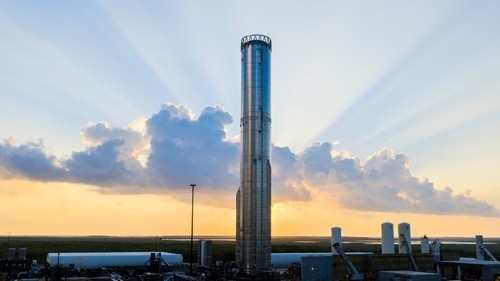
The current market trend is very positive. SpaceX's IPO is being viewed not merely as a corporate disclosure, but as a large-scale event attracting investor attention across the entire space industry. There is growing excitement about various connections such as Starlink, AI data centers, space internet, and Mars exploration projects, leading to expectations of a "space version of NVIDIA".
However, from a short-term perspective, caution is warranted against significant volatility. Currently, space-related stocks have often surged sharply due to listing expectations. When the listing schedule is confirmed or results from the Starship test flight are announced, there is a possibility of massive sell-offs for profit realization. It is crucial to consider these points when making investment decisions.
There are several important factors to consider regarding domestic SpaceX-related stocks.
First, it is essential to verify the actual revenue relationship with SpaceX. Additionally, the scale and sustainability of contracts should also be key points of consideration.
It is necessary to assess whether they are merely riding on a theme and if the valuations are burdensome compared to performance. Lastly, the possibility of the expiry of catalysts post-IPO should also be kept in mind.

SpaceX's IPO is expected to be a pivotal moment in re-evaluating the growth potential of the space industry.
However, in the short term, a flow of "increased expectations → event occurrences → profit realizations" may occur, necessitating good management of abrupt price fluctuations.
#SpaceX, #SpaceXListing, #SpaceXIPO, #StarshipV3, #StarshipLaunch, #ElonMusk, #AerospaceETF, #TIGERAmericanSpaceTech, #KODEXAmericanAerospace, #SpaceRelatedStocks, #SpaceXRelatedStocks, #MiraeAssetVentureInvestment, #KenkoAerospace, #Sphere, #SensorView, #SpaceIndustry, #Starlink, #NasdaqListing, #AmericanIPO, #SpaceThemeStocks, #SpaceETF, #AIDataCenters, #MuskRelatedStocks, #NewSpace, #RocketLab, #ASTS, #SatelliteCommunication, #SpaceInternet, #ThemeStocks, #VolatilityConcern
Frequently Asked Questions (FAQ)
Q. What is the schedule for SpaceX's IPO?
SpaceX is expected to be listed on Nasdaq on June 12.
SpaceX recently submitted an unofficial listing application to the U.S. Securities and Exchange Commission (SEC) and has started preparing the disclosure of the investment prospectus. Goldman Sachs has been selected as the main underwriter, and major investment banks such as Morgan Stanley and JPMorgan are also participating. The actual listing is anticipated for June 12, and this IPO is expected to be one of the largest technology-related IPOs in American history.
Q. What is the significance of the first flight of Starship V3?
The first test flight of Starship V3 serves as a crucial technological catalyst before the IPO.
Starship V3 is SpaceX's next-generation spacecraft, which is essential for manned exploration on the Moon and Mars, the expansion of the Starlink satellites, and the establishment of space data centers. This model features 33 more powerful Raptor engines, lightweight design, improved fuel replenishment capabilities, and enhanced docking and mobility. The success of this test flight will directly have a positive impact on the company's value and heighten IPO expectations.
Q. Can individual investors directly invest in SpaceX?
Currently, SpaceX is a private company, so individual investors cannot buy shares directly.
SpaceX has not yet gone public, and therefore individual investors cannot directly purchase shares. For this reason, investors are focusing on aerospace ETFs, with the TIGER American Space Tech ETF being representative in Korea. This ETF has recently seen inflows of over 700 billion won and is recording returns of over 20%, attracting significant interest.
Q. What are the ways to invest in SpaceX-related stocks in Korea?
In Korea, you can invest indirectly through aerospace ETFs and some related stocks.
Representative domestic aerospace ETFs include the TIGER American Space Tech ETF and KODEX American Aerospace ETF. These ETFs include space tech companies like Rocket Lab and ASTS, as well as stocks related to defense, aerospace, and space infrastructure. There are also actively traded related stocks such as Mirae Asset Venture Investment, Sphere, and Kenko Aerospace, but it is crucial to carefully verify their performance and contract relations.
Q. What is the outlook for the stock market after SpaceX's IPO?
Stock prices in the space industry have surged due to IPO expectations, but short-term volatility can be significant.
SpaceX's IPO is greatly drawing investor interest in the space industry, causing related stocks and ETFs to rise. However, there is a possibility that profit-taking sell-offs may occur when the listing is confirmed or results from the Starship test flight are announced, necessitating caution against sudden price fluctuations. Investors should plan a prudent investment strategy while accounting for short-term volatility.
