Table of Contents
Homeplus Large-Scale Business Suspension

Shocking news has come to light in the domestic large supermarket industry. Homeplus, which is currently undergoing corporate recovery procedures, has decided to temporarily suspend operations at 37 of its 104 stores nationwide.
This decision is interpreted as a large-scale restructuring directly linked to the survival of Homeplus, going beyond merely consolidating some of its stores. This change has drawn significant attention from many in the industry.
From May 10 to July 3, 2026, Homeplus plans to suspend operations at the less profitable stores for about two months and focus on the remaining 67 core stores, adopting a “selection and concentration” strategy. This move is expected to be a crucial turning point in determining Homeplus's future operational direction.
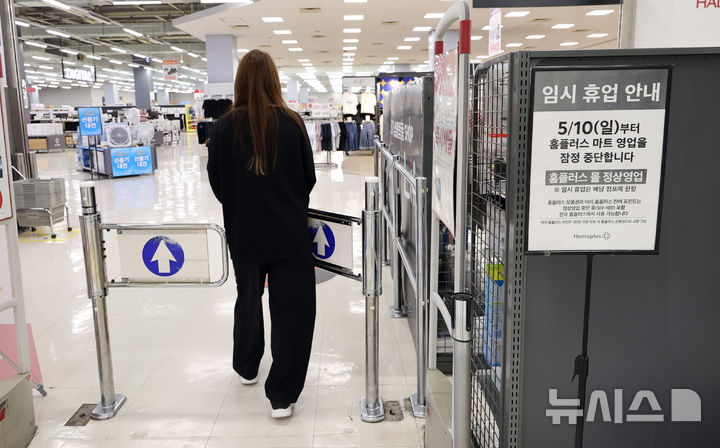
Recently, Homeplus agreed to sell its supermarket division, Homeplus Express, to NS Shopping, but it will likely take some time before the proceeds from the sale are received. Additionally, some stores are facing severe challenges with product supply and empty shelves, leading to a massive drop in sales of over 50% compared to last year.
In light of these difficulties, Homeplus has decided to temporarily close 37 stores to concentrate limited product quantities and operating funds on its core stores. This can be seen as an extreme measure during a crisis.
Analysis of Reasons for Homeplus Closures

The recent restructuring of Homeplus originated from a serious liquidity crisis. Currently, the company has exhausted most of the operating funds (DIP) urgently supported by MBK Partners. Moreover, a substantial portion of the funds secured from real estate sales has been used to repay loans to Meritz Financial, leading to a shortage of actual operating capital.
Homeplus is currently grappling with several problems at once. There is a disruption in product supply, and customer attrition is accelerating. Under these circumstances, sales are rapidly declining, and the liquidity shortage issue is serious. Additionally, pressure is mounting for the recovery plan, and competition in the large supermarket market is intensifying.

The profitability of offline large supermarkets is rapidly deteriorating due to the growth of online retailers such as Coupang, Curly, and Naver Shopping, as well as fierce competition between E-Mart and Lotte Mart.
This situation enhances the necessity for restructuring at Homeplus.
After a second structural innovation, Homeplus is reportedly planning to enhance profitability in its large supermarket, online, and head office sectors before considering the possibility of selling through M&A.
List of Homeplus Store Closures
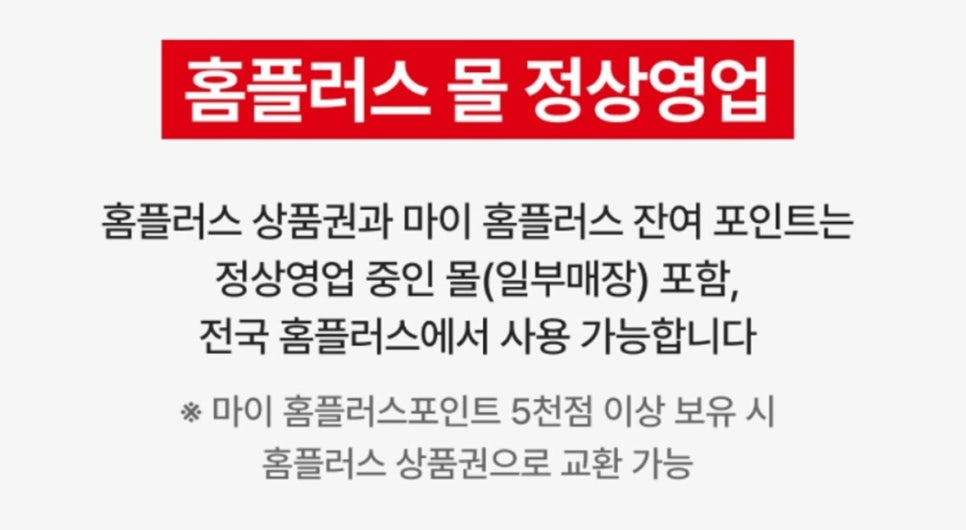
The total of 37 Homeplus stores that will temporarily close spans various regions.
First, in the Seoul area, 4 stores will be closed: Myeonmok Store, Shinnae Store, Jamsil Store, and Junggye Store.
In the Gyeonggi area, 8 stores will be affected: Gyeonggi Hanam Store, Goyang Terminal Store, Namyangju Jinjeop Store, Dong Suwon Store, Bundang Ori Store, Bucheon Sosa Store, KINTEX Store, and Pocheon Songwoo Store.
Incheon will also see 5 stores temporarily close: Gajwa Store, Incheon Nonhyeon Store, Incheon Songdo Store, Incheon Sungui Store, and Incheon Yeonsu Store.
In Busan and Gyeongnam, 10 stores will close: Gimhae Store, Masan Store, Miryang Store, Busan Banyeo Store, Samcheongpo Store, West Busan Store, Centum City Store, Yeongdo Store, Jinju Store, and Jinhae Store.
In Daegu and Gyeongbuk, 5 stores will be affected: Gyeongsan Store, Gumi Store, Sangin Store, Jukdo Store, and Pohang Store.
Finally, 5 stores will also be closed in Chungcheong and Jeolla regions: Gyeryong Store, Gimje Store, Mokpo Store, Suncheon Pungdeok Store, and Iksan Store. Notably, the Busan and Gyeongnam regions include major stores such as Centum City Store and Yeongdo Store, which are expected to significantly shock local consumers.
Closure Dates and Operating Methods
One of the biggest concerns among consumers is whether the stores will actually shut down.
Homeplus has stated that it will halt operations temporarily, not permanently, from May 10 to July 3, 2026. However, there are suggestions in the industry that some stores might be targeted for restructuring depending on the recovery plan results.
This operational suspension is limited to the headquarters of the large supermarket, while some tenant businesses and commercial facilities will continue to operate. Observing how changes will unfold in this context is essential.
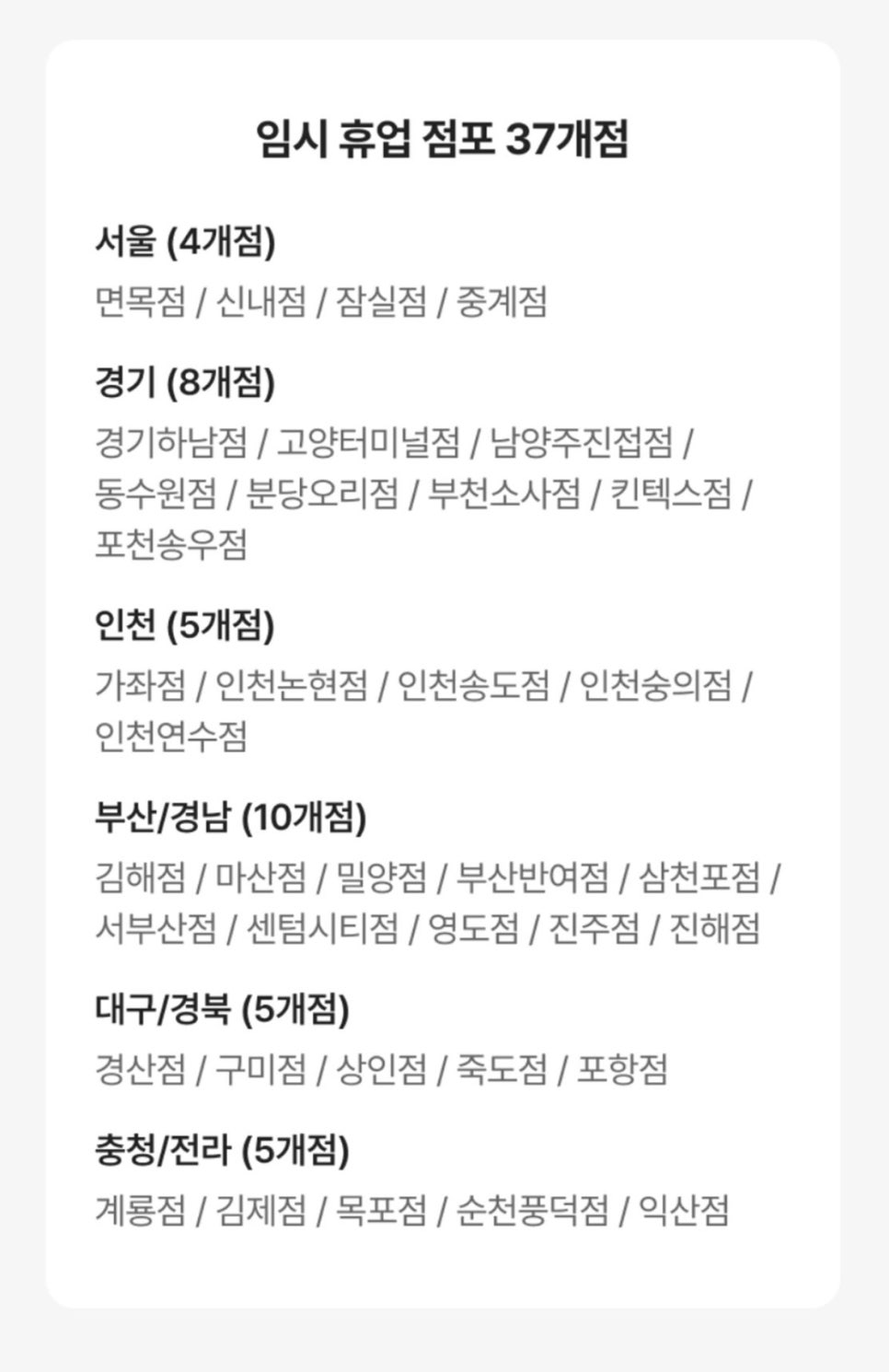
Homeplus will allow the use of gift certificates and My Homeplus points; some Homeplus malls will also continue operations. Additionally, some stores will remain operational in a limited capacity.
Employees will receive 70% of their average wages as temporary closure compensation, and those who wish to will be relocated to normally operating stores.
Future Outlook for Homeplus
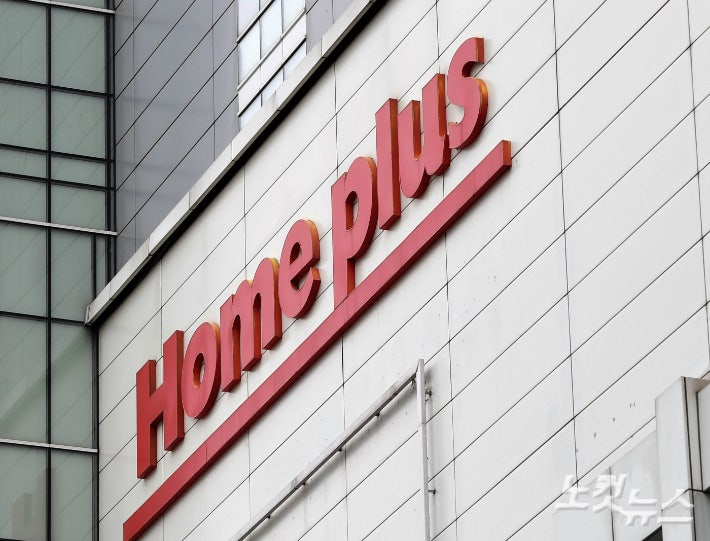
Recently, the situation of Homeplus has been evaluated as an example that shows not just a simple corporate restructuring issue but the changing dynamics of the domestic offline retail industry.
The large supermarket industry has been experiencing growth slowdowns for an extended period, and recently, profitability has significantly decreased due to changes in consumer behavior and the rapid expansion of online retail.
Particularly, Homeplus faces increasing difficulties interlinked with its large supermarket-centered business model and high financial costs. This trend is likely to continue in the future.

Several key factors to watch in the future include the following:
First, the possibility of additional support from Meritz Financial is critical.
Moreover, the passage of the recovery plan and the influx of proceeds from the Express sale will also significantly impact. Furthermore, the pursuit of M&A for remaining business units and the recovery of consumer trust are expected to be key variables.
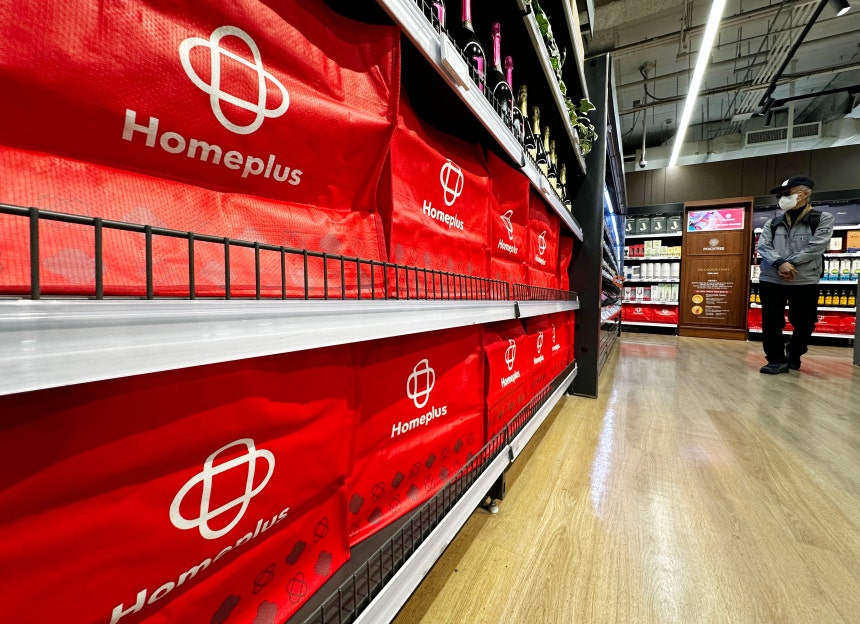
If the recovery procedures do not progress smoothly, there are concerns that additional store restructuring will be inevitable.
However, if Homeplus can regain profitability centered on its core stores and successfully integrate online and offline businesses, there may be some possibilities for normalization. The announced list of closures and temporary suspensions at Homeplus is expected to have a significant impact on the entire domestic retail industry.
#Homeplus, #HomeplusStoreClosures, #HomeplusClosureList, #HomeplusList, #HomeplusClosureDate, #HomeplusBusinessSuspension, #Homeplus37Stores, #HomeplusRestructuring, #HomeplusRecoveryProcedure, #JamsilHomeplus, #CentumCityHomeplus, #YeongdoHomeplus, #BusanBanyeoHomeplus, #HomeplusTemporaryClosure, #CrisisForLargeSupermarkets, #MartClosures, #HomeplusSale, #MBKPartners, #MeritzFinancial, #HomeplusExpress, #CrisisInRetailIndustry, #OfflineMart, #LargeSupermarketClosures, #HomeplusPoints, #HomeplusGiftCertificates, #HomeplusBusan, #HomeplusCentumCityStore, #HomeplusBusinessHours, #HomeplusNews, #DomesticRetailIndustry
Frequently Asked Questions (FAQ)
Q. Why is Homeplus suspending operations at 37 stores nationwide?
Homeplus is temporarily closing 37 stores to concentrate its core store strategy due to liquidity issues and a drop in sales.
Homeplus is currently in a serious liquidity crisis, facing difficulties such as product supply issues and sales dropping more than 50% compared to last year at some stores. Accordingly, it has decided to temporarily suspend operations at 37 of its 104 stores from May 10, 2026, for about two months to focus limited resources and product volumes on its core stores. This measure is regarded as an unavoidable choice for the survival of the company and long-term financial soundness.
Q. Where are the Homeplus stores that are temporarily closing located?
The closed stores are distributed across 4 in Seoul, 8 in Gyeonggi, 5 in Incheon, 10 in Busan and Gyeongnam, 5 in Daegu and Gyeongbuk, and 5 in Chungcheong and Jeolla.
In Seoul, the stores affected include Myeonmok Store, Shinnae Store, Jamsil Store, and Junggye Store. In Gyeonggi, 8 stores are affected: Gyeonggi Hanam Store, Goyang Terminal Store, Namyangju Jinjeop Store, Dong Suwon Store, Bundang Ori Store, Bucheon Sosa Store, KINTEX Store, and Pocheon Songwoo Store. In Incheon, 5 stores will temporarily close, including Gajwa Store. In Busan and Gyeongnam, the major stores closing include Centum City Store and Yeongdo Store along with 10 others. Additionally, 5 stores will close in Daegu and Gyeongbuk and 5 stores in Chungcheong and Jeolla regions, which is expected to greatly influence local consumers.
Q. Is the business suspension a permanent closure?
No, the business suspension is a temporary closure from May 10 to July 3, 2026, and is distinct from a permanent closure.
Homeplus has clarified that this measure is an 'temporary closure,' which is limited to the headquarters of the large supermarket. Some tenant businesses and commercial facilities will continue their operations. However, depending on the results of the recovery plan, some stores might still face restructuring in the future, suggesting that careful observation of the situation going forward is important.
Q. What will happen to the employees during the suspension and how will they be compensated?
Employees on hiatus will receive 70% of their average wages as compensation and will be relocated to normal stores if they wish.
Due to this temporary closure measure, affected employees will receive compensation equivalent to approximately 70% of their average wages. Additionally, there are plans for reallocation to normally operating stores for those employees who wish to work, providing some level of job security support.
Q. What is the future outlook and restructuring plans for Homeplus?
Strengthening profitability in core stores will be followed by M&A initiatives, and the approval of the recovery plan will be key variables moving forward.
Homeplus is planning a second structural innovation amid the slowdown in growth in the large supermarket industry and intensifying competition in online retail. Initially, it aims to improve profitability in core stores, headquarters, and online sectors, and is considering M&A initiatives for sales. Moreover, additional financial support, the approval of the recovery plan, and restoring consumer trust are expected to be crucial factors for future management normalization. If the recovery process does not go smoothly, the potential for further store restructuring cannot be ruled out.
