Table of Contents
Geumyang Delisting Decision
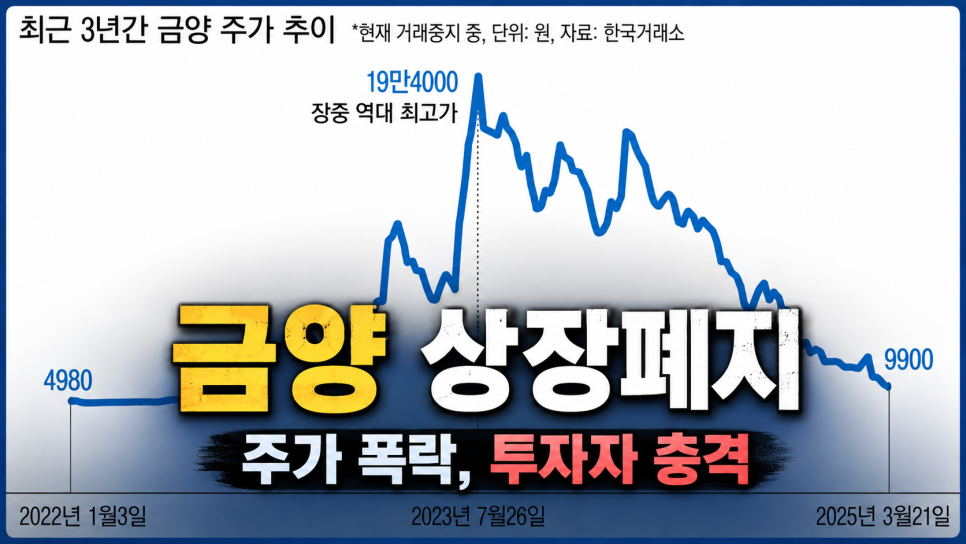
Geumyang, a leading secondary battery-related company in Busan, has inevitably begun the delisting process. Having once been at the center of the domestic secondary battery boom, this decision has delivered a significant shock to the market.
The Korea Exchange held a listing announcement committee on May 20 and confirmed the delisting of Geumyang's stock. The main reason for this decision is that Geumyang received 'opinion rejections' for two consecutive years in the external audits for the fiscal years 2024 and 2025. In the case of KOSPI-listed companies, receiving an audit opinion rejection formally triggers the grounds for delisting.

The external auditor expressed serious concerns about Geumyang's financial situation. Last year, Geumyang recorded operating losses of over 40 billion won and net losses exceeding 50 billion won, signifying a severe deficit. Moreover, it has been confirmed that current liabilities are more than 600 billion won greater than current assets.
Notably, the audit report included a warning stating, “There is substantial doubt about the entity's ability to continue as a going concern.” This is one of the most seriously interpreted contents in listed company audit reports, further highlighting the uncertainty regarding Geumyang's future.
Battery Theme Stock Frenzy
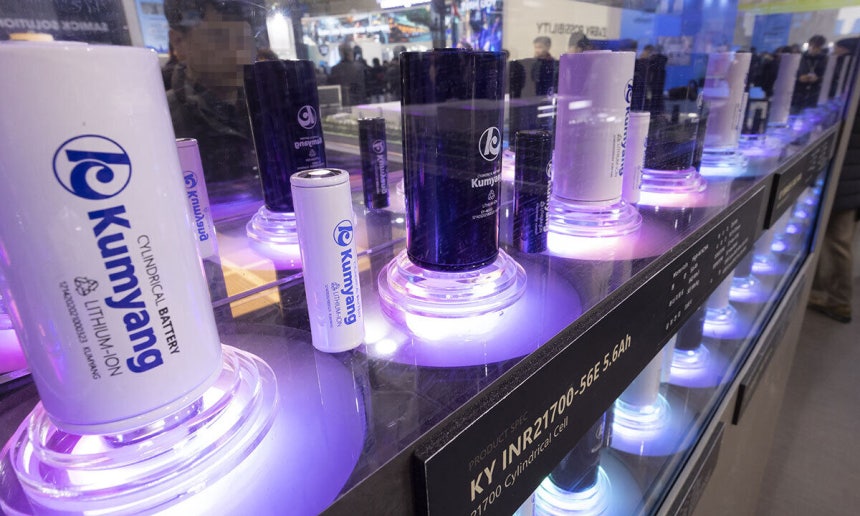
Geumyang began as a manufacturer of foaming agents but decided to officially enter the secondary battery field in 2022 through the development of cylindrical batteries. This attracted significant attention in the market.
At the time, the domestic stock market was experiencing a rapid rise of secondary battery-related stocks, led by EcoPro, Geumyang, and POSCO group stocks. Geumyang particularly established itself as a high-beta secondary battery stock, recording a noticeable upward trend in a short period of time.
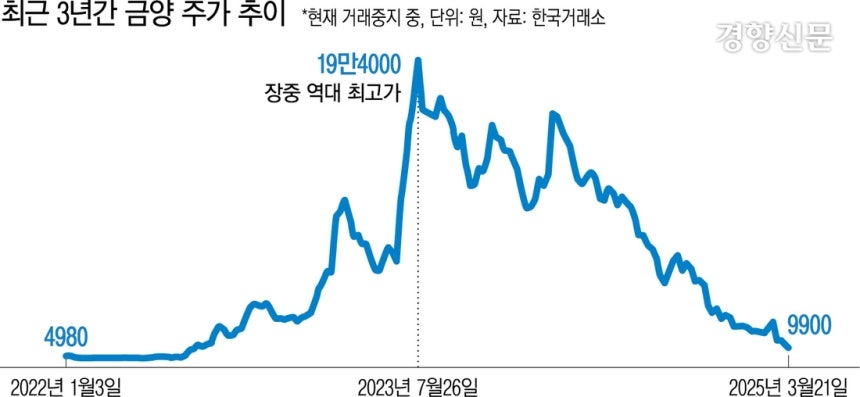
In 2022, the stock price was only 5,000 won, but a year later, it rose approximately 3,000%. The market capitalization also surged from 200 billion won to trillions of won.
However, the reality of the battery business fell short of expectations, leading to a rapid change in circumstances. Contrary to investor expectations, performance improvements did not occur, and large-scale investment plans and fundraising schedules continued to be delayed.
As a result, Geumyang's stock price has fallen by more than 95% from its peak.
Gijang Plant and Financial Crisis
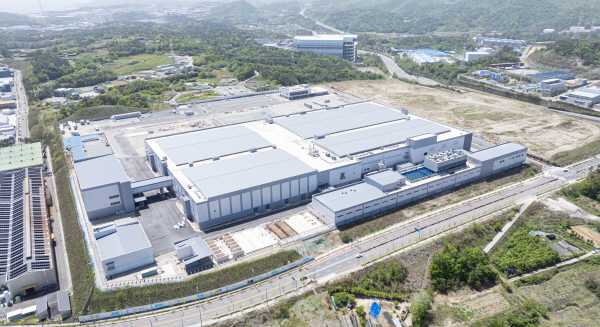
The secondary battery plant located in Gijang-gun, Busan, occupies a pivotal position in Geumyang's growth story. The local community has high hopes for the construction of a large-scale battery production base, but recent circumstances are unfavorable.
Geumyang attempted to attract an investment of about 405 billion won from a Saudi investor, but this timeline has been postponed eight times. There are concerns that this has significantly reduced market trust in the company's ability to secure funding.
Additionally, problems with unpaid construction costs have arisen, worsening the situation. Consequently, a forced auction of the Gijang plant site has been decided, further clouding future prospects.
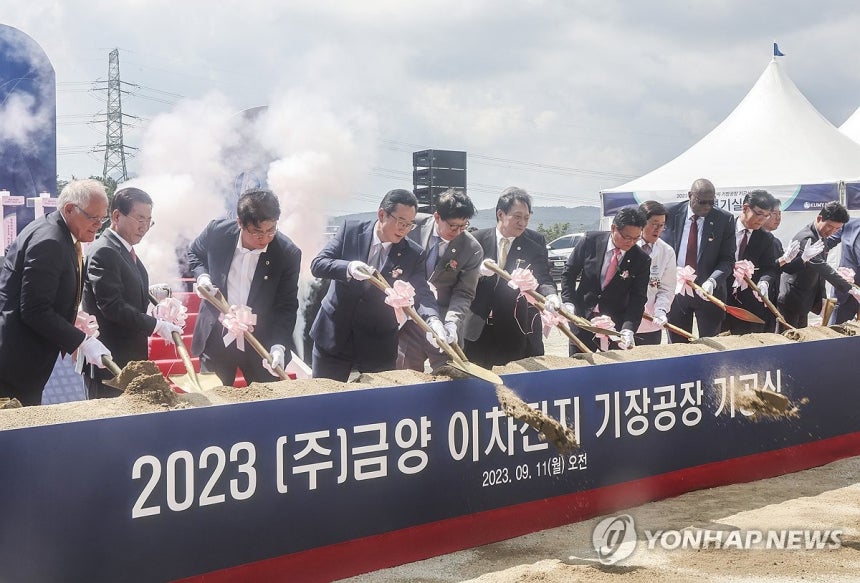
Currently identified major risks include the following.
The construction costs for the battery plant in Gijang, Busan, have not been paid, and a forced auction of the plant site has begun. Additionally, Busan Bank has filed a lawsuit demanding the return of a loan of 135.6 billion won. Due to the repeatedly postponed schedule for large-scale capital increases, concerns about the company's sustainability are growing.
Given that there were expectations in the Busan region for Geumyang to emerge as a central player in the future battery industry ecosystem, this situation is generating a disappointing atmosphere.
Trading and Shareholder Damages
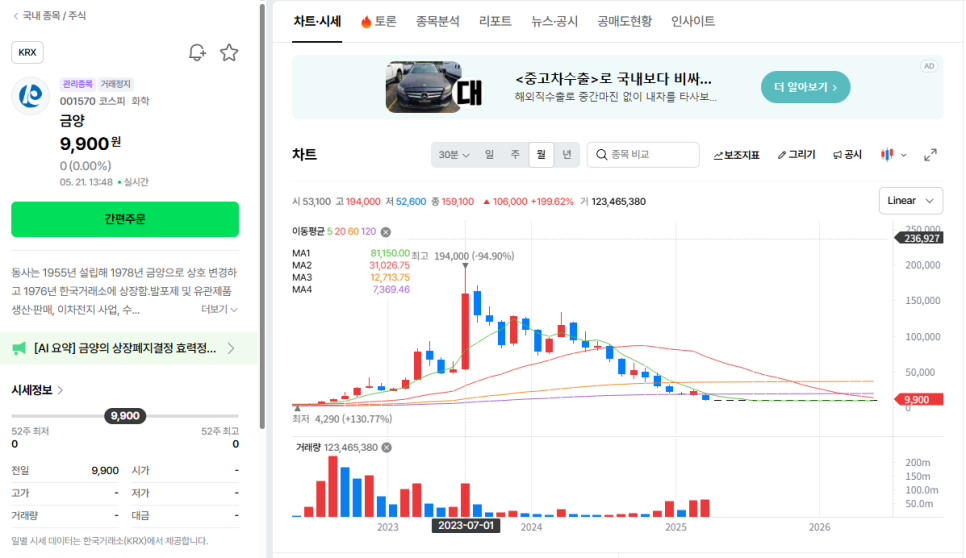
The exchange plans to conduct trading for about 7 trading days following the delisting notice. During this period, the stock price is highly likely to experience sharp volatility, requiring attention.
Even after the trading period ends, the stock will not disappear completely and will convert into unlisted shares that can be traded over-the-counter. However, in this case, trading liquidity is significantly reduced, making it effectively difficult to cash out.
Especially, if it leads to court management or rehabilitation proceedings, there is a high risk of significant dilution of existing shareholders' value.
For example, through a capital decrease without compensation, the value of existing shares can be reduced, or during the process of conversion, a large number of new shares may be issued. This may lead to a rapid decrease in the ownership percentages of small shareholders.
Currently, it is reported that about 230,000 minor shareholders in Geumyang are expected to face substantial losses. Thorough analysis and caution regarding this situation are required.
Lessons from the Geumyang Incident
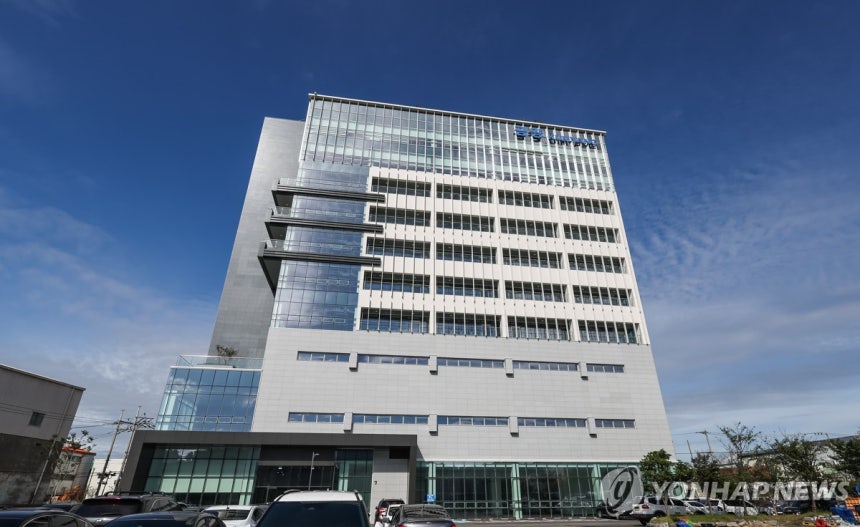
The recent Geumyang incident has once again revealed the inherent risks associated with theme stock investments in the Korean stock market.
It particularly suggests that if excessively inflated expectations around the guise of a future industry are not based on actual performance and financial status, significant volatility may occur.
The secondary battery industry possesses long-term growth potential; however, several critical factors must be checked when investing.
First, it is essential to confirm whether actual sales are occurring, and stable cash flow is also necessary. Audit opinions need to be positive, and the ability to secure funding is important. Lastly, it must be examined whether plant investments are realistically progressing.
Recently, the domestic stock market has highlighted various future industry themes such as AI, robotics, aerospace, and quantum technology. In this context, it is becoming increasingly important to consider not just simple expectations but also the actual financial status and business progress of companies.
#Geumyang, #GeumyangDelisting, #GeumyangStockPrice, #GeumyangTrading, #BusanBatteryCompany, #SecondaryBatteryRelatedStocks, #SecondaryBatteryThemeStocks, #GeumyangGijangPlant, #BusanGijang, #KOSPIDelisting, #AuditOpinionRejection, #Trading, #MinorShareholderDamages, #StockInvestment, #BatteryStocks, #ThemeStockRisks, #UnlistedStocks, #CapitalIncrease, #ForcedAuction, #BusanBank, #SecondaryBatteryStocks, #StockMarket, #StockIssues, #KoreaExchange, #BatteryIndustry, #DomesticMarket, #StockRisks, #FinancialCrisis, #RehabilitationProcess, #BusanEconomy
Frequently Asked Questions (FAQ)
Q. What is the reason for Geumyang's delisting?
Geumyang was delisted due to receiving opinion rejections in the external audit for two consecutive years.
The Korea Exchange confirmed the delisting on May 20 after Geumyang received consecutive 'opinion rejections' in the external audits for the fiscal years 2024 and 2025. In the case of KOSPI-listed companies, receiving an audit opinion rejection leads to grounds for delisting. This decision reflects serious concerns about Geumyang's financial condition.
Q. What are the serious issues with Geumyang's financial status?
Geumyang recorded operating losses exceeding 40 billion won and current liabilities exceeding current assets by over 600 billion won.
Geumyang is currently operating at a loss, reporting over 40 billion won in operating loss and over 50 billion won in net loss last year. With current liabilities exceeding current assets by more than 600 billion won, its financial health is extremely vulnerable. The audit report included a warning statement regarding significant doubts about the company's ability to continue as a going concern, indicating substantial investment risk.
Q. How has Geumyang's stock price changed?
The stock price increased from 5,000 won in 2022 to about 3,000% a year later, but subsequently plummeted by more than 95%.
Geumyang saw its share price rise from just over 5,000 won in 2022 to a staggering increase of about 3,000%, which spiked its market capitalization to trillions of won within a year. However, due to underperformance in battery business results and delays in significant investments and funding, stock prices have now plummeted by over 95% from the peak, resulting in significant losses for investors.
Q. What issues are associated with the Gijang plant?
There are ongoing issues regarding unpaid construction costs and the forced auction of the plant site.
Geumyang is constructing a secondary battery plant in Gijang, Busan, and attempts to attract investment from a Saudi investor have been postponed nine times. Unpaid construction costs have resulted in a forced auction of the plant site, severely impacting project progress and corporate sustainability.
Q. What is the situation regarding trading and minor shareholder damages for Geumyang?
During the trading period, stock price volatility is high, and afterward, shares will trade as unlisted, drastically reducing liquidity.
The exchange will conduct trading for about 7 trading days following the delisting notice, during which stock prices may fluctuate significantly. After this trading period, the stock will convert into an unlisted form traded over the counter; however, liquidity will be so low that recovering investments could become very challenging. In the event of court management or rehabilitation proceedings, there is a high risk of equity value dilution for minor shareholders due to potential capital reductions or conversion processes. Approximately 230,000 individual investors are expected to suffer losses.
Q. What lessons does the Geumyang incident provide for investors?
Investors should closely assess the actual financial conditions and business progress rather than excessive expectations.
The Geumyang incident illustrates the necessity of verifying financial soundness and performance when investing in theme stocks. Believing solely in long-term growth potential without careful examination can lead to significant losses. Important factors such as stable cash flow, positive audit opinions, and realistic funding capabilities need to be assessed.
