Table of Contents
US Space ETF Investment Strategies

Recently, New Space companies such as Rocket Lab, Redwire, AST SpaceMobile, and Planet Labs have shown remarkable stock price increases in the US stock market. This trend is further enhancing investor interest in space industry ETFs.

Recently, there has been growing interest among domestic investors in the TIGER US Space Tech and KODEX US Aerospace ETFs.
While these two ETFs share the common goal of investing in the growth of the US space industry, the actual components reveal significant differences in their nature. Rather than simply judging them as similar space-related ETFs, it's essential to note that each product has distinctly different investment philosophies.
Therefore, the two ETFs have different characteristics and strategies, making it important for investors to conduct a thorough comparison before making informed decisions.

A noteworthy issue these days is the anticipation surrounding SpaceX's IPO schedule.
Additionally, there is increasing interest in long-term investment strategies for the US space industry utilizing pension savings and IRP accounts alongside the possibility of future inclusion in ETFs.



Characteristics of TIGER Space Tech

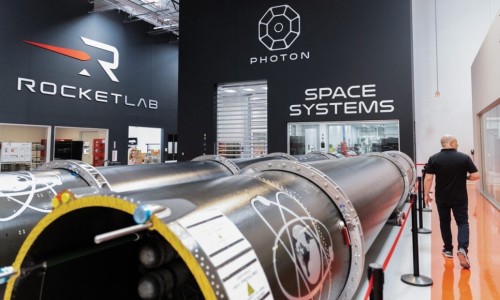
TIGER US Space Tech is a high-beta ETF primarily investing in companies with high growth potential in the US New Space sector. Key holdings include Rocket Lab, Intuitive Machines, Redwire, AST SpaceMobile, and Planet Labs.
The most significant feature is its extreme concentration.
| Rank | Ticker | Company Name | Weight |
| 1 | RKLB | Rocket Lab Corp | 30.54% |
| 2 | LUNR | Intuitive Machines Inc | 17.41% |
| 3 | RDW | Redwire Corp | 14.53% |
| 4 | ASTS | AST SpaceMobile Inc | 10.10% |
| 5 | PL | Planet Labs PBC | 7.27% |
| 6 | GSAT | Globalstar Inc | 6.43% |
| 7 | SATS | EchoStar Corp | 5.65% |
| 8 | FLY | Firefly Aerospace Inc | 3.11% |
| 9 | VOYG | Voyager Technologies Inc | 2.84% |
| 10 | KRMN | Karman Holdings Inc | 1.70% |
The weight of Rocket Lab reaches 30.54%, followed by Intuitive Machines at 17.41% and Redwire at 14.53%. These top three stocks alone account for 62.48% of the total.
Including AST SpaceMobile and Planet Labs, the top five stocks contribute a staggering 79.85%.
In conclusion, this investment product represents a portfolio concentrated on growth stocks related to space, despite being in ETF form.
The advantages of this structure are evident.
| Category | Details |
| ETF Nature | US Space Tech and New Space focused ETF |
| Core Investment Direction | Focusing on companies related to launch vehicles, satellite communication, lunar exploration, space infrastructure, and low Earth orbit satellites |
| Portfolio Features | Very high concentration in top holdings |
| Top Holding | Rocket Lab Corp |
| Top Weight | 30.54% |
| Top 3 Weight | About 62.48% |
| Top 5 Weight | About 79.85% |
| Main Stocks | RKLB, LUNR, RDW, ASTS, PL, GSAT |
| Advantages | High elasticity of returns during bull markets for space tech themes |
| Disadvantages | High dependence on specific stocks and significant volatility |
| Investment Style | Suitable for investors seeking high-risk, high-return concentrated investments in growth stocks related to space |
Recently, the dramatic increase in Rocket Lab's stock, the rise of Redwire, and the rebound of AST SpaceMobile have intensified return volatility. In fact, Rocket Lab achieved over a 30% increase in a brief period, and Redwire has continued a strong upward trend.
If capital in the market concentrates more on New Space companies rather than traditional defense companies like Boeing or Lockheed Martin, the TIGER structure is likely to be more favorable. Such changes will significantly impact future investment strategies.
However, the disadvantages are quite clear as well.

If any specific stock such as Rocket Lab, Redwire, or Intuitive Machines experiences a rapid decline, the volatility of the entire ETF may increase significantly. Moreover, during periods of rising interest rates and corrections in growth stocks, there's a risk of even greater declines.
In conclusion, TIGER US Space Tech can be assessed as an aggressive investment product with a very high purity of space-related themes, but it also carries substantial volatility.
Structure of KODEX Aerospace

KODEX US Aerospace ETF is structured as a hybrid, mixing growth stocks in the space industry with large traditional aerospace and defense shares.
Key components include Rocket Lab at 26.41%, Intuitive Machines at 11.72%, AST SpaceMobile at 11.32%, and Planet Labs at 6.85%, indicating a substantial proportion of growth stocks in the space sector.
Additionally, it includes large aerospace and defense companies such as Boeing, GE Aerospace, Lockheed Martin, Northrop Grumman, L3Harris, TransDigm, and Howmet Aerospace, resulting in a diversified portfolio.
This hybrid structure offers various opportunities for investors and provides insight into the future growth potential of the space industry.
| Rank | Ticker | Company Name | Weight |
| 1 | RKLB | Rocket Lab Corp | 26.41% |
| 2 | LUNR | Intuitive Machines Inc | 11.72% |
| 3 | ASTS | AST SpaceMobile Inc | 11.32% |
| 4 | SATS | EchoStar Corp | 7.41% |
| 5 | PL | Planet Labs PBC | 6.85% |
| 6 | BA | Boeing Co/The | 3.68% |
| 7 | HWM | Howmet Aerospace Inc | 3.61% |
| 8 | TDG | TransDigm Group Inc | 3.29% |
| 9 | GE | GE Aerospace | 3.15% |
| 10 | KTOS | Kratos Defense & Security Solutions Inc | 2.98% |
| 11 | CRS | Carpenter Technology Corp | 2.85% |
| 12 | LHX | L3Harris Technologies | 2.71% |
| 13 | ESLT | Elbit Systems | 2.65% |
| 14 | LMT | Lockheed Martin Corp | 2.62% |
| 15 | NOC | Northrop Grumman Corp | 2.42% |
| 16 | FLY | Firefly Aerospace Inc | 2.07% |
| 17 | RDW | Redwire Corp | 1.96% |
| 18 | KRMN | Karman Holdings Inc | 1.24% |
| 19 | GSAT | Globalstar Inc | 0.93% |
| 20 | BKSY | BlackSky Technology Inc | 0.13% |
KODEX should not be simply viewed as a space-related technology ETF, but rather as a more complex structure.
About 70% is composed of space growth stocks, while the remaining 30% comprises large aerospace and defense stocks.
This diverse portfolio enhances KODEX's appeal.
The key advantage of this structure is its relative stability.
| Category | Details |
| ETF Nature | Mixed ETF of US Aerospace, Defense, and New Space |
| Core Investment Direction | Incorporates space growth stocks along with large aerospace and defense stocks |
| Portfolio Features | Contains a larger number of stocks and is more diversified than TIGER |
| Top Holding | Rocket Lab Corp |
| Top Weight | 26.41% |
| Top 3 Weight | About 49.45% |
| Top 5 Weight | About 63.71% |
| Main Stocks | RKLB, LUNR, ASTS, SATS, PL, BA, HWM, TDG, GE, KTOS |
| Advantages | Pursues returns from the space theme while enabling volatility reduction with aerospace and defense large caps |
| Disadvantages | May have lower upside elasticity than TIGER in a pure space tech bull market |
| Investment Style | Suitable for investors looking for stability and diversification while investing in space themes |
Even if Rocket Lab or AST SpaceMobile is facing instability, large defense stocks like Lockheed Martin and Northrop Grumman may mitigate some of the declines. Of course, defense stocks also exhibit certain volatility, but compared to the small growth stocks in New Space, price fluctuations are relatively smaller.
Thus, for those wanting to invest in the long-term growth potential of the space industry but find the high volatility of TIGER burdensome, KODEX may be a better choice. Considering this, KODEX seems especially appealing to investors who prioritize stability.
However, the upside elasticity is likely to be weaker than that of TIGER.

The biggest difference between the two ETFs is evident in the weight of Redwire. In the case of TIGER, the weight of Redwire is 14.53%, significantly higher than KODEX's 1.96%.
Therefore, in a market where Redwire surges, TIGER's returns are expected to respond more strongly. For Globalstar, TIGER has a weight of 6.43%, while KODEX has only 0.93%.
In conclusion, when thematic stocks are strong, TIGER is favored, whereas KODEX may provide better defensive strength in stability-focused markets.
Expectations for SpaceX Listing

One of the main reasons for the increasing investment frenzy in the US space industry is the anticipation surrounding SpaceX's IPO.
Currently, there are expectations in the market that SpaceX may push for an IPO in June 2026, with its enterprise value projected to reach up to $2 trillion. If the listing goes through, SpaceX is expected to quickly enter the upper ranks of market capitalization on the US stock exchange.
This investment anticipation further highlights the growth potential of the space industry.

The reason the space-related industry is receiving attention is not solely due to expectations for the future. The war between Russia and Ukraine and conflicts in the Middle East have rapidly increased the need for satellite communication, reconnaissance, low Earth orbit networks. Particularly, SpaceX's Starlink is significantly realizing this demand into a tangible industry.
Moreover, companies such as Rocket Lab, AST SpaceMobile, Redwire, and Planet Labs are demonstrating significant contracts and achievements, establishing space as the next-generation growth sector following AI. This phenomenon is expected to have profound impacts on the future economy and financial markets.

Currently, SpaceX is a privately held company and is not directly included in domestic-listed ETFs. Nevertheless, the recently launched TIGER US Space Tech and KODEX US Aerospace ETFs have set flexible rebalancing criteria to immediately incorporate SpaceX once it goes public.
Ultimately, the current trend in space ETF investments can be interpreted as proactive investments in the future ecosystem surrounding SpaceX, going beyond a mere thematic trend. This approach could offer attractive opportunities from a long-term investment perspective, considering the development potential of the space industry.
Retirement Savings IRP Investment Strategies

Currently, an increasing number of individuals are looking to invest in US space ETFs using retirement savings and IRP accounts.
In particular, the space industry is highly likely to be closely interconnected with various sectors in the long term. This includes low Earth orbit satellite communication, space internet, space data industry, defense and reconnaissance satellites, space logistics and launch vehicles, as well as lunar exploration and deep space-related industries.
For these reasons, the combination of retirement savings and IRP accounts is receiving positive assessments as a long-term growth industry.

It's essential to clearly understand the differences in the characteristics of these ETFs.
Aggressive long-term investors might consider TIGER US Space Tech, while those prioritizing stability might find KODEX US Aerospace more suitable.
Particularly, since pension accounts emphasize the compound interest effect over the long term, it’s crucial to evaluate not only short-term returns but also the ability to withstand volatility.
Final Summary of US Space ETFs

As of now, TIGER US Space Tech can be classified as an ETF that focuses on growth stocks related to space. In contrast, KODEX US Aerospace is an ETF that combines space growth stocks with large aerospace and defense stocks.
If you aim to maximize the elasticity and returns of short-term themes, TIGER would be a more aggressive choice. However, if you consider long-term stability and diversification effects, KODEX is evaluated to have a more stable structure.
| Category | TIGER US Space Tech | KODEX US Aerospace |
| Core Nature | Focused on Space Tech | Mixed Aerospace and Defense |
| Number of Stocks | 10 | 20 |
| Concentration | High | Relatively Low |
| Volatility | High | Relatively Mitigated |
| Upward Elasticity | High | Medium |
| Stability | Low | Relatively High |
| Representative Keywords | New Space, Growth Stocks in Space, High Beta | Aerospace, Defense, Diversified Large Caps |
In the future, if New Space companies such as Rocket Lab, Redwire, AST SpaceMobile, and Planet Labs play vital roles in the growth of the US space industry, the growth potential of TIGER is expected to increase even further.
However, considering interest rate changes, corrections in growth stocks, and cycles of themes, KODEX's mixed structure of defense and aerospace large caps can provide sufficient advantages. These factors present diverse opportunities for investors and necessitate strategies to respond to market volatility.

Ultimately, the key lies not in the name of the ETF, but in understanding the included stocks and their weights. Even if they appear to be similar US space ETFs, the structures of risks and expected returns can differ significantly. It is important to comprehend these aspects properly.
#TIGERUSSpaceTech, #KODEXUSAerospace, #USSpaceETF, #SpaceXListing, #SpaceXIPODate, #RocketLab, #Redwire, #ASTSpaceMobile, #PlanetLabs, #USSpaceIndustry, #AerospaceETF, #SpaceTechETF, #PensionSavingsETF, #IRPInvestment, #PensionSavingsUSETF, #USStockETF, #SpaceIndustryInvestment, #NewSpace, #USGrowthStocks, #SpaceThematicStocks, #USETFRecommendations, #DefenseETF, #AerospaceETF, #LongTermInvestmentETF
Frequently Asked Questions (FAQ)
Q. What are the main features of the TIGER US Space Tech ETF?
The TIGER US Space Tech ETF is a high beta investment product centered around US New Space companies.
The TIGER US Space Tech ETF is an aggressive ETF that focuses on rapidly growing US New Space companies such as Rocket Lab, Intuitive Machines, Redwire, AST SpaceMobile, and Planet Labs. The top 5 stocks account for approximately 80% of the entire portfolio, showing a very high concentration and considerable volatility. Notably, Rocket Lab, with a weight of over 30%, causes the ETF's return to respond sensitively to price movements of this specific stock.
Q. How is the KODEX US Aerospace ETF structured?
KODEX is a mixed ETF consisting of growth stocks in space and large traditional aerospace and defense stocks.
The KODEX US Aerospace ETF invests about 70% in US space growth stocks, with the remaining 30% allocated to large traditional aerospace and defense stocks such as Boeing and Lockheed Martin. This structure enhances the stability and diversification of the portfolio, thus reducing volatility. Consequently, it is suitable for long-term investors who prioritize stability and diversification, collecting a variety of related industry stocks to invest in the overall growth of the space and aerospace industries.
Q. What is the biggest difference between TIGER and KODEX US Space ETFs?
TIGER focuses on high concentration growth stocks, whereas KODEX has a mixed structure of growth and large caps for stability.
Both ETFs invest in the US space industry, but there are significant differences in their investment philosophies and component stocks. TIGER focuses predominantly on high beta growth stocks, making it strong during thematic stock rises but also highly volatile. In contrast, KODEX includes large aerospace and defense stocks to reduce volatility and enhance stability. Notably, the weight of Redwire is 14.53% in TIGER while only 1.96% in KODEX, which can lead to performance differences during bullish themes.
Q. How does the listing of SpaceX affect US Space ETF investments?
The listing of SpaceX greatly increases expectations for space industry growth and ETF investment interest.
SpaceX is rumored to pursue an IPO in 2026, with a projected corporate value of up to $2 trillion. If the listing occurs, it is expected to enter the upper echelon of market capitalization in the US stock market, amplifying investor expectations. Currently, as a private company, it is not included in ETFs, but TIGER and KODEX have set up flexible rebalancing criteria to quickly incorporate SpaceX upon its listing, allowing proactive long-term investment in the space industry ecosystem.
Q. What is the strategy for investing in US Space ETFs through pension savings and IRP accounts?
Retirement savings and IRP accounts are suitable investment options for the long-term growth of the space industry.
The space industry holds various growth potential in low Earth orbit satellite communication, space data, defense, and space logistics, making long-term investments advantageous. Retirement savings and IRP accounts are optimized for long-term investing with the compounding effect, making them strong when seeking long-term returns while withstanding volatility in space ETF investments. Aggressive investors can opt for TIGER, while those prioritizing stability can choose KODEX for their portfolios.
