Table of Contents
Expansion of Support for Busan Alley Markets

The city of Busan will begin a large-scale support project to revitalize the local alley economy. Recently, it was announced that the sites for the '2026 Alley Market Vitalization Support Project' have been finalized, and support for new and excellent alley markets will be fully implemented.
This project is one of the representative local economic policies of Busan and marks its fifth year. The main goal is not only to provide facility support but also to develop the market by combining the unique characteristics and cultures of each alley with local brands. In particular, it is expected to serve as an important opportunity for the recovery of the local alley economy amid recent consumer contraction and the slowdown in the self-employed economy.
Various supports are expected to be implemented to revitalize the alley markets in Busan.

The city of Busan will utilize a budget of 1 billion won to support 5 new alley markets and 9 existing alley markets. In particular, 2 locations selected as 'Busan-like Alley Support' will each receive 100 million won in concentrated support.
Status of Newly Selected Alley Markets

This year, five alley market communities have been newly selected.
They are the Kyungseong Merchant Association in Nam-gu, Nampo-dong Nopo Alley in Jung-gu, Moonlight Harmony Street in Nam-gu, Jungkwan Dolphin Street in Gijang-gun, and Deokcheon Young Street in Buk-gu.
These areas are expected to become vibrant spaces.

Each market will receive a growth support fund of 25 million won. The city of Busan plans to strengthen the capabilities of merchants and develop the market according to local characteristics through joint marketing, environmental improvement, and brand strategy establishment.
Notably, this year, an analysis of the area will be conducted based on objective data such as floating population, sales, and the status of startups and closures, in cooperation with the Southeast Regional Data Center. This approach, which moves away from simple qualitative assessments to a data-based evaluation of the actual competitiveness and growth potential of the markets, holds significant meaning.

The city of Busan will carry out a community organization project for the new alley markets. The goal is to integrate small merchants who were not part of the institutional system, strengthen self-sufficiency, and ultimately develop into the representative markets of the region.
Selection of Busan-like Alley Support

In the evaluation of Busan's alley markets, Jangrim Industrial Supplies Street in Saha-gu and 40 Stairs Street in Jung-gu were selected as S-grade, establishing themselves as targets for 'Busan-like Alley Support.'
Jangrim Industrial Supplies Street is a manufacturing-centered alley market closely linked to Jangrim and Sinpyeong Industrial Complex. Last year, it received high marks for introducing smart shared logistics systems and AI chatbot-based sales linking systems. This year, it plans to establish a smart shared delivery system, improve alley design, and operate a merchant academy.
On the other hand, 40 Stairs Street in Jung-gu is gaining attention as a representative alley market that combines the historical and tourism resources of Busan's old city. The city of Busan plans to focus on creating a stay-type market by connecting history, culture, and food content.
Various projects related to this are expected to be promoted, including stamp tours, receipt events, pop-up stores, SNS joint marketing, and the publication of merchant association newsletters. These strategies are analyzed to increase tourist stay times and boost consumption.
Including Haeri Street and Jeonpo Alley
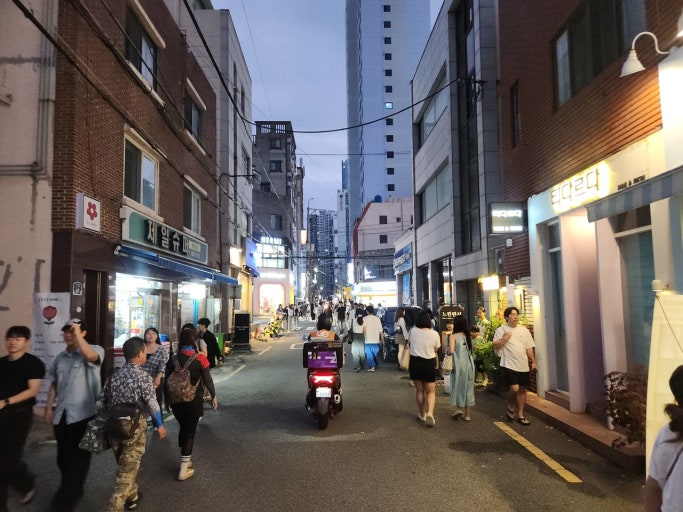
In this evaluation, previously popular alley markets showed excellent performance. Selected as A-grade are Jeonpo Alley in Busanjin-gu, Namcheon Beach Road in Suyeong-gu, Haeri Street in Haeundae-gu, and Munmun Sanghoe in Nam-gu.
In particular, Haeri Street and Jeonpo Alley are already well-known as representative local markets of Busan. Through this project, these markets are expected to strengthen their brand and expand their content even further.
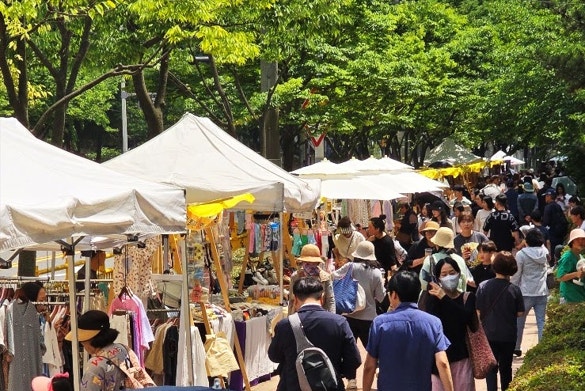
Included in the B-grade are Nakjo Hana Road in Saha-gu, Haeri Street, and Namsan Road in Geumjeong-gu. Alley markets evaluated will receive differentiated support of up to 50 million won.
The city of Busan is focusing on storytelling for each alley, developing local brands, and sustainable community operation rather than simple one-time support. Additionally, plans are underway to expand the influx of young consumer groups by cooperating with university alley market marketers.
Expected Effects of the Busan Alley Economy

The 2026 Alley Market Vitalization Support Project aims to go beyond simple market support, targeting regional balanced development and the recovery of living economy. Amid the increasing concentration of large markets and online consumption, the city of Busan is actively nurturing community-based economic revitalization models with regionally specialized content.
Notably, the 'market planner' system supports merchants through on-site consulting and community organization. The core of this system is to create a structure where merchants can enhance their market competitiveness beyond simply receiving support funds.
Future growth of new markets such as Nampo-dong Nopo Alley, Jungkwan Dolphin Street, and Deokcheon Young Street as representative alley markets of the region is receiving great interest from many people.
#BusanAlleyMarket, #AlleyMarketVitalization, #BusanAlleyEconomy, #BusanSmallBusiness, #NampoDongNopoAlley, #HaeriStreet, #JeonpoAlley, #40StairsStreet, #JangrimIndustrialSuppliesStreet, #DeokcheonYoungStreet, #JungkwanDolphinStreet, #MoonlightHarmonyStreet, #BusanMarketSupport, #BusanEconomicPolicy, #BusanLocalEconomy, #BusanStartup, #BusanSelfEmployed, #BusanHotPlace, #BusanLocalBrand, #BusanDateCourse, #PlacesToVisitInBusan, #BusanOldCity, #BusanTourism, #BusanMarketAnalysis, #BusanAlley, #BusanFoodStreet, #BusanLocalMarket, #BusanCitySupportProject, #BusanMerchantAssociation, #BusanEconomicRevitalization
Frequently Asked Questions (FAQ)
Q. What support projects is Busan City promoting for the revitalization of alley markets?
Busan City supports new and existing markets through the Alley Market Vitalization Support Project until 2026.
Busan City has been undertaking the '2026 Alley Market Vitalization Support Project' for five years to revitalize the local alley economy. It aims to boost economic activity by integrating the uniqueness and culture of each alley with local brands beyond just facility support. This year, through a budget of 1 billion won, it will support 5 new alley markets and 9 existing alley markets, with concentrated support of 100 million won for areas selected as 'Busan-like Alley Support.'
Q. Where are the newly selected Busan alley markets in 2024?
Five new alley markets have been selected, including the Kyungseong Merchant Association in Nam-gu and Nampo-dong Nopo Alley in Jung-gu.
This year's newly selected alley market communities are Kyungseong Merchant Association in Nam-gu, Nampo-dong Nopo Alley in Jung-gu, Moonlight Harmony Street in Nam-gu, Jungkwan Dolphin Street in Gijang-gun, and Deokcheon Young Street in Buk-gu. These areas will each receive a growth support fund of 25 million won for customized support such as strengthening merchant capabilities, joint marketing, and brand strategy establishment.
Q. What are the selected areas for 'Busan-like Alley Support' and what are the details of the support?
Jangrim Industrial Supplies Street in Saha-gu and 40 Stairs Street in Jung-gu are selected to each receive 100 million won in concentrated support.
Busan City has selected Jangrim Industrial Supplies Street and 40 Stairs Street for 'Busan-like Alley Support.' Jangrim Industrial Supplies Street, a manufacturing-based market, is planning to introduce innovative technologies such as smart shared logistics and delivery systems, improve alley design, and operate a merchant association academy. 40 Stairs Street aims to develop as a stay-type market by integrating history, culture, and tourism and plans to promote stamp tours, pop-up stores, and SNS marketing to increase tourist spending.
Q. What are the current roles and support plans for Haeri Street and Jeonpo Alley?
Both markets are representative local markets of Busan, and support will focus on brand strengthening and content expansion.
Haeri Street and Jeonpo Alley are local hotspot alley markets representing Busan, and Jeonpo Alley in Busanjin-gu and Haeri Street in Haeundae-gu have already gained high popularity by being selected as A-grade. In the future, these areas will receive support to further enhance their brand and expand various content, invigorating the local economy.
Q. What are the expected effects of the revitalization of Busan alley markets and their impact on the local economy?
Support for alley markets will contribute to the recovery of the local economy, balanced development, and activation of self-employment.
Busan City aims to recover the local economy, which has been stagnant due to the concentration of large markets and increased online consumption, through the Alley Market Vitalization Support Project. The program goes beyond simple support by developing regionally specialized content, organizing communities, and providing on-site consulting through market planners, thereby enhancing the self-sufficiency of merchants and establishing a sustainable economic model. This is expected to lead to regional balanced development and revitalization of local economies.