Table of Contents
- Curocell Investment Experience
- Significance of Rimkato Approval
- Selling Flow on News
- Variables for Insurance Coverage
- Funding Burdens
- Commercialization Cost Burdens
- Possibility of Further Decline
- Split Purchase Strategy
- Future Stock Variables
- Curocell Investment Summary
- Frequently Asked Questions (FAQ)
Curocell Investment Experience

The fluctuations in Curocell's stock bring to mind the adage often heard in bio stock investing, "buy on anticipation, sell on news."
By closely monitoring the movements of Curocell, I approached it with a short-term swing strategy rather than long-term holding. In particular, as the approval date for Rimkato by the Ministry of Food and Drug Safety approached, there was a surge in selling volume, and I had an experience of selling at around 60,000 won, locking in profits.
This situation gives important lessons to investors and clearly shows how crucial it is to catch the right trading timing.

Ultimately, although the approval of Rimkato was achieved, unfortunately, Curocell's stock has not continued a strong upward trend since then. Instead, investors began to harvest profits as the approval news was released, resulting in a flood of sell-offs.
Since the approval, the stock has seen a continuous decline for nine trading days. This does not mean that the technical value of Rimkato has disappeared. It shows that the stock market has shifted its evaluation criteria from pre-approval anticipation to a commercialization verification stage.
Significance of Rimkato Approval

Rimkato is a CAR-T therapy developed by Curocell, with the active ingredient being anbalcaptagen autoleucel. The Ministry of Food and Drug Safety has approved this drug, which is suitable for treating diffuse large B-cell lymphoma and primary mediastinal B-cell lymphoma.
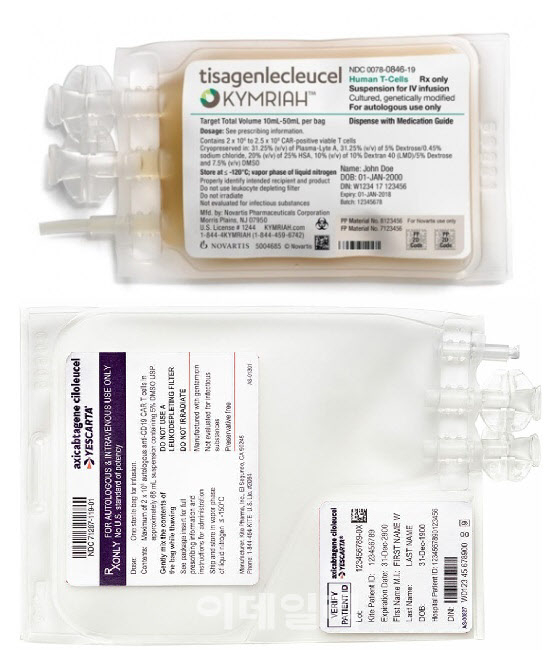
The approval of a CAR-T therapy developed by a domestic company is highly significant. The CAR-T market has been dominated by products from global pharmaceutical companies, with examples such as Novartis' Kymriah, Gilead's Yescarta, and BMS' Breyanzi.
The entry of Korea's first CAR-T therapy into the market represents a noteworthy example of the technological advancement in the domestic cell therapy industry, which raises expectations for future growth potential.

Stock prices do not rely solely on technical achievements. Prior to approval, expectations about the first domestic CAR-T and major bio events contributed to the stock price rise. However, after approval, the focus must shift to various factors such as sales, insurance coverage, drug pricing, prescription rate, and cash flow.

Selling Flow on News

One reason for the decline in Curocell's stock price is that much of the anticipation for approval had already been reflected in the market.
Bio companies tend to see increasing expectations ahead of various events, such as clinical results, product approvals, technology exports, and conference presentations. However, it is common for stock prices to peak in the short term after actual news is announced without further positive developments.
For this reason, Curocell's stock price is currently showing a downward trend.

Curocell's stock was already close to its peak on the day the approval was announced. While the approval of Rimkato was indeed positive news, stock-wise, it meant that the anticipated event had materialized after a long wait, which led to the evaporation of short-term catalysts. As a result, short-term investors moved to realize profits, while new buyers remained cautious until the coverage and sales were confirmed.
In conclusion, the decline in Curocell's stock is unrelated to Rimkato's failure, and it is rational to understand this drop as an adjustment in the process of transitioning from anticipation to the commercialization verification stage for approval.
Variables for Insurance Coverage

Following the approval of Rimkato, the market's attention is quickly turning to health insurance coverage. CAR-T therapies are categorized as ultra-high-cost treatments with prices much higher than conventional anticancer drugs. As it is significantly burdensome for patients to afford this treatment out-of-pocket, health insurance coverage is essential for actual prescription expansion.
The approval grants legal qualification to sell the treatment; however, in the expensive anticancer market, mere approval is insufficient. Insurance coverage is very important for hospitals to actually prescribe the treatment and for patients to receive it. Without coverage, patients' accessibility decreases, and hospitals find it difficult to increase prescriptions actively.
Curocell aims to launch Rimkato's health insurance coverage, but this remains a goal and is not yet confirmed. There are many procedures left, including negotiations on drug pricing with the Cancer Drug Review Committee, the Drug Benefit Assessment Committee, and the National Health Insurance Corporation. Particularly for high-cost therapies like CAR-T, the application of risk-sharing programs and drug pricing levels are critical variables.
Funding Burdens

Another background for the decline in Curocell's stock is concerns about funding and stock dilution. The company has decided to raise funds through a capital increase and convertible bond issuance for the commercialization of Rimkato and the development of subsequent pipelines. While these decisions were made based on the company’s requirements, they may be viewed negatively by the market.
The CAR-T therapy business incurs considerable expenses even after sales begin. Significant funds are needed in various areas, including improvements to GMP production facilities, establishment of quality control systems, in-house development of viral vectors, building hospital networks, securing logistics systems, and subsequent clinical development.
However, the stock market perceives capital increases and convertible bonds as elements that dilute the value of existing shareholders. If future convertible bonds or convertible preferred shares convert into common stock, the number of outstanding shares may increase, especially if the stock price continues to fall below the conversion price, investors' sentiment may worsen. In this context, investors are likely to adopt a more cautious approach.
Commercialization Cost Burdens

Unlike regular pharmaceuticals, CAR-T therapies are not produced and distributed in bulk. This treatment involves collecting the patient's T cells, genetically modifying and cultivating them, and then injecting them back into the patient, making it a personalized cell therapy.
This process requires individual manufacturing and quality testing for each patient, as well as refrigerated and frozen logistics. There are also complex systems required for preparation and adverse reaction management in hospitals. Therefore, it does not automatically lead to a immediate surge in sales and profits after approval.

In the early stages, costs for production facilities, personnel, quality control, hospital training, and building supply chains are prioritized. The market is beginning to recognize Curocell not just as a simple research and development company, but as an early-stage commercialization biotech company. While the technological capability has been proven, it must now demonstrate stable supply and revenue generation ability in real medical settings.
Possibility of Further Decline
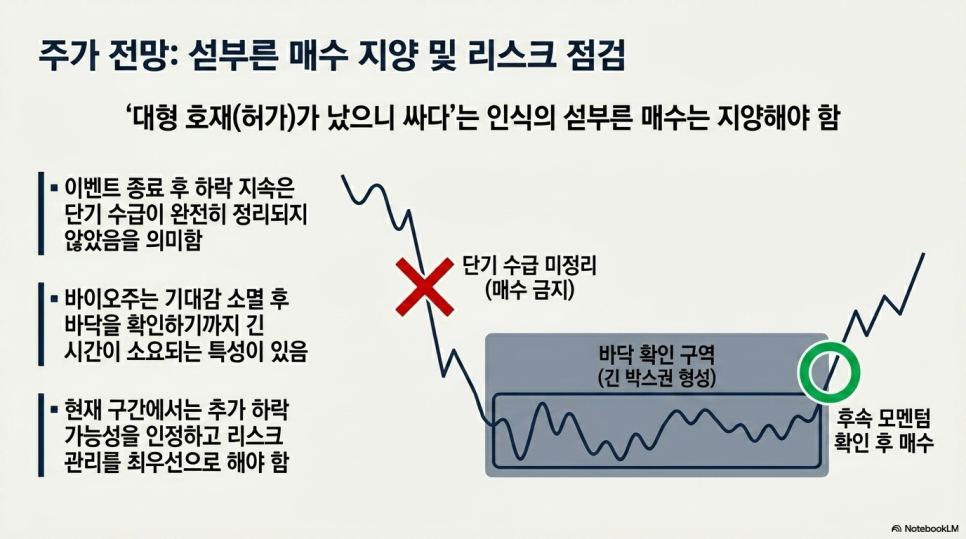
A point to be cautious about with Curocell's stock price is the possibility of further decline. The fact that the stock has shown a continuous downward trend without rebounding after the announcement of a major event such as approval indicates that the short-term supply and demand have not yet stabilized.
Bio stocks often take time to confirm a floor after anticipation fades. Before subsequent events such as coverage, drug price negotiations, expansion of treatment centers, and initial prescription data occur, the stock price may form a box range or undergo further adjustments, so caution is warranted.
Thus, at this point, hastily buying on the idea that "approval has been granted, so the stock price is cheap" may be risky. It would be more rational to consider the possibility of further decline and adopt a strategy of waiting for a trend reversal signal after confirming the bottom by using a split purchase approach.
Split Purchase Strategy

For investors with a positive outlook on Curocell, what is most needed now is not conviction, but confirmation of facts. There was a significant achievement with the approval of Rimkato, but the stock price reflects visibility of supply and performance more coldly than technical prowess.
Hence, the investment approach can be summarized in three ways. First, check whether trading volume decreases and the decline slows down after a sharp drop. This becomes an important indicator for gauging market reactions. Second, observe the process of support formation and floor consolidation at key price levels. This may serve as a signal for potential future rebounds. Third, carefully monitor whether subsequent momentum such as insurance schedules, drug price negotiations, and hospital prescription expansions are actually confirmed.
Rather than making a massive purchase without meeting these conditions, it is more effective from a risk management perspective to divide and approach when a trend reversal signal appears. Particularly for biotech stocks, the method of purchase is often more important than the purchase price due to their volatility based on news.
Future Stock Variables

The most significant factors affecting Curocell's stock price are whether health insurance coverage will be granted. If the company achieves coverage release according to its planned schedule, the market will again reflect the commercialization potential of Rimkato. In particular, if the drug pricing conditions do not impose a significant burden on the company's profitability and treatment centers are quickly established at major hospitals, it may create positive factors for a stock price rebound.
However, if the coverage schedule is delayed beyond expectations or the drug price does not meet market expectations, it may take time for the stock price to recover. Additionally, initial prescription numbers, manufacturing success rates, time taken for administration, and the speed of expanding hospital networks are also key elements that can significantly affect the stock price. These various variables will determine the future flow of the stock price.
If this funding is effectively utilized in the commercialization of Rimkato and the development of subsequent pipelines, positive mid-to-long-term results can be expected. However, if revenue generation is delayed and cash depletion intensifies, concerns about additional funding may arise again.
Curocell Investment Summary

The reason for the decline in Curocell's stock after the Rimkato approval is not solely due to negative factors.
Firstly, the anticipation for approval had already been reflected in the stock price. Secondly, after the actual announcement of approval, the catalysts disappeared due to profit realization.
Thirdly, there remains a more significant task of health insurance coverage which acts as a source of market anxiety.
Fourthly, concerns have increased regarding potential dilution of shareholder value due to capital increases and the issuance of convertible bonds.
Lastly, massive initial costs are required for production, quality control, hospital networks, logistics, and manpower to commercialize CAR-T. These elements are collectively contributing to the stock decline.

When analyzing Curocell, the critical issue is not "why did the stock price drop after approval?" but rather "what elements must be assessed to enable the stock price to rise again after approval?" The approval for Rimkato can be seen as a signal of a new beginning.
Curocell is not just a biotech stock that moves based on anticipation, but is considered an early-stage commercialization company that must successfully establish a domestic CAR-T therapeutic in the market. At this point, the possibility of further declines cannot be excluded, so it would be more rational to consider confirming the bottom and implementing a split purchase strategy after the trend has reversed.
The value of Rimkato is likely to be meaningfully reflected in the stock price when proven in terms of coverage, prescriptions, sales, and profitability. Therefore, it is crucial to closely monitor the ongoing developments.
#Curocell, #Rimkato, #Curocell stock, #Rimkato approval, #Ministry of Food and Drug Safety approval, #CART therapy, #domestic CART, #anbalcaptagen autoleucel, #bio stocks, #bio investment, #pharmaceutical bio, #anticancer drug, #cell therapy, #diffuse large B-cell lymphoma, #primary mediastinal B-cell lymphoma, #health insurance coverage, #drug price negotiation, #risk-sharing program, #capital increase, #convertible bonds, #shareholder value dilution, #bio commercialization, #GMP, #Curocell analysis, #Rimkato coverage, #CAR-T therapy, #new drug approval, #split purchase, #trend reversal, #investment strategy
Frequently Asked Questions (FAQ)
Q. What can we learn from the Curocell investment experience?
The Curocell investment experience shows the importance of short-term swing strategies and trading timing.
The stock price of Curocell tends to rise due to anticipation and sees selling pressure after news announcements. Investors realized profits through short-term selling strategies aligned with the timing of Rimkato's approval, rather than holding long-term. This is a clear example of how crucial it is to capture appropriate trading timings in biotech stock investing.
Q. How did the Rimkato approval affect Curocell’s stock price?
While there was significant anticipation for Rimkato's approval, it did not lead to a stock price increase and instead showed a declining trend.
Although Rimkato received approval from the Ministry of Food and Drug Safety, following the approval news, investors engaged in profit realization, resulting in a nine-day consecutive decline in stock price. This was not because the technical value disappeared but rather because the market transitioned its evaluation criteria from anticipation before approval to actual commercialization verification stage.
Q. What is the significance of Rimkato and what diseases does it treat?
Rimkato is a CAR-T therapy developed by Curocell used for specific lymphomas.
Rimkato is a CAR-T therapy with the active ingredient anbalcaptagen autoleucel, approved by the Ministry of Food and Drug Safety to treat diffuse large B-cell lymphoma and primary mediastinal B-cell lymphoma. This is the first CAR-T treatment developed in Korea, symbolizing the advancement of national biotechnology.
Q. What are the main variables that the market focuses on after Rimkato's approval?
Coverage listing and drug price negotiations are key variables for Rimkato's commercialization.
The approval only grants the qualification to sell; to actually prescribe the high-cost CAR-T therapy, health insurance coverage is essential. The negotiation of drug prices with the Cancer Drug Review Committee, the Drug Benefit Assessment Committee, and the National Health Insurance Corporation, along with the application of risk-sharing programs, are critical variables, and this process must be completed for prescription expansion and revenue generation to be possible.
Q. What are the main reasons for the decline in Curocell’s stock price?
Exhaustion of approval anticipation, uncertainty regarding health insurance coverage, and concerns over funding are reasons for the price decline.
The stock price already reflected expectations prior to the approval, and post-announcement, the material evaporated due to profit realization. Additionally, there is uncertainty regarding the schedule for insurance coverage, heightened fears regarding dilution of shareholder value from capital increases and convertible bonds, and the burdensome costs of commercialization.
Q. What points bring about the possibility of additional declines in Curocell’s stock price?
Delays in coverage listing and absence of initial prescription data create short-term adjustment possibilities.
Bio stocks often take time to confirm a bottom after anticipation fades, and until subsequent momentum such as health insurance coverage, drug price negotiations, expansion of treatment centers, and prescription performance occurs, the stock price may remain in a box range or undergo declines. Hence, rather than rushing to buy, it is recommended to confirm the bottom and consider a split purchase strategy.
Q. What is the split purchase strategy for Curocell and why is it necessary?
A strategy of dividing purchases into several rounds after confirming the bottom and trend reversal signal.
Currently, Curocell is at the early stage of active commercialization following approval and is subject to high volatility. Rather than hastily making a large purchase, it is beneficial for risk management to confirm signals of stabilizing trends such as reduced decline and formation of support before dividing purchases. This approach considers the volatility of biotech stocks and the progress of subsequent momentum.
Q. What are the future stock variables for Curocell?
Timelines for health insurance coverage, drug pricing levels, and prescription expansion are major variables.
The success of Rimkato's commercialization heavily relies on the schedule for insurance coverage and drug pricing conditions. Acceptable prices, prompt establishment of treatment centers at major hospitals, increased initial prescriptions, manufacturing success rates, and time to administration are various factors that influence stock price increases. These variables will determine whether the stock price rebounds according to market expectations.
Q. How will the funding announced by Curocell impact its stock price?
While funding is essential for business, there are significant concerns regarding shareholder value dilution.
The capital increase and issuance of convertible bonds are essential funding methods for the commercialization of Rimkato and subsequent pipeline development, but there are negative impacts on investor sentiment due to concerns over dilution of shareholder value from the increase in stock volume. If revenue generation is delayed and cash depletion worsens, concerns about additional funding may also increase, necessitating cautious short-term investment approaches.
