Table of Contents
What is the Youth Tomorrow Savings Account?

The Youth Tomorrow Savings Account is a program that is receiving significant attention as a government initiative for asset formation. The City of Busan announced that it will recruit new members from May 4 to May 20, 2026. This will be an important opportunity to provide economic support to young people.
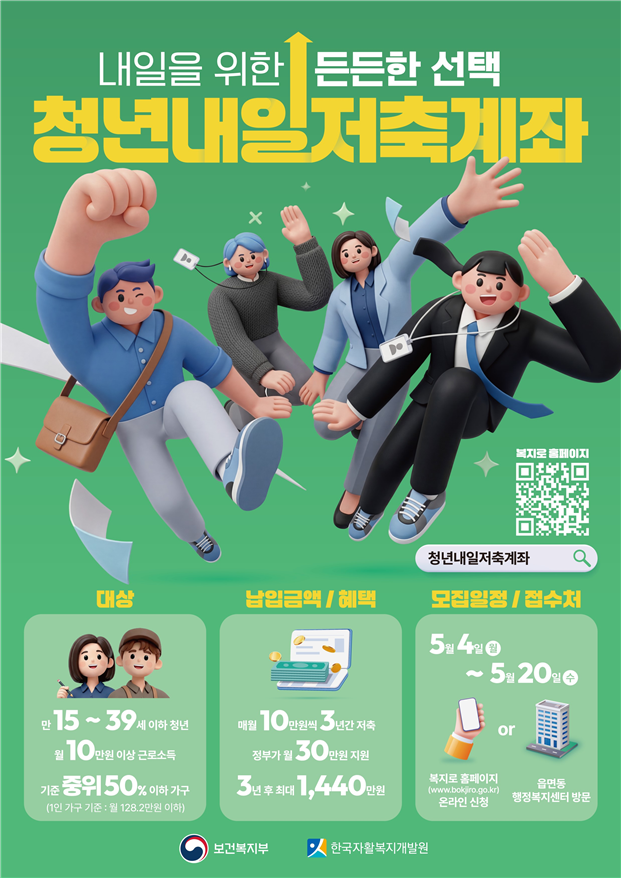
The Youth Tomorrow Savings Account operates by allowing working youth to save 100,000 KRW each month for three years. Upon joining this account, the government provides additional work income incentives to support asset formation. Unlike regular savings accounts, this program features a matching method that includes government support.
This year, recruitment for those exceeding the lower-middle-income level has been halted, targeting primarily youth with median income below 50%.
If the account is maintained for three years, participants can receive up to 10.8 million KRW in work income incentives, interest, and additional support funds, making it a highly effective policy for helping young people build assets. This program provides practical support to facilitate economic independence for youth.
Income Standards and Eligibility Requirements

The Youth Tomorrow Savings Account is not a product that everyone can join. It requires meeting specific age, income, and employment conditions.
As of 2026, the eligibility requirements are as follows. Applicants must be aged between 15 and 39 years, and must not be 40 years old at the time of applying.

Regarding household income standards, the main criterion is set at 50% of the median income. For example, a one-person household should have a monthly income not exceeding 1,280,000 KRW, a two-person household should be below 2,090,000 KRW, a three-person household should stay under 2,670,000 KRW, and a four-person household must have income below 3,240,000 KRW.
The eligibility requirements also necessitate a monthly work or business income of at least 100,000 KRW. Therefore, simply being unemployed makes it difficult to apply; applicants must generate a certain level of income through part-time work, employment, or business activities. Continuous work activities are essential post-enrollment; if the income requirements are not met or if there are long periods of non-payment, support funds may be reclaimed. It is crucial to understand and prepare for these requirements.
Analysis of Government Support Benefits

The biggest advantage of the Youth Tomorrow Savings Account lies in the high matching support structure from the government.
The basic details of this program are as follows.
The personal savings amount is 100,000 KRW per month, and the government provides additional support of 300,000 KRW monthly. Additional support funds and interest are paid separately.
Ultimately, over three years, an individual saves a total of 3.6 million KRW, but when including government support, it is possible to form assets of over 14.4 million KRW.

Depending on the target audience, additional support is provided.
Support items include work income deduction funds, Tomorrow Growth Incentive Funds, Tomorrow Growth Profit Funds, and benefit reduction incentives. In particular, young people receiving basic living allowances or participating in self-sufficiency projects can see significantly increased actual receipts through monthly additional support.
Compared to general savings products, this support boasts a very high rate of return. It creates a government matching effect that cannot be explained solely by bank interest rates.
Application Methods and Schedules

The application process for the Youth Tomorrow Savings Account is relatively easy.
There are two methods of application. The first is online; applicants should access the Welfare website and proceed with the application for the Youth Tomorrow Savings Account. The second method is offline; individuals can visit their local administrative welfare center based on their resident registration address to apply.
The recruitment schedule is as follows. The application period is from May 4 to May 20, 2026, and eligibility checks will take place from May to August. The final selection will occur in August, and the first incentive deposit is planned for August.

The City of Busan provides an AI chatbot service called ‘Self-sufficiency Honey Jar’. This service is available 24/7 to provide consultations on the income standards, maintenance conditions, cancellation requirements, and eligibility for overlapping memberships related to the Youth Tomorrow Savings Account.
Youth Asset Formation Strategies

The Youth Tomorrow Savings Account is not just a regular savings product but a structured financial support program devised by the government to help youth invest in their futures and achieve self-sufficiency.
The funds from this account at maturity are mainly used for purposes such as rental deposits, housing arrangements, educational expenses, business preparations, and investment funds.
Especially for young people starting their careers or those from low-income backgrounds, it is crucial to effectively utilize the government’s matching support system, considering that quickly accumulating a significant amount of money with just regular financial products can be challenging.
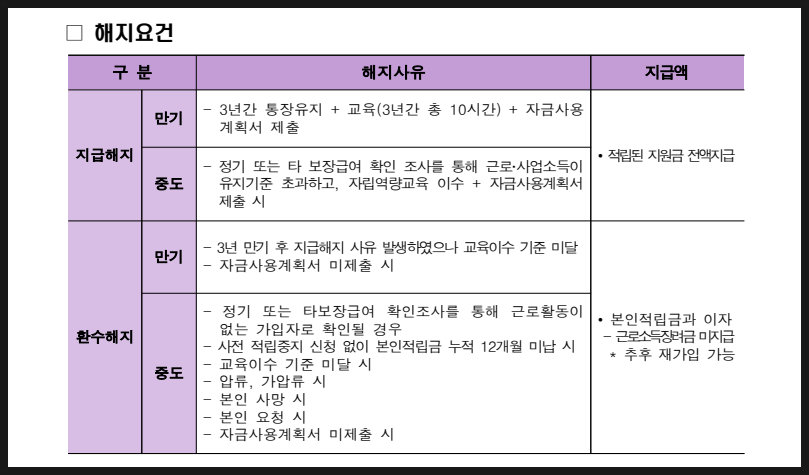
However, to receive all the support funds, it is required to maintain the account for three years, complete educational courses, and submit a financial usage plan. If the account is prematurely closed, it may lead to disadvantages in receiving government support funds, thus it is necessary to fully consider the feasibility of maintenance before applying.
#YouthTomorrowSavingsAccount, #HowToApplyForYouthTomorrowSavingsAccount, #IncomeStandardsForYouthTomorrowSavingsAccount, #InterestRatesForYouthTomorrowSavingsAccount, #GovernmentSupport, #YouthGovernmentSupport, #YouthPolicies, #YouthSavings, #GovernmentSupportedSavings, #YouthAssetFormation, #BuildingWealth, #YouthInvestment, #StartingOutFinancialStrategies, #YouthFinancialStrategies, #Welfare, #BusanYouthPolicies, #WorkIncomeIncentives, #YouthWelfare, #YouthSupportPrograms, #GovernmentSupportFunds, #YouthFinancialPolicies, #YouthSupportFunds, #AssetFormationSupportPrograms, #50PercentMedianIncome, #YouthSavings, #SelfSufficiencySupport, #YouthWealthCreation, #WelfarePolicies, #YouthLivingSupport, #FinancialStrategies">
Frequently Asked Questions (FAQ)
Q. What is the Youth Tomorrow Savings Account?
The Youth Tomorrow Savings Account is a structured financial support program by the government that adds government support funds to the monthly savings amount to help youth build their assets.
The Youth Tomorrow Savings Account is a program where working youth save 100,000 KRW monthly for three years while the government supports with an additional 300,000 KRW in work income incentives each month. This helps youth save a substantial amount and promote economic independence. This account is distinguished from ordinary savings as it includes government matching support.
Q. What are the eligibility requirements and income standards for the Youth Tomorrow Savings Account?
Youth aged 15 to 39 from households below 50% of the median income can apply, with a requirement for monthly income above 100,000 KRW from work or business.
Eligibility is for youth aged 15 to 39; applicants must not be 40 at the time of application. The household income standard is set at or below 50% of the median income, for instance, a one-person household should not exceed a monthly income of 1,280,000 KRW, while a four-person household must stay under 3,240,000 KRW. Furthermore, applicants need to have work or business income of at least 100,000 KRW per month and be continuously employed post-application. If income requirements are not met or if there are long payment lapses, support funds may be reclaimed, so awareness of these conditions is vital.
Q. What benefits does the government provide to Youth Tomorrow Savings Account subscribers?
The government supports up to 300,000 KRW, which is three times the subscriber's savings amount every month, and provides additional incentives and interest, facilitating the formation of assets exceeding 14.4 million KRW.
When subscribers save 100,000 KRW monthly, the government adds 300,000 KRW through a matching method. Additionally, support funds like work income deductions, Tomorrow Growth Incentives, and benefit reduction incentives are provided, allowing up to 14.4 million KRW in assets to be accumulated at maturity. Particularly, youths receiving basic living allowances or engaging in self-sufficiency projects may receive more significant benefits, yielding much higher returns compared to standard savings.
Q. How do I apply for the Youth Tomorrow Savings Account?
Applications can be made online through the Welfare website or offline at the local administrative welfare center from May 4 to 20.
Applications can be made in two ways: online by filling out the application form on the Welfare website, or offline by visiting the administrative welfare center corresponding to the resident registration address. The application period is from May 4 to May 20, 2026, and thereafter eligibility verification will take place from May to August, with final selection and incentive deposits beginning in August.
Q. What should I be aware of after joining the Youth Tomorrow Savings Account?
You must maintain the account for three years and complete educational requirements; early termination could result in disadvantages in receiving support funds.
To fully receive government support funds, continuous saving until maturation for three years is essential. Subscribers must complete policy education and submit a financial usage plan; early termination may lead to the repayment of support funds. Therefore, it is crucial to carefully consider economic circumstances and maintenance feasibility before applying. The City of Busan provides 24-hour consultations through the AI chatbot ‘Self-sufficiency Honey Jar’ to assist related inquiries.
