Table of Contents
Significance of the Establishment of Maritime Courts
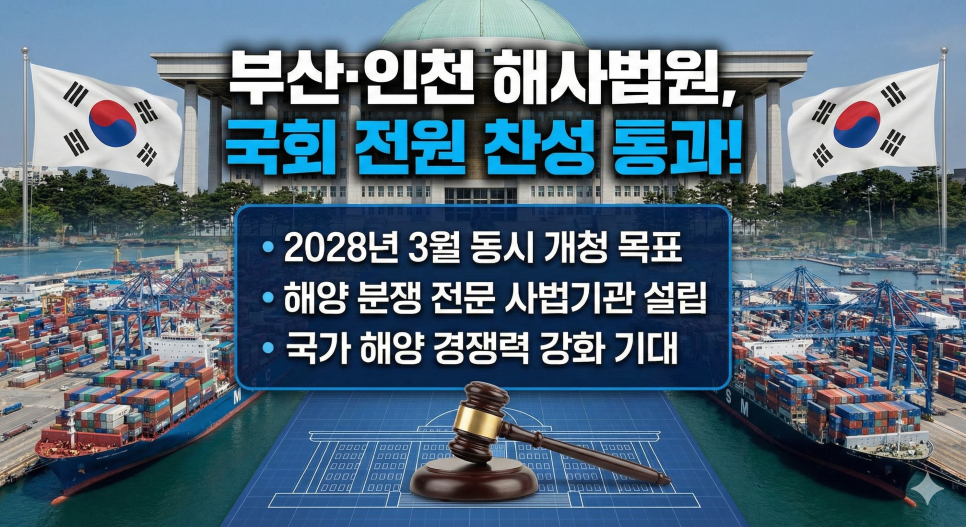
The bill proposing the establishment of specialized maritime courts in Busan and Incheon was legally confirmed after passing the National Assembly's plenary session on February 12, 2026. The approved 'Partial Amendment Bill on the Establishment and Jurisdiction of Various Courts' was unanimously passed by 157 present lawmakers and aims for opening in March 2028.
The most significant content of this bill is to establish specialized maritime courts in both Busan and Incheon. The maritime court has long been a goal for the Busan region and had previously faced several setbacks amid competition for hosting with Incheon. However, an agreement between the ruling and opposition parties led to the decision to install courts in both cities simultaneously, finalizing the legislation.
The specialized maritime courts are judicial institutions that professionally deal with maritime-related disputes and are viewed as crucial infrastructure that significantly affects national competitiveness amid the intensifying global shipping and port competition. The establishment of such courts is expected to positively contribute to the future development of the maritime industry.
Jurisdiction of the Maritime International Commercial Court

The official name of the newly established Maritime International Commercial Court is ‘Maritime International Commercial Court’. This court will have its main offices in both Busan and Incheon, and cases will be divided based on region.
The jurisdiction of the Busan Maritime International Commercial Court includes Busan Metropolitan City, Ulsan Metropolitan City, Daegu Metropolitan City, Gyeongsangnam-do and Gyeongsangbuk-do, as well as Gwangju Metropolitan City, Jeollanam-do, Jeollabuk-do, and Jeju Special Self-Governing Province.
On the other hand, the Incheon Maritime International Commercial Court will have jurisdiction over Seoul Special City, Incheon Metropolitan City, Gyeonggi-do, Gangwon Special Self-Governing Province, Daejeon Metropolitan City, North Chungcheong Province, and South Chungcheong Province. Each main office will specially handle maritime and commercial cases within their respective regions.
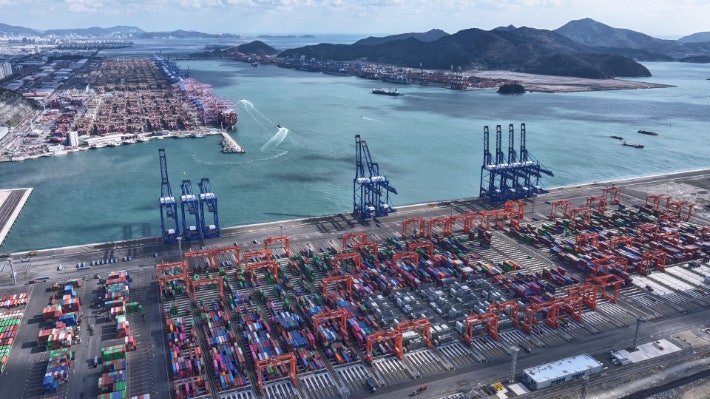
Jurisdictional cases are divided into several categories. First, there are cases involving commercial law and maritime law. Second, civil cases related to ships, navigation, and ship bonds are included. Third, cases of ship accidents and international commercial cases also fall under this jurisdiction. Lastly, lawsuits against maritime administrative agencies, such as the Ministry of Oceans and Fisheries and the Maritime Police Agency, are also included.
First-instance cases will be handled by each maritime court, and second-instance cases will be dealt with by the Busan High Court and Incheon High Court.
Opening Schedule for 2028
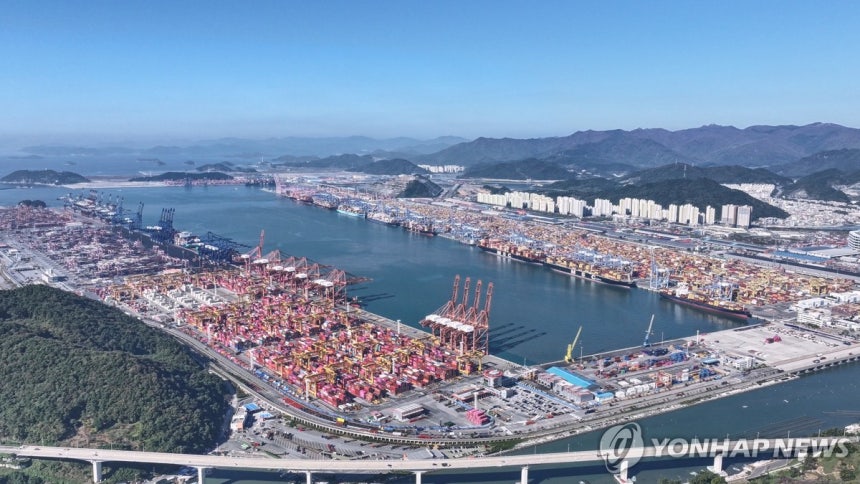
The maritime courts are set to begin operations on March 1, 2028, through a temporary court building. Subsequently, from March 2032, they plan to perform their duties in a newly constructed permanent building.
Since 2017, Busan City has emphasized the necessity of establishing the maritime court by forming a citizen promotion council. To this end, they have conducted feasibility studies, policy discussions, and maritime mock trials to gather public opinions. In 2018, in collaboration with the Korean Commercial Arbitration Board, they established the APEC Maritime Mediation Center to lay the foundation for resolving maritime disputes.
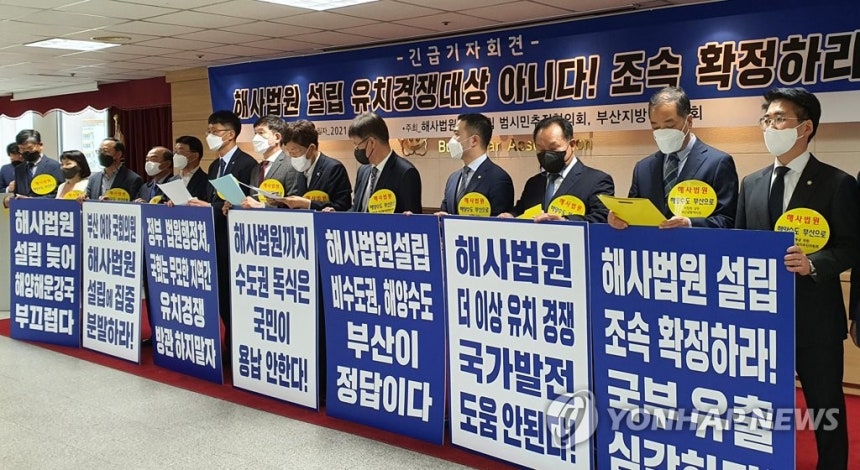
The establishment of the maritime courts not only adds a simple court but also significantly elevates the status of Busan as the marine capital and advances the maritime legal services industry. However, there are concerns that shipping companies, which are primarily located in Seoul and the metropolitan area, may concentrate significant international commercial cases in Incheon.
Impact on Marine Capital Busan
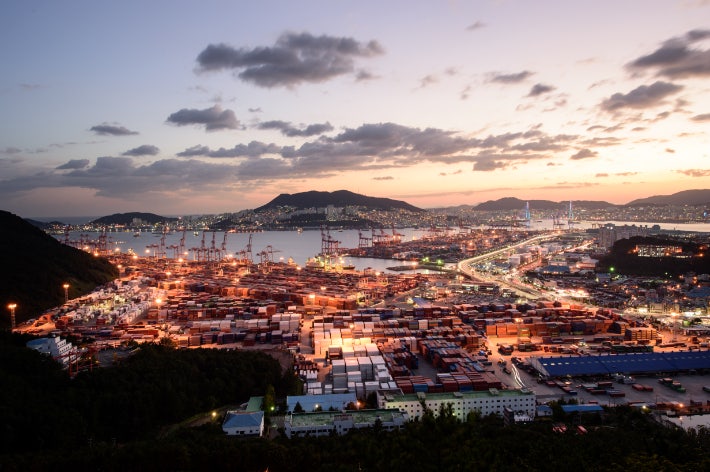
The establishment of the Busan Incheon Maritime Court holds significant importance as it is the first maritime specialized court introduced in the country. Busan is a maritime city possessing the second-largest transshipment port in the world, and with the relocation of the Ministry of Oceans and Fisheries and the concentration of maritime-related public institutions, there is a high potential for the formation of a maritime legal cluster encompassing maritime law, arbitration, finance, and insurance sectors.
Future tasks include training specialized judges and legal professionals, enhancing international arbitration functions, establishing an English trial system, and attracting specialized maritime law firms and shipping companies. While an institutional foundation has been laid, it is crucial to build practical competitiveness.
In conclusion, the passage of the bill for the installation of the Busan Incheon Maritime Courts in the National Assembly is the first step towards opening in 2028. If the Maritime International Commercial Court is established as planned, the maritime judicial system of South Korea is expected to advance significantly.
#MaritimeCourt, #BusanMaritimeCourt, #IncheonMaritimeCourt, #MaritimeInternationalCommercialCourt, #SpecializedMaritimeCourt, #NationalAssemblyPassage, #Openingin2028, #BusanOpening, #MarineCapitalBusan, #MaritimeCivilCases, #InternationalCommercialCases, #ShipAccidentLawsuits, #MaritimeAdministrativeLawsuits, #Jurisdiction, #BusanJurisdiction, #IncheonJurisdiction, #NewBuildingConstruction, #TemporaryCourt, #BusanNewPort, #ShippingPort, #MinistryofOceansandFisheries, #MaritimePoliceAgency, #CourtEstablishmentLaw, #BusanEconomy, #RegionalBalancedDevelopment, #MaritimeMediation, #APECMaritimeMediationCenter, #MaritimeLegalServices, #ShippingIndustry, #MaritimeCluster, #
Frequently Asked Questions (FAQ)
Q. What are the main contents of the bill to establish specialized maritime courts in Busan and Incheon?
The bill to establish specialized maritime courts in Busan and Incheon has been unanimously passed by the National Assembly, aiming for opening in March 2028.
On February 12, 2026, the 'Partial Amendment Bill on the Establishment and Jurisdiction of Various Courts' was passed by unanimous approval from all 157 present lawmakers in the National Assembly plenary session. This bill includes plans to establish specialized maritime courts in Busan and Incheon, making it essential to create an institution that specifically handles maritime-related disputes. The establishment of such courts is a measure to strengthen the long-standing aspiration for the maritime judicial system in the Busan region and is expected to contribute to enhancing national competitiveness in the maritime industry.
Q. How is the jurisdiction of the Maritime International Commercial Court divided?
The Busan court will handle Gyeongnam, Gyeongbuk, Gwangju, Jeonnam, Jeonbuk, and Jeju, while the Incheon court will handle Seoul, Incheon, Gyeonggi, Gangwon, Daejeon, North Chungcheong, and South Chungcheong.
The Maritime International Commercial Court has its main offices in both Busan and Incheon. The Busan main office will handle cases in Busan, Ulsan, Daegu, Gyeongsangnam-do, Gyeongsangbuk-do, Gwangju Metropolitan City, Jeollanam-do, Jeollabuk-do, and Jeju Special Self-Governing Province. The Incheon main office will be responsible for Seoul Special City, Incheon Metropolitan City, Gyeonggi-do, Gangwon Special Self-Governing Province, Daejeon Metropolitan City, North Chungcheong Province, and South Chungcheong Province. Each main office will conduct specialized hearings on maritime and commercial-related cases within their region.
Q. What types of cases does the Maritime International Commercial Court handle?
It includes cases related to commercial law and maritime law, civil cases involving ships and ship bonds, ship accidents and international commercial cases, and maritime administrative lawsuits.
The Maritime International Commercial Court primarily oversees four types of cases. First, it handles various cases that apply commercial law and maritime law. Second, it includes civil cases related to ships, navigation, and ship bonds. Third, it adjudicates cases of ship accidents and international commercial matters. Lastly, it processes lawsuits against maritime administrative agencies such as the Ministry of Oceans and Fisheries and the Maritime Police Agency. First-instance cases are handled by the relevant maritime court, while second-instance cases are processed by the Busan High Court and Incheon High Court.
Q. What are the plans for the establishment and operation of the Busan Maritime Court?
The maritime court is set to start operations in March 2028 at a temporary building, and will fully operate in a newly constructed permanent building in 2032.
In preparation for the establishment of the maritime court, Busan City has emphasized the necessity by forming a citizen promotion council since 2017. They collected public opinions through feasibility studies, policy discussions, and maritime mock trials, and in 2018, they cooperated with the Korean Commercial Arbitration Board to establish the APEC Maritime Mediation Center. The court is scheduled to begin operations at a temporary building on March 1, 2028, and plans to fully operate in the newly constructed building by March 2032.
Q. What impact will the establishment of the Busan Maritime Court have on Marine Capital Busan?
It is expected to significantly enhance the status of Marine Capital Busan and contribute greatly to the development of the maritime legal services industry.
The establishment of the maritime court signifies an important turning point, enhancing Busan's status as a marine hub beyond just the installation of an additional court. As a city holding the second-largest transshipment port in the world, Busan is expected to see the formation of a maritime legal cluster due to the relocation of the Ministry of Oceans and Fisheries and the concentration of related public institutions. This will lay a foundation for the development of various maritime-related industries, including maritime law, arbitration, finance, and insurance. However, the potential concentration of significant commercial cases at the Incheon court due to the concentration of key shipping companies in Seoul and the metropolitan area remains a concern.