Table of Contents
- Results of Selection of Four Areas for Busan Urban Regeneration Project Contest
- Summary of Urban Regeneration Projects by Region
- Urban Regeneration Projects, Limited Perceived Effects
- Need for Policy Comparison with Redevelopment and Reconstruction
- Challenges of Urban Regeneration Projects and Future Points of Interest
- Frequently Asked Questions (FAQ)
Results of Selection of Four Areas for Busan Urban Regeneration Project Contest
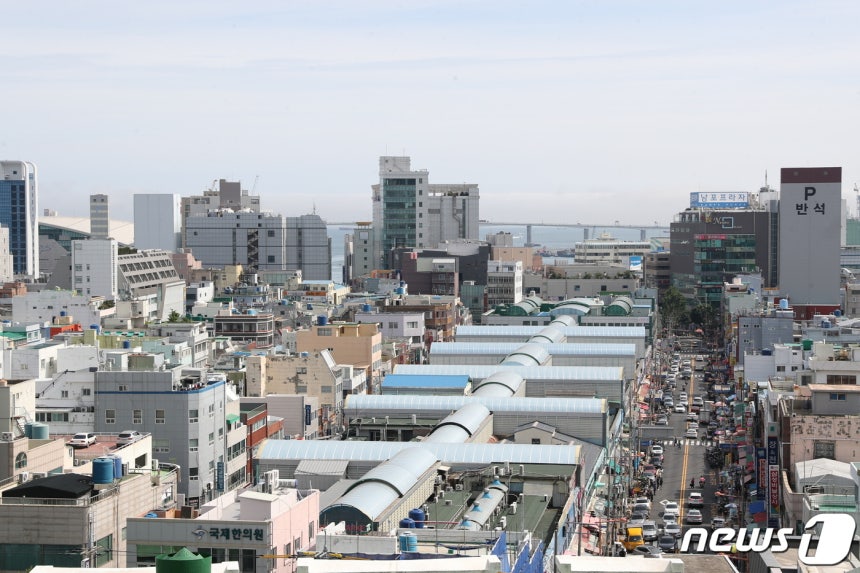
The city of Busan has secured 4 billion KRW in national funding by having all four areas it applied for selected in the Ministry of Land, Infrastructure and Transport’s "2025 Urban Regeneration Project Contest"
The selected areas include Jung-gu Gwangbok·Bupyeong-dong, Dong-gu Sujeong 2-dong, Dongnae-gu Sumin·Boksan-dong, and Geumjeong-gu Bugok 3-dong. A total of 94.7 billion KRW worth of urban regeneration projects will be implemented in these areas for five years starting from 2026.
This achievement is evaluated as a result of Busan City’s planning capabilities and cooperation with the central government.

Summary of Urban Regeneration Projects by Region
Jung-gu Gwangbok·Bupyeong-dong

The 'Rediscovery of the Underground, Art Shelter Project' is an urban regeneration project aimed at utilizing underground spaces centered around the International Underground Shopping Center. This project focuses on supplementing the lack of public restrooms and resting spaces in the existing underground shopping centers.
Moreover, it aims to increase tourist dwell time by attracting small-scale performances, exhibitions, and cultural events. Given the already active pedestrian traffic in this area, the focus is more on environmental improvement rather than regeneration.
This project can thus be evaluated as a supplementary initiative for the existing commercial area rather than a structural change or influx of new residents. It is hoped that the utilization of underground spaces will become more dynamic through this approach.
Dong-gu Sujeong 2-dong

The 'Brilliant 24 Hours of Sujeong-dong' is a support project for the maintenance of aging residential areas, characterized by a goal of completely managing empty houses. This aims to support the demolition and renovation of old homes to improve the safety and environment of housing.
Additionally, public rental housing will be supplied in certain sections, while improving living conditions through alleyway renovations and the expansion of living social infrastructure (SOC). However, since large-scale new housing supplies are not being made, the effects on improving the population structure may be limited.
Dongnae-gu Sumin·Boksan-dong

The historic district of Dongnae in Busan is developing into a 'Big History Town.' This area is promoting an urban regeneration project centered on tourism and culture utilizing Dongnae Eupseong and traditional markets.
Efforts are underway to improve the environment of the traditional market, enhance walking routes, and increase amenities. Furthermore, plans are in place to establish a Hanok village and historical cultural trails to strengthen experiential tourism.
Although these changes are expected to positively impact visitor numbers, there may be discrepancies from actual improvements in living conditions or increased housing demand.
The tourism-centered urban regeneration follows a typical pattern, and sustainability during the off-peak tourist season will be a significant challenge.
Geumjeong-gu Bugok 3-dong

The 'Joyful Living 20·50 Plus(+) Wellness Town’ is a lifestyle-centered urban regeneration project aimed at middle-aged and senior citizens. This project emphasizes enhancing community facilities and health and leisure-related amenities to accommodate residents' conveniences.
In particular, initiatives to resolve inconveniences in daily life, such as the construction of parking lots and improvement of street environments, hold significant weight. While there are plans to encourage the maintenance of private housing, there are clear limitations in actually motivating participation.
In conclusion, this project can be interpreted as focusing on maintaining and managing residential areas.
Urban Regeneration Projects, Limited Perceived Effects
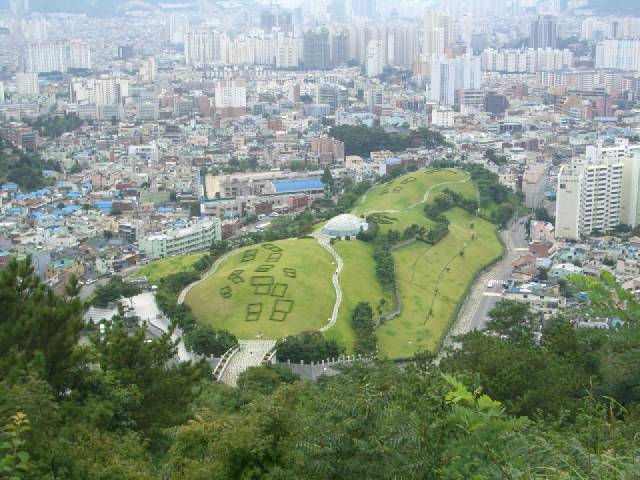
Personally, I still have doubts about the actual effects of urban regeneration projects.
Looking at the various urban regeneration projects conducted in Busan, they often result in improvements to the physical environment or short-term events. In result, cases leading to population influx, commercial area recovery, and real estate value increase are not numerous.
Utilizing the allocated budget is important, but in areas where housing demand has already decreased, small-scale maintenance and content input alone clearly have limitations in solving fundamental structural problems. It seems that a more in-depth approach is needed for urban regeneration projects to lead to real change.
Need for Policy Comparison with Redevelopment and Reconstruction
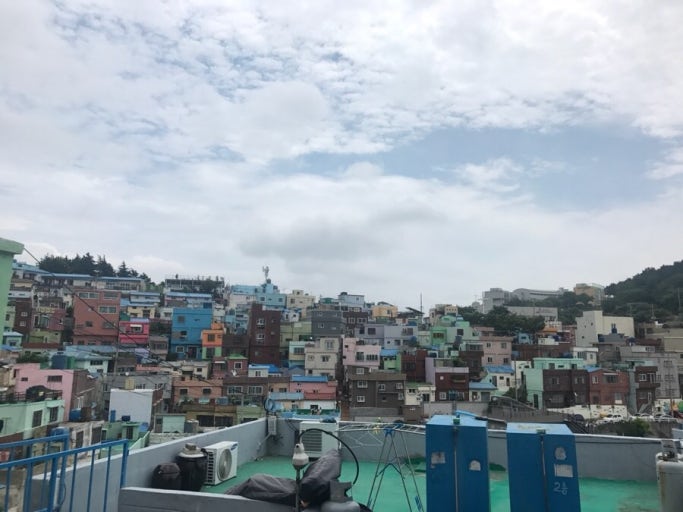
If urban regeneration projects focus on 'maintaining the status quo,' the effective way to actually attract residents and achieve generation replacement may be through large-scale residential supply like redevelopment or reconstruction.
In a situation where urban regeneration is considered a solution in all areas, an objective evaluation of actual results relative to the budget used is necessary. Such evaluations could reveal the true utility of urban regeneration.
Challenges of Urban Regeneration Projects and Future Points of Interest
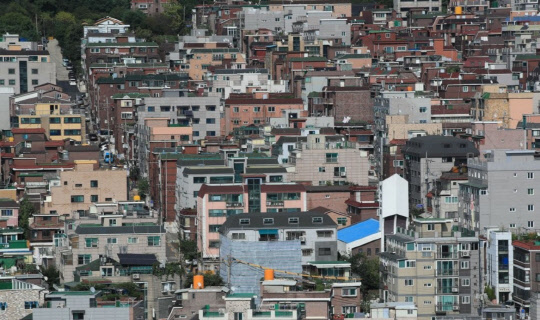
The selection of urban regeneration projects in Busan is evaluated as an administrative achievement. However, real evaluations will occur after the projects are completed.
Beyond facility improvements, attention needs to be given to whether changes in resident numbers, sustainability of commercial areas, and enhancement of local value will occur.
If urban regeneration merely concludes as a 'maintenance project,' there is a high likelihood that past controversies will recur.
#BusanUrbanRegeneration, #UrbanRegenerationProject, #MinistryofLandUrbanRegeneration, #BusanNationalFunding, #GwangbokBupyeongdong, #Sujeong2dong, #SuminBoksandong, #Bugok3dong, #BusanPolicy, #BusanDevelopment, #UrbanMaintenance, #AgingResidentialAreas, #EmptyHouseManagement, #TraditionalMarketRevitalization, #UrbanRegenerationEffects, #UrbanRegenerationLimitations, #BusanRedevelopment, #BusanReconstruction, #UrbanPolicyCritique, #BusanRealEstate, #RegionalBalancedDevelopment, #LivingSOC, #BusanAdministration, #NationalProject, #CityCenterRegeneration, #BusanCityCenter, #UrbanRegenerationControversy, #LivingEnvironment, #BusanFuture, #RegionalDevelopment
Frequently Asked Questions (FAQ)
Q. Which areas has Busan City selected for the Urban Regeneration Project Contest in the second half of 2025?
Jung-gu Gwangbok·Bupyeong-dong, Dong-gu Sujeong 2-dong, Dongnae-gu Sumin·Boksan-dong, and Geumjeong-gu Bugok 3-dong.
Busan City has secured 40 billion KRW in national funding by having all four areas it applied for selected in the Urban Regeneration Project Contest for the second half of 2025. The selected areas are Jung-gu Gwangbok·Bupyeong-dong, Dong-gu Sujeong 2-dong, Dongnae-gu Sumin·Boksan-dong, and Geumjeong-gu Bugok 3-dong. A total of 94.7 billion KRW worth of urban regeneration projects will be implemented over five years starting from 2026.
Q. What are the main contents of the urban regeneration project centered around the International Underground Shopping Center?
The project aims to supplement public restrooms and resting spaces, targeting an increase in tourist dwell time through cultural events.
The 'Rediscovery of the Underground, Art Shelter Project' focuses on supplementing the lack of public restrooms and resting spaces within the International Underground Shopping Center. Additionally, it seeks to increase tourist dwell time by attracting small-scale performances, exhibitions, and cultural events. The project strongly emphasizes environmental improvement, thus complementing the existing commercial area.
Q. What does the urban regeneration project in Dong-gu Sujeong 2-dong encompass?
It includes 100% management of empty houses, improvement of residential environments, and supply of some public rental housing.
The 'Brilliant 24 Hours of Sujeong-dong' project aims to fully manage empty houses as a part of maintaining aging residential areas. It supports the demolition and renovation of old houses, and some sections will also see the supply of public rental housing. Furthermore, living conditions will be improved through the renewal of alleyways and expansion of living SOC, although the limited supply of new housing may restrict the effectiveness of population structure improvement.
Q. What effects have urban regeneration projects actually had in Busan?
They are mainly focused on physical environmental improvements, with minimal effects on population influx or commercial area recovery.
Urban regeneration projects in Busan mainly concentrate on physical environmental improvements and short-term events, with few cases leading to actual population influx, revitalization of commercial areas, or increases in real estate value. There are limits to resolving fundamental structural issues in aging areas, prompting calls for deeper engagement and assessments.
Q. What is the difference between urban regeneration projects and redevelopment or reconstruction projects?
Urban regeneration focuses on maintaining the status quo, while redevelopment targets large-scale residential supply and demographic shifts.
Urban regeneration projects emphasize sustaining or improving the existing environment of an area. In contrast, redevelopment or reconstruction aims to bring about fundamental change through large-scale residential supply and population replacement. Consequently, redevelopment and reconstruction are seen as effective approaches when sustainable population influx and housing demand growth are pertinent.
Q. What are the future tasks and evaluation points for Busan's urban regeneration projects?
Evaluation should focus on changes in resident numbers, the sustainability of commercial areas, and improvement in local value.
While Busan's urban regeneration projects are seen as administrative achievements, the real evaluation will depend on whether facility improvements lead to changes in resident numbers, sustainability in commercial areas, and enhancement of local value post-completion. If urban regeneration remains merely a maintenance project, past controversies may repeat, making in-depth and objective evaluations critical.