Table of Contents
- KOSPI and US Stock Market Short-term Correction Phase
- Reasons Why Food and Beverage Stocks Are Gaining Attention in a Correction Phase
- Binggrae's Performance Trends and Short-term Burden Factors
- Seasonality, Merger Synergy, and Mid-term Momentum
- Valuation, Dividend Attractiveness, and Technical Ranges
- Conclusion | Realistic Approach to Binggrae's Stock Price Outlook
- Frequently Asked Questions (FAQ)
KOSPI and US Stock Market Short-term Correction Phase

Recently, the KOSPI and US stock markets are experiencing significant volatility and have entered a short-term correction phase.
Foreign investor sell-offs, declining commodity prices, and adverse events in the US have caused the KOSPI to drop sharply, while the US market is fluctuating with a focus on technology stocks. In this unstable environment, investors are at a point requiring more caution.

In the current economic environment, there is a trend of decreasing preference for growth stocks, with capital moving towards defensive sectors.
In this context, the food and beverage sector, particularly the stock price outlook for Binggrae, is gaining renewed attention.
Reasons Why Food and Beverage Stocks Are Gaining Attention in a Correction Phase
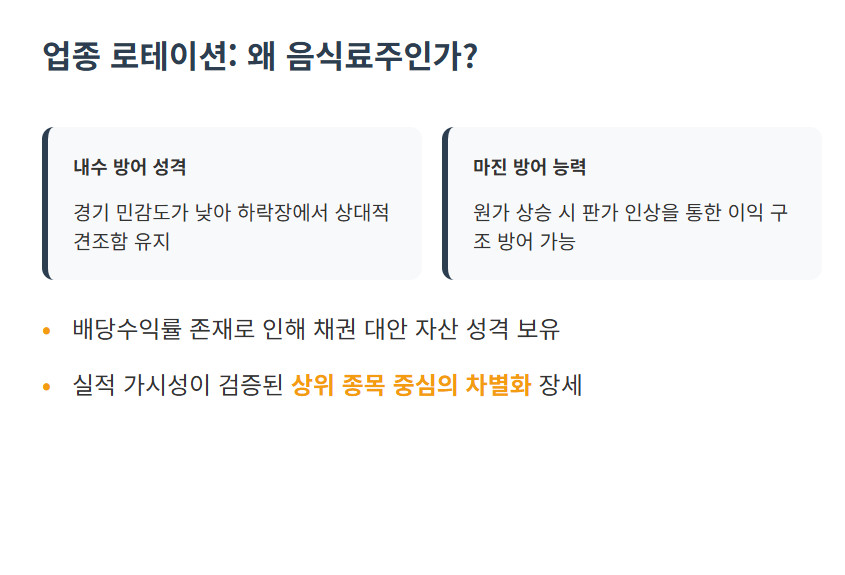
There are several reasons why the food and beverage sector is drawing interest during the correction phase.
First, it is a domestic defensive sector that is less sensitive to economic fluctuations. Second, companies that can raise prices despite rising costs have the advantage of margin protection. Third, high dividend yields make it attractive as an alternative asset.
However, during correction phases, it is often the case that rather than all sectors gaining simultaneously, only certain stocks with clear earnings and stable business structures stand out. Therefore, careful stock selection is essential when investing in food and beverage stocks.
An analysis of Binggrae was conducted last October. At that time, the stock price rose slower than expected, as the semiconductor, secondary battery, and KOSDAQ sectors captured market attention. As a result, a decision was made to sell to profit from other stocks.
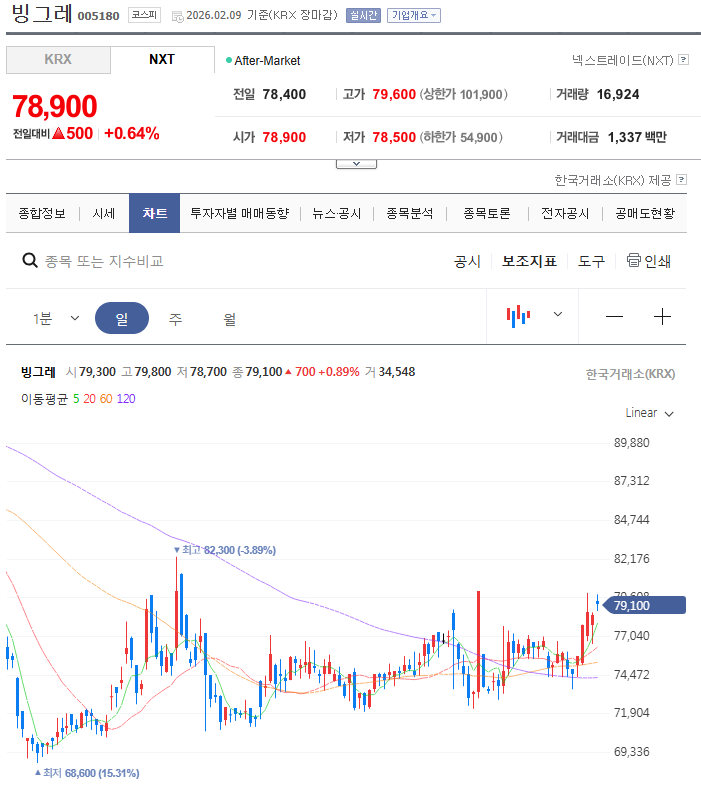
As the correction phase has started recently, defensive and food stocks are expected to be highlighted again. Currently, there is no significant increase in stock prices, leading to consideration of re-entry, and chart analysis shows promising buying points.
Binggrae's Performance Trends and Short-term Burden Factors

Binggrae finds itself in a situation where both short-term and medium-term considerations need to be addressed. The impact of the off-season in Q4 and rising costs are raising concerns about a possible operating loss.
Analyses indicate that the slowdown in the domestic market, merger-related expenditures, and some overseas issues have negatively affected short-term performance.
These factors clearly pose risks that could limit stock price increases.
Seasonality, Merger Synergy, and Mid-term Momentum
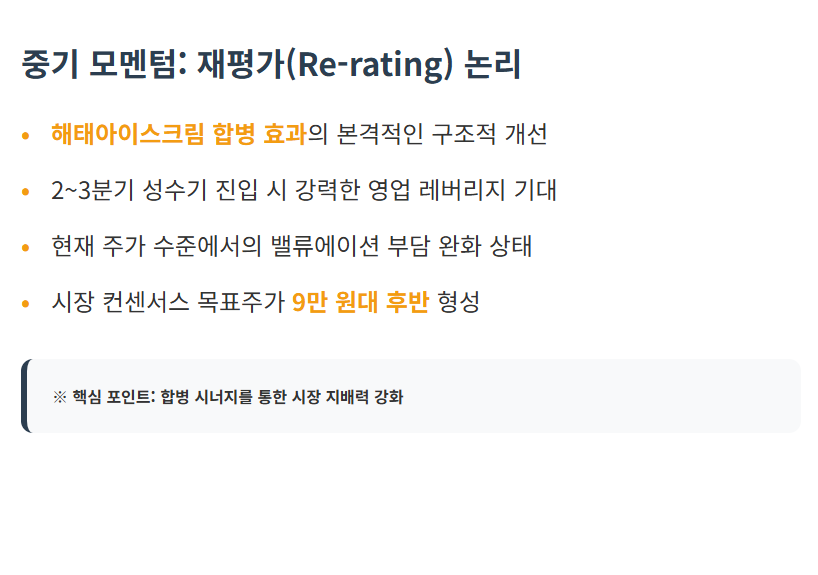
In the medium to long term, there is potential for reassessment.
The merger effect with Haitai Ice Cream could lead to structural improvements. In the ice cream-centric frozen high season during Q2-3, leverage is expected to apply, and given the current stock price, valuation burdens are not significant.
The market considers merger synergy a key argument, setting target prices in the high 90,000 won range. During correction phases, stocks with such structural improvement stories tend to gain relatively more attention.
Valuation, Dividend Attractiveness, and Technical Ranges

Binggrae's PBR is in the low 1s, with a dividend yield of around 4%. These figures suggest potential inflows of capital characterized by 'defensive + dividends' during market corrections.
According to technical analysis, the 76,000 won range acts as a key support level, while the range around 80,000 won serves as an important resistance level. These factors will serve as crucial reference points for investment decisions.

Attention will be focused on whether Binggrae can stabilize around the 80,000 won range and whether trading volumes will increase concurrently.
In the earnings report, if cost burdens lessen or merger synergy is mentioned, it will also be crucial to monitor whether changes in exchange rates and raw material prices re-emerge.
If all three of these conditions are met, the reliability of upward momentum is expected to rise.
Conclusion | Realistic Approach to Binggrae's Stock Price Outlook

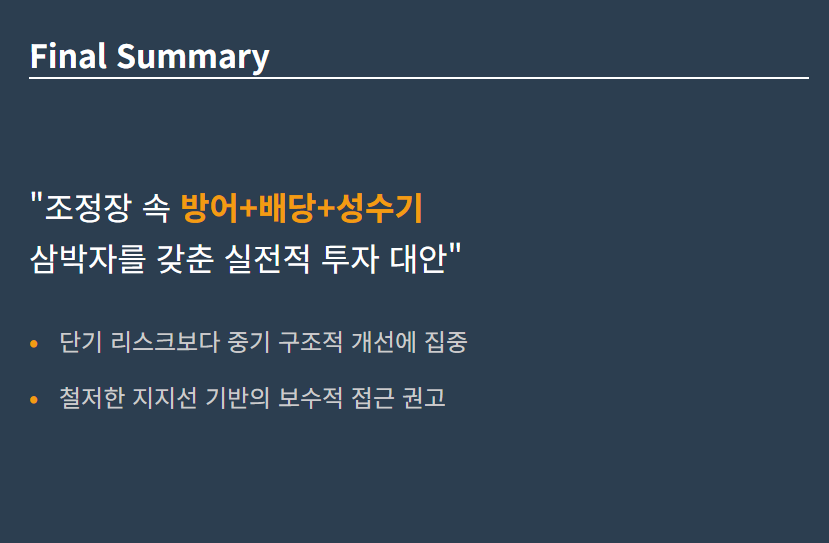
In the current correction situation of the KOSPI and the US stock market, there is a high likelihood of capital moving towards relatively neglected food and beverage stocks.
Binggrae has various positive factors such as dividend yield, value defense, seasonal synergy effects, and advantages from mergers.
However, rather than aiming for short-term surges, a strategy that confirms support levels and stabilizes around 80,000 won before verifying improvements in performance and guidance would be safer and more practical.
#KOSPIcorrection, #USstockmarketoutlook, #foodandbeveragestockoutlook, #Binggraestockprice, #Binggraeoutlook, #defensivestocks, #dividendstocks, #foodstockinvestment, #stockmarketanalysis, #correctionstrategies, #domesticstocks, #KOSPIoutlook, #leadingstockrotation, #seasonalbenefitstocks, #mergersynergy, #dividendinvestment, #valuestocks, #domesticdemandstocks, #stockinvestmentstrategies, #marketanalysis
Frequently Asked Questions (FAQ)
Q. What phase have the KOSPI and US stock markets recently entered?
The KOSPI and US stock markets have recently entered a short-term correction phase.
Recently, the KOSPI and US stock markets have shown significant volatility and have entered a short-term correction phase. The sell-off by foreign investors, falling commodity prices, and unfavorable events in the US have led to a sharp decline in the KOSPI, while the US market is showing unstable fluctuations centered around technology stocks. Consequently, this is a time when investors need to exercise caution.
Q. Why are food and beverage stocks gaining attention in a correction phase?
Food and beverage stocks are garnering attention because they are less sensitive to economic fluctuations and have margin defense and dividend attractiveness.
In correction phases, there tends to be a shift of funds toward domestic defensive sectors rather than growth stocks. Food and beverage stocks are less sensitive to economic fluctuations, can maintain margins despite rising costs, and have high dividend yields, making them attractive as an alternative asset. However, it is essential to focus investments on certain food and beverage stocks with excellent performance and stable businesses to reduce risks.
Q. What are the recent performance trends and short-term burden factors for Binggrae?
Binggrae faces potential operating losses due to seasonal off-peak in Q4 and rising costs.
Binggrae is facing a potential operating loss due to the off-season in Q4 and the impact of rising costs. The slowdown in domestic demand, merger-related expenses, and overseas issues are negatively affecting short-term performance, potentially acting as burdens on stock price increases. Thus, these burdens should be considered for short-term investments.
Q. How is Binggrae's mid-term momentum and merger synergy evaluated?
Binggrae has the mid-term growth potential through merger effects and seasonal leverage.
From a medium to long-term perspective, structural improvements are expected through the merger with Haitai Ice Cream. During the ice cream peak season, revenue growth is anticipated to provide leverage, and merger synergies are expected to be key drivers of mid-term growth. Currently, the valuation burden is not significant, leading the market to view it positively for medium-term momentum.
Q. What is the valuation and dividend attractiveness of Binggrae's stock price?
Binggrae has a PBR in the low 1s and a dividend yield of about 4%, making it attractive.
Binggrae's PBR is in the low 1s, and its dividend yield is relatively high at around 4%. This suggests possible inflows of funds focused on defense and dividends during market corrections. Technically, the 76,000 won range serves as a crucial support level, and the area around 80,000 won acts as an important resistance point for investment references.
Q. What aspects should be carefully considered when investing in Binggrae?
Attention should be paid to stock price stability, increased trading volume, eased cost burdens, and trends in exchange rates and raw materials.
When investing in Binggrae, it is essential to observe the stability of stock prices around the 80,000 won range and whether trading volumes are increasing. Additionally, if the earnings report shows reduced cost burdens or mentions synergy from mergers, it is vital to monitor changes in exchange rates and raw material prices. If all three of these conditions are met, trust in upward momentum is likely to increase.
Q. What is the comprehensive conclusion regarding Binggrae's stock price outlook?
Binggrae offers strong defense, dividend yield, merger synergies, and solid long-term prospects.
In the context of the KOSPI and US stock market correction, there is an expectation for capital to flow into Binggrae as a defensive and dividend stock. While there are positive factors such as structural improvements from the merger and seasonal synergy effects, a safer strategy would be to invest after confirming support levels and observing improvements in performance and guidance rather than aiming for short-term surges. Realistically, stabilization at the 80,000 won mark and improvements in performance guidance are key.