Table of Contents
- The $173 Controversy of Silver Coins: A Sign of Overheated Silver Investment?
- Status of the Surge in Silver Prices and Reasons Behind It
- The True Meaning of the $173 Silver Coin from the United States Mint
- Current Position of Silver Prices Based on the GoldSilver Ratio
- Timing for Silver Investment Selling: Where Should It Be Judged?
- Conclusion | The Surge in Silver Prices: A Coexistence of Opportunity and Risk
- Frequently Asked Questions (FAQ)
The $173 Controversy of Silver Coins: A Sign of Overheated Silver Investment?
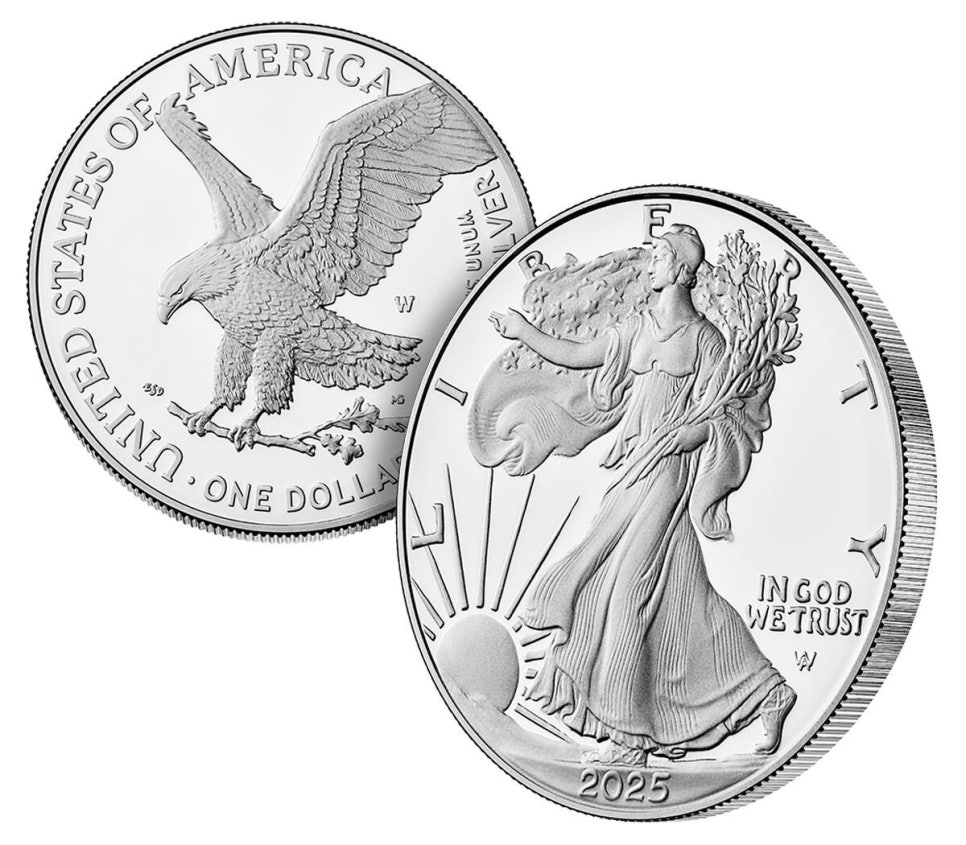
Recently, news has reported that the price of silver coins from the United States Mint has reached $173, revitalizing the silver investment market.
Additionally, the international silver price has surged to the mid-$90 range per ounce, showing potential for reaching historic highs.
To determine whether this upward trend is a short-term phenomenon or the beginning of a long-term bull market, it is necessary to comprehensively analyze the reasons behind the surge in silver prices, the structure of silver coin prices, and the GoldSilver Ratio.
Investors must closely examine these factors to predict the future direction of the market.
Status of the Surge in Silver Prices and Reasons Behind It
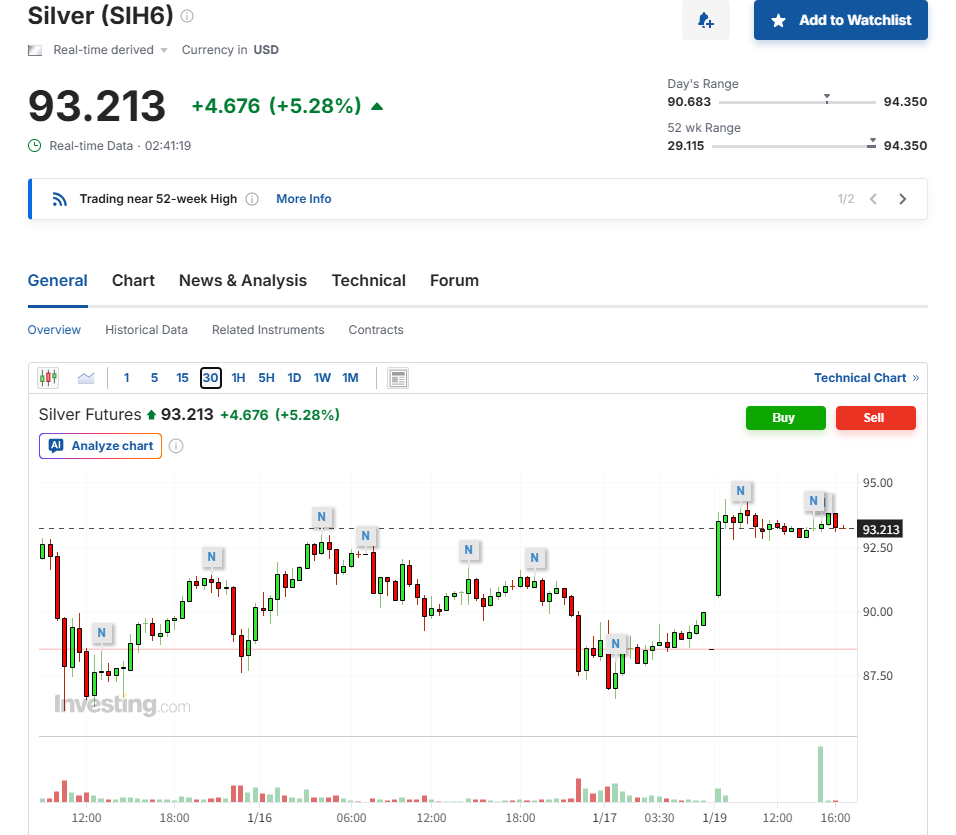
As of January 2026, the international spot silver price is approximately $93-$94/ounce. Last week, after buying a silver leveraged ETF, it experienced difficulties during a consolidation phase, but it has shown signs of upward movement since January 19th. Hopeful changes are anticipated.

In recent months, the phenomenon of a sharp rise in silver prices has become prominent. The main reasons for this surge can be summarized into three points.
The first is the heightened preference for safe assets due to geopolitical risks and tariff issues. Consequently, significant capital has flowed into both gold and silver, increasing market volatility.
The second factor is expectations of falling real interest rates and changes in the dollar's flow. As forecasts suggest that interest rates will decline, silver has a greater leverage characteristic than gold, making its price increase more pronounced.
Finally, the structural increase in industrial demand has driven the rise in silver prices. The consistent increase in silver use across various fields such as solar energy, electric vehicles, and semiconductor industries has highlighted the tight supply situation of physical silver.
These various factors are collectively encouraging a reevaluation of silver as an industrial strategic asset beyond just a precious metal. For more detailed information on the specific background of the rise in silver prices, please refer to the posts below.
The True Meaning of the $173 Silver Coin from the United States Mint
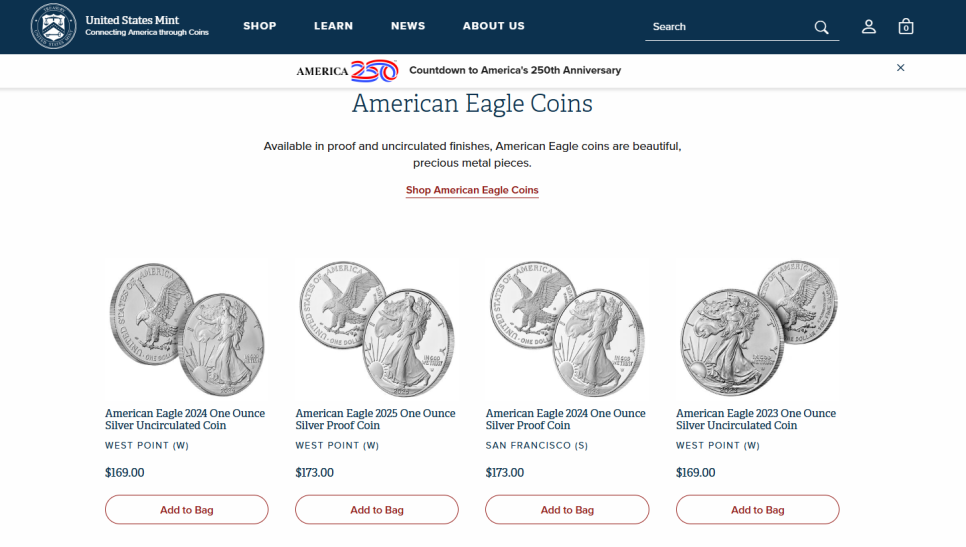
The recent controversy surrounding the $173 silver coin does not merely indicate that this is the price of silver. This price is set as the official retail price for the American Eagle 2025 1oz Silver Proof(W) sold by the United States Mint.
The reason why this amount is high is clear. Proof silver coins are collectible products rather than items intended for investment. Therefore, in addition to the raw material silver price, costs like minting process, quality inspection, packaging, certification (COA), distribution costs, and margins are all included. As recent silver prices surged, the Mint reviewed its existing pricing structure and adjusted the prices of collectible silver products accordingly.
In conclusion, the $173 does not represent the ceiling of silver prices. If you wish to invest in silver, choosing physical silver bars or spot-linked products with lower premiums would be a much more reasonable choice.
Current Position of Silver Prices Based on the GoldSilver Ratio
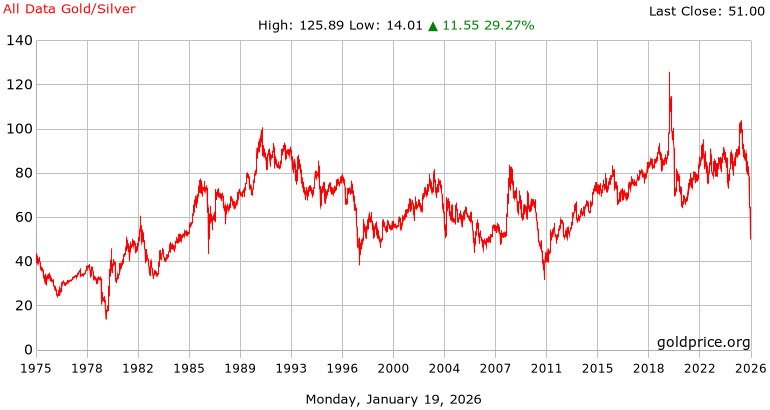
Currently, the price of gold is about $4,660 per ounce, and the price of silver is around $93. Based on this, the GoldSilver Ratio is approximately 50.
Historically, this ratio has important reference points. During the 1980 silver supercycle, the GoldSilver Ratio plunged to the level of 16 to 17. In modern investment markets, this ratio has also been observed to drop below 30 towards the end of a bull market.
If gold prices maintain their current levels, if the GoldSilver Ratio drops to 30, theoretically silver prices could exceed $150. More extremely, if this ratio drops to 17, silver prices could surpass $270. However, such calculations are purely theoretical, and actual markets will naturally encounter adjustments and volatility.
Timing for Silver Investment Selling: Where Should It Be Judged?

The crucial judgment criterion for investment is the change in the GoldSilver Ratio rather than the price itself. The GoldSilver Ratio is an important indicator to understand where the silver bull market stands, and its meaning becomes distinctly categorized depending on specific intervals.
First, when the GoldSilver Ratio reaches the range of 45-40, it signals when silver prices start to react quickly, marking a zone for short-term overheating. During this time, considering to partially sell some positions is advisable.
Next, when the GoldSilver Ratio hits the range of 35-30, this is interpreted as the latter half of the silver bull market. At this point, it's necessary to reduce holdings to realize profits.
Finally, when the GoldSilver Ratio drops below 25, this is historically an extreme overheating zone, where capital that had poured into the silver market often tends to exit rapidly. Utilizing these indicators wisely can help formulate a more effective investment strategy.
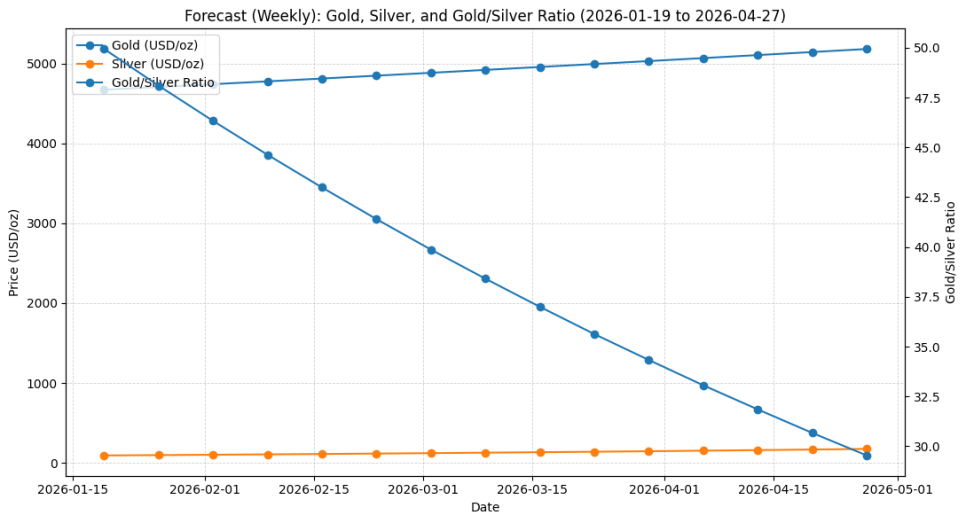
If we extend the trends from the last three months simply, we can calculate that if the current trend continues, the ratio of gold to silver in April 2026 could reach 30. However, this is a scenario based on very strong assumptions, so in actual investments, it is advisable to consider not just the price itself but also the speed of decline of the gold to silver ratio and the market atmosphere.
It would be good to regard silver prices as being in a strong bullish zone and set the gold to silver ratio of 30 as the first selling timing. If we apply the weekly average increase rate over the past three months, gold shows +0.74% and silver shows +4.59%. Based on this, it’s possible to predict future price fluctuations, which will serve as useful information in making investment decisions.
| Category | Point in Time | Gold ($/oz) | Silver ($/oz) | GoldSilver Ratio | Judgment |
| Initial | 2026-01-19 | 4,670 | 93.5 | 49.9 | Start of Bull Market |
| Mid | 2026-03-16 | 4,956 | 134.0 | 37.0 | Entering Overheated Zone |
| Late | 2026-04-27 | 5,181 | 175.4 | 29.5 | Selling Timing |
In this scenario, it is expected that when the price of silver reaches around $170, the GoldSilver ratio will drop to approximately 30. Setting this as the first exit interval of the bull market strategy makes sense. The key point is not the price target but whether there is a change in the GoldSilver ratio. In actual trading, dividing responses into intervals of 35, 32, and 30 would be advantageous for managing volatility.
Conclusion | The Surge in Silver Prices: A Coexistence of Opportunity and Risk
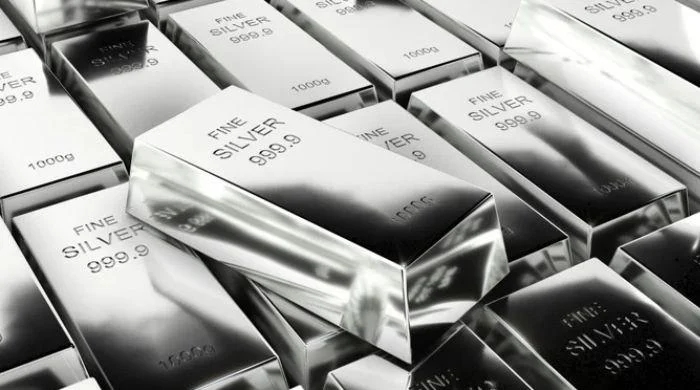
The incident of the silver coin being traded at $173 by the United States Mint effectively demonstrates the high volatility of the current silver prices. Despite short-term price fluctuations, considering structural demand and monetary policy, the potential for silver prices to rise in the mid to long term still exists.
However, in the current situation, a careful investment strategy based on the ratio of gold to silver is required rather than blindly buying. What is crucial in silver investment is not merely the $173 silver coin, but how the ratio of gold and silver fluctuates. Therefore, it is important for investors to clearly recognize and respond to this point.
#silver price, #silver coin, #United States Mint, #SilverEagle, #silver investment, #GoldSilverRatio, #silver price outlook, #silver surge, #precious metal investment, #physical silver, #silver bar, #proof silver coin, #silver selling timing, #GoldSilver30, #silver super cycle, #safe assets, #inflation hedge, #commodity investment, #precious metals market, #silver spot, #US dollar, #interest rates and silver, #industrial metals, #solar silver demand, #silver market analysis, #investment strategy
Frequently Asked Questions (FAQ)
Q. Why is the United States Mint's silver coin $173?
The $173 is the official retail price of a collectible proof silver coin, not the raw material price of silver coins.
The $173 price of the silver coin from the United States Mint is not simply the price of silver but the official retail price of a proof silver coin intended for collectors rather than for investment. This price includes the minting process, quality inspection, packaging, certification, distribution costs, and margins. Therefore, it differs from the raw silver price, and for investments, products linked to physical silver or silver bars with lower premiums would be a more reasonable choice.
Q. What are the current international silver prices and the GoldSilver ratio?
As of January 2026, silver trades at approximately $93-$94 per ounce, and the GoldSilver ratio is about 50.
As of January 2026, the international spot silver price is about $93-$94 per ounce. The gold price has reached about $4,660, and based on this, the GoldSilver ratio is approximately 50. Historically, the lower the GoldSilver ratio, the greater the likelihood of rising silver prices, and dropping below 30 is interpreted as a signal of the latter stages of a bull market or overheating.
Q. What are the main reasons for the surge in silver prices?
Geopolitical risks, expectations of low real interest rates, and increasing industrial demand are the main reasons.
The recent surge in silver prices is due to three main factors. Firstly, heightened preference for safe assets due to geopolitical risks and tariff issues has led to significant capital flowing into both gold and silver. Secondly, expectations of falling real interest rates and changes in dollar flow have made silver demonstrate greater leverage effects than gold, leading to more pronounced price increases. Thirdly, increased structural industrial demand for silver in sectors like solar energy and electric vehicles has tightened the physical supply. These combined factors are promoting the appreciation of silver's value.
Q. How should GoldSilver ratio be used to determine appropriate silver investment selling timing?
GoldSilver ratio 45-40 indicates short-term overheating, 35-30 indicates the latter stages, and below 25 indicates extreme overheating signals.
The timing for selling silver investments should primarily focus on changes in the GoldSilver ratio rather than prices. When the GoldSilver ratio reaches the 45-40 range, prices begin to react quickly, marking a point to consider partial selling. When it reaches the 35-30 range, it is the latter half of the bull market, and reducing equity for profit realization is advisable. If it drops below 25, it indicates an extreme overheating zone, with a high potential for rapid capital flight. Investors can develop effective selling strategies using the GoldSilver ratio indicator.
Q. Why does the surge in silver prices present both opportunities and risks for investors?
Price surges reflect increased demand and rising expectations, but also involve volatility and adjustment risks.
The surge in silver prices seems to provide investment opportunities, but short-term volatility is also substantial. Factors like geopolitical risks, interest rates, and industrial demand support the appreciation of silver's value; however, price adjustments and market fluctuations naturally occur. Furthermore, the price movements of the United States Mint silver coin also reflect the influence of collectible premiums, differing from actual raw material prices. Therefore, rather than blindly buying, a careful investment strategy based on indicators like the GoldSilver ratio is necessary.
