Table of Contents
- NASA Artemis II, the first crewed lunar flight in 50 years
- Overview of the Artemis II launch schedule and window
- Overview of the SLS rocket and Orion crewed spacecraft mission
- Inclusion of a South Korean satellite and achievements in Korea-US space cooperation
- Aerospace industry and SpaceX listing issues
- Conclusion | The significance of Artemis II
- Frequently Asked Questions (FAQ)
NASA Artemis II, the first crewed lunar flight in 50 years
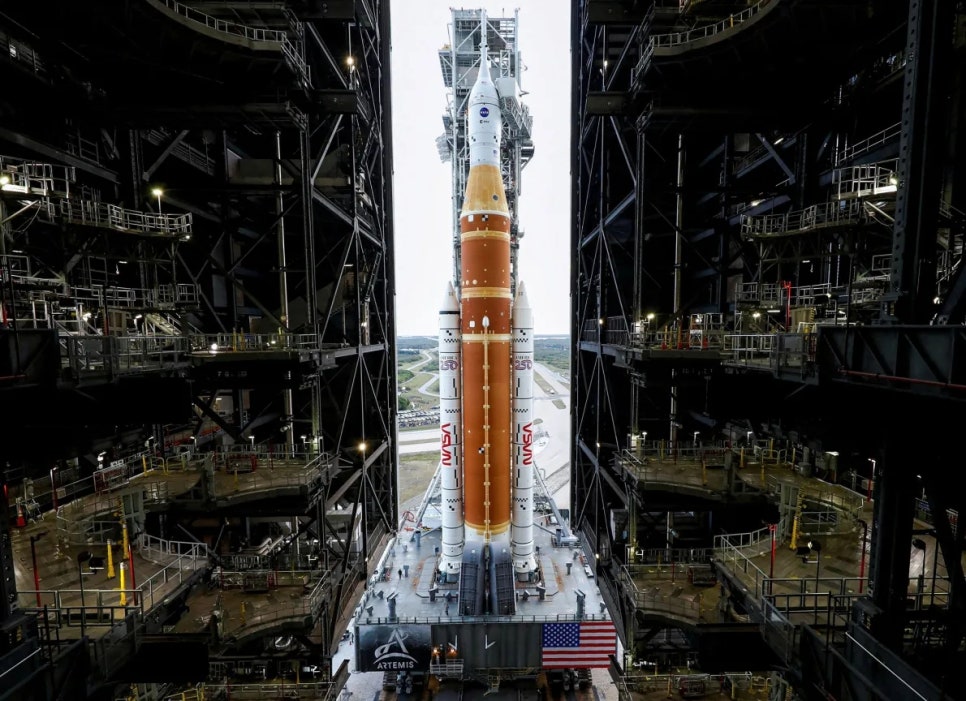
NASA's Artemis II is preparing for a launch aimed for February 2026.
This mission holds significant meaning as the first crewed lunar flight in 50 years since Apollo 17 in 1972.
Although lunar landing is not included, it is a crucial step that will lay the groundwork for future crewed lunar landings and lunar base construction, thereby attracting much attention in the global aerospace industry and investment market.
Recommended articles to read

Overview of the Artemis II launch schedule and window
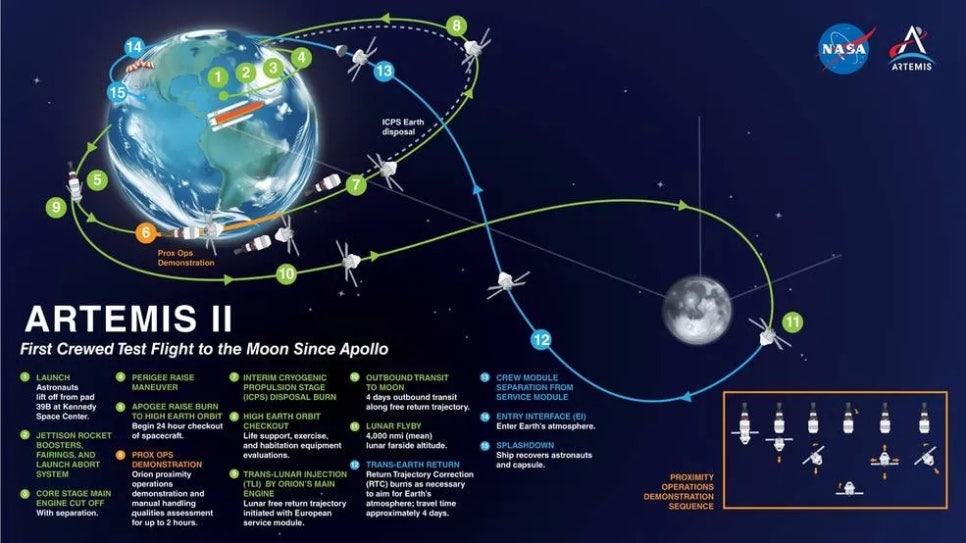
NASA has set the launch of Artemis II for February 2026, with the primary target date expected to be February 6 (local time). However, the final confirmation of this schedule is greatly influenced by the results of the Wet Dress Rehearsal.
Based on current information, the launch plan for Artemis II is as follows. First, the target launch month is February 2026, and the second likely launch date appears to be around February 6. Third, limited launch operations are expected to be feasible until mid-February. If the schedule is delayed, additional launch opportunities are being considered between March and April.
Lastly, NASA has emphasized a principle of "not rushing," indicating that technical completeness is of utmost importance, which is expected to have a significant impact on future schedule decisions.
Overview of the SLS rocket and Orion crewed spacecraft mission

Artemis II will consist of the Space Launch System (SLS) Block 1 rocket for space exploration and the Orion crewed spacecraft. The SLS is a large rocket that reaches a height of approximately 98 meters (322 feet) and is the next-generation launch vehicle developed by NASA for crewed lunar exploration.
This mission will involve three American astronauts and one Canadian astronaut, totaling four crew members. The mission will take about 10 days, conducting a flyby of the moon (free-return trajectory) before returning to Earth. In this process, Orion's life support systems, communication, and heat shield performance will undergo comprehensive verification of key technologies for crewed lunar landings.
Inclusion of a South Korean satellite and achievements in Korea-US space cooperation
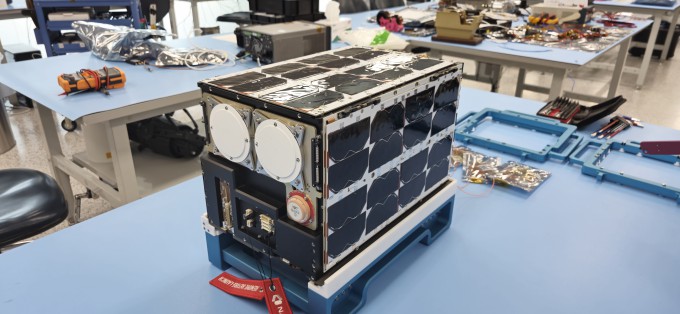
Artemis II will carry the K-RadCube satellite, a small satellite developed by South Korea. This satellite, a 12U cube satellite developed by Korea Astronomy and Space Science Institute and Naraspace, is tasked with collecting cosmic radiation data near the Van Allen radiation belts.
Notably, the satellite will contain semiconductor experiment modules from Samsung Electronics and SK Hynix. This experiment aims to validate the semiconductor performance against radiation in the actual space environment, which could significantly enhance the potential for expansion in the semiconductor market in the fields of space, defense, and aviation. In this context, South Korea's direct contribution to the crewed lunar exploration program, beyond merely launching a satellite, is a significant development.
Aerospace industry and SpaceX listing issues

The Artemis program is moving towards strengthening the participation of private companies, breaking away from traditional state-centered space development approaches. Notably, in the upcoming Artemis III mission, SpaceX is expected to play a key role in lunar lander technology.
Against this backdrop, the possibility of a SpaceX listing is attracting attention, and investment interest in aerospace, satellite, and launch vehicle companies is increasing. The success of Artemis II is anticipated to be a crucial turning point for the future revaluation of the value of private space companies and the expansion of the global aerospace industry ecosystem.
Conclusion | The significance of Artemis II
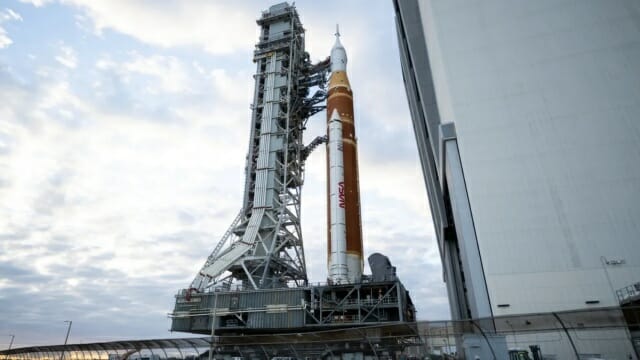
The launch of NASA's Artemis II signifies more than just a space mission. It is seen as the starting point for humanity to step foot on the moon again and a moment establishing the foundation for long-term deep space exploration. Particularly, given that a South Korean satellite is onboard, it is expected to provide a significant turning point for Korea's aerospace and semiconductor industries.
While the launch schedule may be adjusted based on technical inspections, February 6th is projected to be the first important timeline. The success of this mission is likely to have a substantial impact on future space strategies, including lunar landings by Artemis III and Mars exploration. Therefore, the launch of Artemis II will serve as an important benchmark for the future of human space exploration.
#ArtemisII, #NASA_Lunar_Exploration, #ArtemisII, #SLS_Rocket, #Orion_Spacecraft, #Crewed_Lunar_Flight, #2026_Space_News, #NASA_Launch_Schedule, #Kennedy_Space_Center, #Korean_Satellite_Integration, #K_RadCube, #Space_Radiation, #Korea_US_Space_Cooperation, #Aerospace_Industry, #Space_Stocks, #SpaceX_Listing, #Private_Space_Companies, #Lunar_Exploration_Program, #Artemis_Program, #Lunar_Orbital_Flight, #Space_Semiconductors, #Samsung_Electronics_Space, #SK_Hynix_Space, #Global_Space_Competition, #Space_Investment, #Space_Themed_Stocks, #US_Space_Development, #Lunar_Base, #Mars_Exploration
Frequently Asked Questions (FAQ)
Q. What are the main objectives of the Artemis II mission?
Artemis II is the crewed lunar flyby in preparation for a crewed lunar landing, occurring 50 years after the last mission.
Artemis II will conduct the first crewed lunar flyby mission since Apollo 17 in 1972. Although it does not include lunar landing, this critical mission will verify the core life support and communication systems of the Orion spacecraft over approximately 10 days of lunar flyby. This mission is regarded as a cornerstone for future crewed lunar landings and lunar base construction, holding significant meaning for NASA and the global aerospace industry.
Q. What is the launch schedule for Artemis II and what are the key schedule variables?
The launch is scheduled for around February 6, 2026, and may vary based on technical inspections.
NASA aims for the launch of Artemis II in February 2026, specifically targeting February 6. However, the results of the Wet Dress Rehearsal are a significant variable in schedule confirmation, and if there are delays, additional launch opportunities may be considered between March and April. NASA has stated that it will prioritize technical completeness without rushing, and the launch schedule will be carefully finalized.
Q. How many astronauts will be on Artemis II and what spacecraft will be used?
Three US astronauts and one Canadian astronaut, totaling four, will be aboard the Orion spacecraft.
This mission will include three American astronauts and one Canadian astronaut, totaling four individuals. The spacecraft will be the Orion crewed spacecraft developed by NASA, and the launch vehicle will be the next-generation large rocket, the Space Launch System (SLS) Block 1. The mission will last about 10 days and is set to verify the core systems of the Orion crewed spacecraft through a lunar flyby trajectory.
Q. How is South Korea participating in the Artemis II mission, and what does it signify?
The South Korean cube satellite K-RadCube will be onboard to conduct space radiation experiments.
Artemis II will carry the 12U cube satellite K-RadCube, developed by Naraspace with the Korea Astronomy and Space Science Institute overseeing it. The satellite will contain a semiconductor experiment module from Samsung Electronics and SK Hynix, tasked with verifying semiconductor performance in space environments. This marks South Korea's first direct participation in crewed lunar exploration, representing significant progress for the aerospace and semiconductor industries.
Q. What are the expectations for the aerospace industry and private companies following Artemis II?
An expansion of the space industry ecosystem is expected due to increased private sector participation and expectations of a SpaceX listing.
The Artemis program is transitioning towards greater private sector involvement, with SpaceX taking on pivotal lunar lander technology in the upcoming Artemis III mission. Consequently, interest in the possibility of a SpaceX listing and investment in aerospace, satellites, and launch vehicles is rising. The success of the Artemis II mission is anticipated to be a crucial turning point for the revaluation of private space company values and the expansion of the global space industry ecosystem.
