Table of Contents
- January 2026 Soybean Price Decline: Why Now?
- USDA WASDE Shock and Soybean Price Drop
- Why Chinese Demand News Supports the Bottom
- Biofuels, Soybean Oil Variables, and South American Crop Risks
- Soybean Futures ETFs and ETNs: Leveraged and Inverse Investment Checkpoints
- Conclusion: In Soybean Investment for January 2026, ‘Response Structure’ is More Important than ‘Cause of Drop’
- Frequently Asked Questions (FAQ)
January 2026 Soybean Price Decline: Why Now?

The price of soybean (soybean) futures dropped sharply in January 2026, leading many investors to wonder, "Is this the bottom?"
This price drop is analyzed as a result of several factors rather than a simple technical adjustment. The USDA supply and demand outlook provided a shock, leading to position realignment, with South American crop conditions and biofuel variables complicating the situation.
In particular, domestic access to soybean futures ETFs and ETNs (including leveraged and inverse) has increased. Therefore, having a clear understanding of the structure and risks at this critical decline will be a wise investment strategy.
USDA WASDE Shock and Soybean Price Drop

The recent cause of the decline is the supply and demand outlook announced in January. The report revealed that U.S. soybean ending stocks were significantly raised above market expectations, which played a critical role.
The news of increased stocks is interpreted as a signal that "supply has become ample," which leads to a reaction in the futures market that price adjustments downwards are necessary. Along with this, a conservative revision to the export outlook weakens demand pressure and further intensifies downward pressure on prices. This phenomenon applies not only to soybeans but also to corn.
Ultimately, the market began to reposition with the view that "even if domestic demand is strong, if exports decline, stocks will accumulate." In this process, volatility tends to increase in the 1-3 trading days following the report's announcement, and the downward trend often continues for another day.
Why Chinese Demand News Supports the Bottom

The background of the soybean market not simply flowing into a bearish market is influenced by China. As the world's largest importer, China's purchases and releases through state-owned reserve agencies create short-term fluctuations in prices.

Since the end of October 2025, additional purchases of U.S. soybeans have begun, and at the same time, auctions for imported soybeans have been conducted. These auctions have served as signals indicating short-term stock burdens and have pressured prices. However, conversely, they imply the securing of space for quantities yet to arrive.
As various news items are conveyed to the market, prices tend to fluctuate frequently. Ultimately, this situation prevents sharp declines while creating a complex market that requires time for rebounds. As market volatility increases, investors need to exercise cautious approaches.
Biofuels, Soybean Oil Variables, and South American Crop Risks
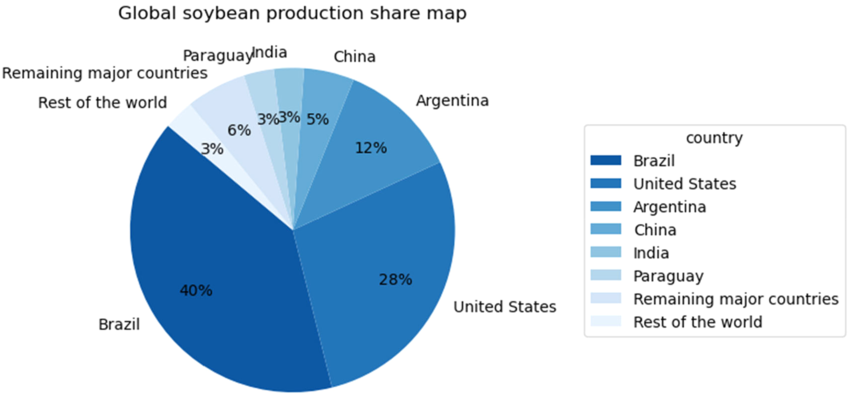
Soybeans should not be viewed solely as “soybeans.” Various products like soybean oil and soybean meal should also be taken into account. If biofuel policies are strengthened or the use of other oils increases, the price of soybean oil may drop, putting pressure on crushing margins and weakening demand outlooks for soybeans.
In addition, the crop conditions in South America, particularly in Brazil and Argentina, play a crucial role in export competition. If Brazil's production outlook is favorable, expectations that “South American supply will increase in February to April” will rise, potentially leading to further declines in CBOT soybean futures prices.
On the other hand, if the weather in South America worsens, rapid short-covering may occur, leading to spikes in prices. Thus, while the January drop was triggered by the supply-demand situation, the subsequent market flow will be influenced by weather in South America and China's supply and demand policies.
Soybean Futures ETFs and ETNs: Leveraged and Inverse Investment Checkpoints
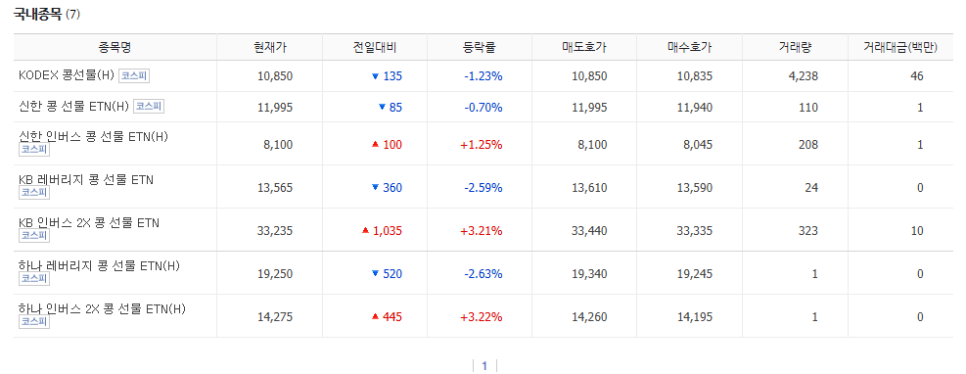
There are primarily two ways to invest in soybeans domestically. The first is through soybean futures ETFs, and the second is through soybean futures ETNs, including leveraged and inverse products. The crucial point here is that instead of directly purchasing the physical soybeans, one opts for the futures rollover structure.
In the case of futures, rollover yield or loss can occur whenever the contract expires, leading to differences between expected and actual performance over long-term holdings. Additionally, leveraged and inverse products amplify daily volatility or track inversely, increasing the likelihood of adverse profits in flat or volatile markets for investors.

Currently, noteworthy products include the KB leveraged soybean futures ETN and the KB inverse 2X soybean futures ETN. These two products are set to expire in early July 2028, making them an attractive choice from a short-term trading perspective. However, during a sharp decline, rather than investing all at once, it would be more reasonable to initially purchase one share as a scout and assess the basis and volatility.
Moreover, other financial companies like KODEX, Shinhan, and Hana are also launching similar soybean futures products. Therefore, the final choice of which product to select should be based on comparisons considering tracking indices, leverage multiples, total fees, basis rates, spreads, and liquidity.
Conclusion: In Soybean Investment for January 2026, ‘Response Structure’ is More Important than ‘Cause of Drop’

Soybean prices have entered a short-term oversold zone due to changes in USDA's supply and demand outlook and position adjustments. This suggests that after clear bottom signals appear, holding leveraged products for several months will be a valid strategy.
In particular, the soybean market is a commodity where various factors can regularly arise to influence mid-term direction, including changes in South American crop conditions, timing for China's resumption of imports, and changes in biofuel policies. Therefore, if one can divide their purchases when prices stabilize and trading volume decreases after a sharp decline, this is expected to be a strategy that can yield higher return expectations than short-term trading.
However, due to the nature of leveraged products, volatility can significantly enlarge gains and losses. Thus, it is important to verify bottom signals before making a small initial purchase and to progressively increase positions once a trend reversal is confirmed. This strategy is likely to lead to successful investments.
#soybean prices, #soybeans, #price drop, #USDA WASDE, #WASDE, #soybean futures, #CBOT, #commodity investment, #agricultural futures, #soybean investment, #soybean futures, #soybean ETF, #soybean ETN, #leveraged ETN, #inverse ETN, #KODEX, #Shinhan ETN, #KBETN, #Hana ETN, #futures rollover, #roll yield, #basis, #spread, #China demand, #Brazil crop, #biofuels, #soybean oil, #soybean meal, #dollar-cost averaging, #scout investment
Frequently Asked Questions (FAQ)
Q. What are the main reasons for the sharp drop in soybean prices in January 2026?
The upward revision of ending stocks and conservative export outlook in USDA's supply and demand outlook triggered the price drop.
In the USDA WASDE report announced in January 2026, the ending stocks of U.S. soybeans were found to have increased significantly beyond expectations, shocking the market. The news of stock increases was interpreted as a signal that supply has become more ample, leading to a decline in futures prices. Additionally, conservative revisions to the export outlook intensified demand pressure, accelerating the price drop. These combined factors were major contributors to the continued volatility and downward trend over the first 1-3 trading days.
Q. How does China influence soybean prices?
China provides short-term price volatility and support through state reserve agency purchases and releases and import auctions.
As the world's largest importer of soybeans, China brings about short-term price fluctuations through purchases or releases by its state reserve agencies. For example, additional purchases of U.S. soybeans began at the end of October 2025, and simultaneous import soybean auctions sent various signals to the market, causing price fluctuations. Such news defends against sharp drops but creates a complex market atmosphere where rebounds take time, requiring careful judgment by investors.
Q. What variables do biofuels and South American crop conditions provide for soybean prices?
Biofuel policies and South American crop changes affect soybean oil demand and supply, increasing price volatility.
If biofuel policies are strengthened or increases in the use of alternative oils lead to a drop in soybean oil prices, crushing margins can be pressured, potentially decreasing soybean demand. Simultaneously, favorable crop conditions in Brazil and other South American regions can raise expectations for increased supplies in February to April, acting as a determinant for lower soybean futures prices. Conversely, worsening weather in South America can always present the possibility of rapid price spikes due to short covering, necessitating continuous monitoring of supply-demand and environmental variables by investors.
Q. What should investors be cautious about when investing in soybean futures ETFs and ETNs?
Investors must consider the risks of futures rollover profits and losses and the volatility amplification risks of leveraged and inverse products.
In soybean investment, ETFs and ETNs use futures rollover methods instead of physical purchases, which can lead to deviations between expected long-term performance and actual results due to rollover yields or losses occurring at rollover times. Particularly, leveraged and inverse products are prone to unanticipated losses in flat or volatile markets due to their enlarging daily volatility and inverse tracking characteristics. Thus, it’s crucial to meticulously compare the structures, total fees, liquidity, and basis rates of each product and approach investment cautiously.
Q. What investment strategies should be devised after the soybean price drop in January 2026?
A rational strategy involves checking for bottom signals, implementing dollar-cost averaging, and gradually increasing positions after initial small entries.
The current soybean prices have entered a short-term oversold state due to changes in USDA's supply and demand outlook and position adjustments. Observing price stabilization and a decline in trading volume after the sharp drop suggests that it would be safe to proceed with dollar-cost averaging, initially entering small amounts to assess rollover profits and market trends. Following a trend reversal, expanding positions progressively to aim for medium-term gains becomes a valid strategy. A gradual approach can enhance the likelihood of success when investing in volatile leveraged products.
